Killed on the Job
[FRANKLAND, William.]
A large collection of manuscript correspondence relating to the death of William Frankland. [Manchester, Slaidburn, and Blackburn, June 1886–May 1888].
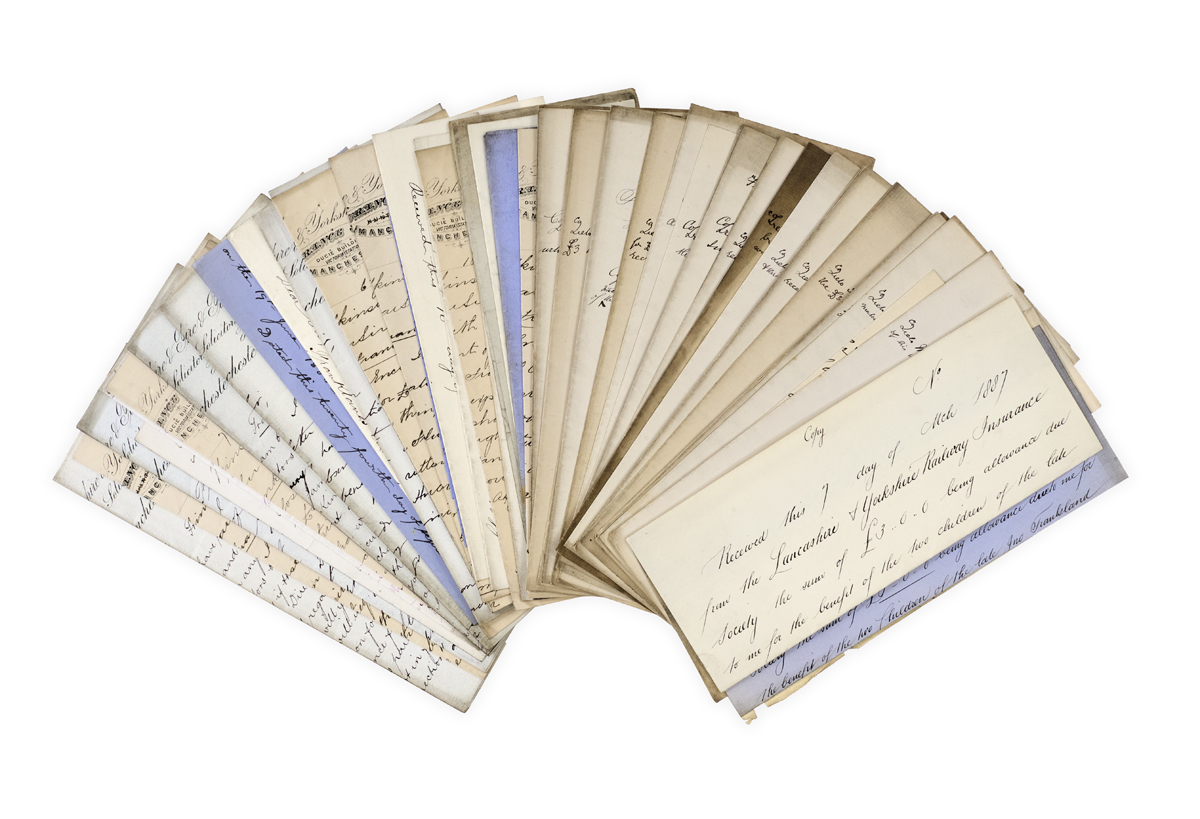
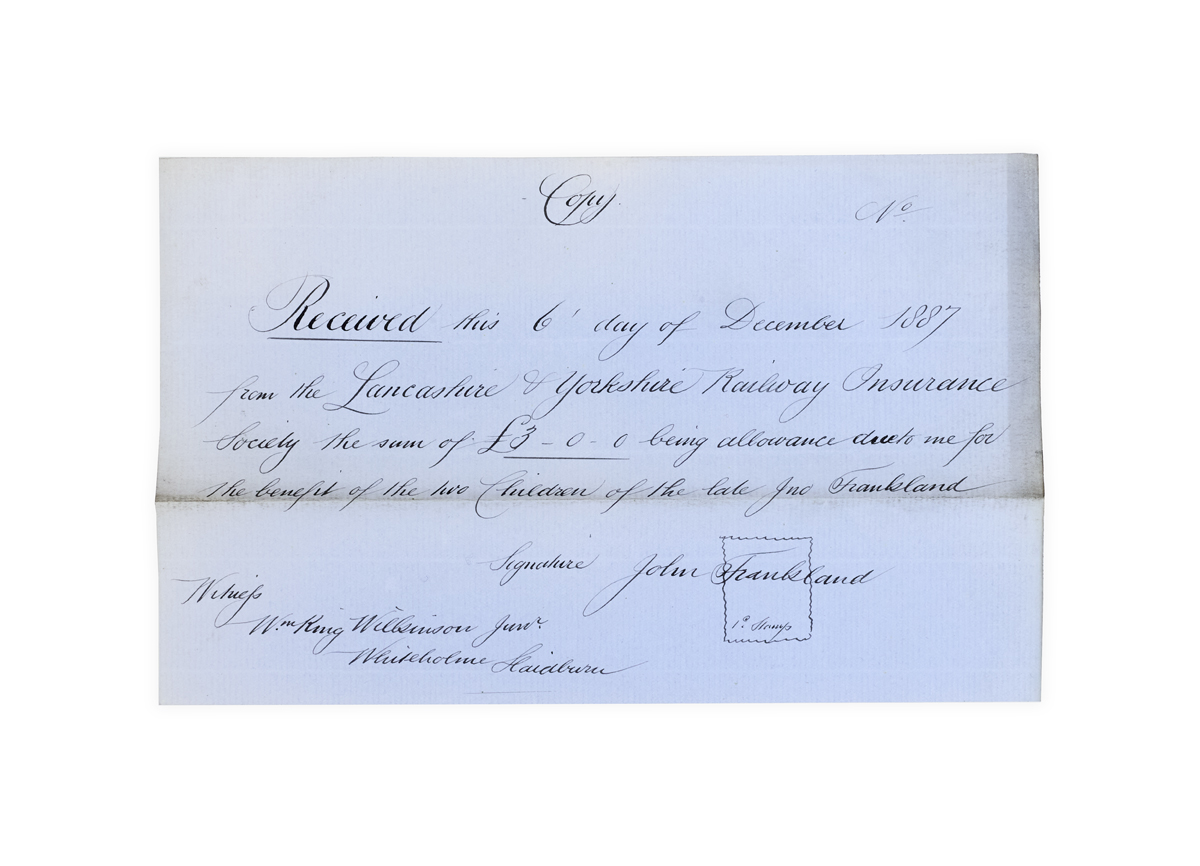
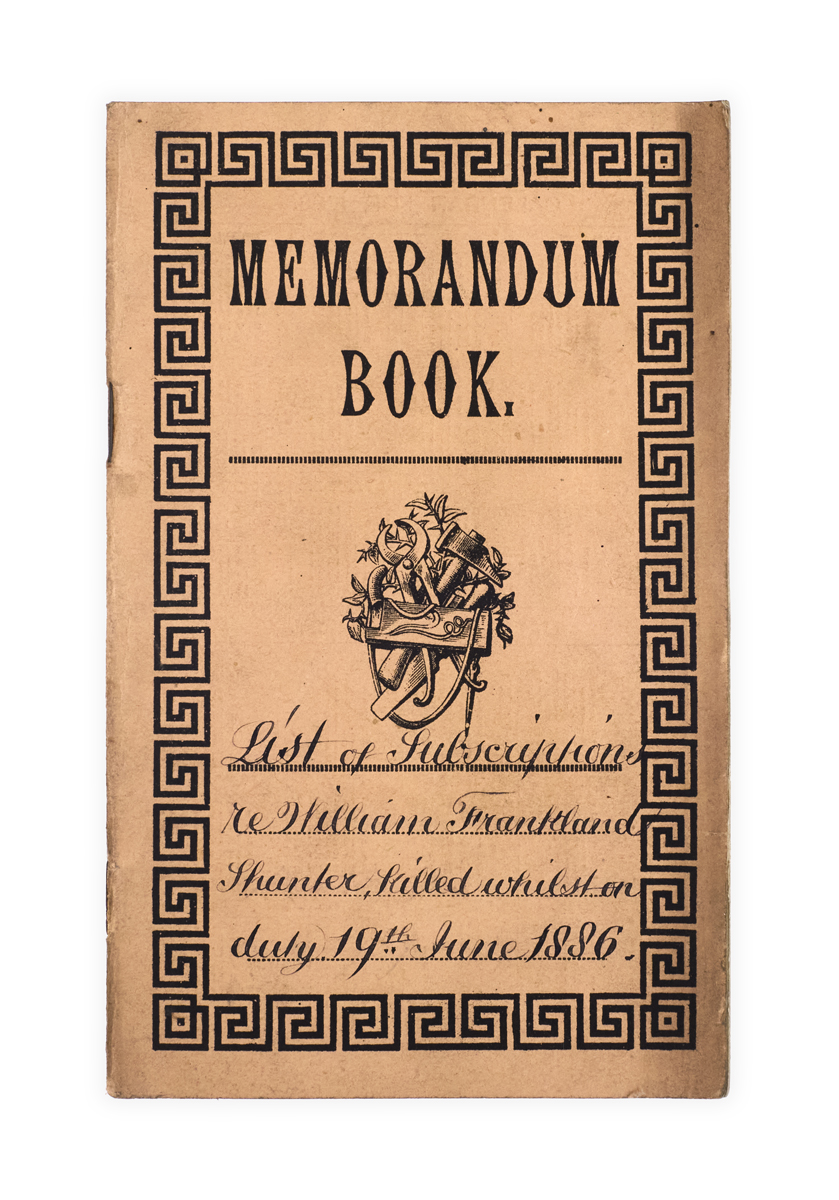
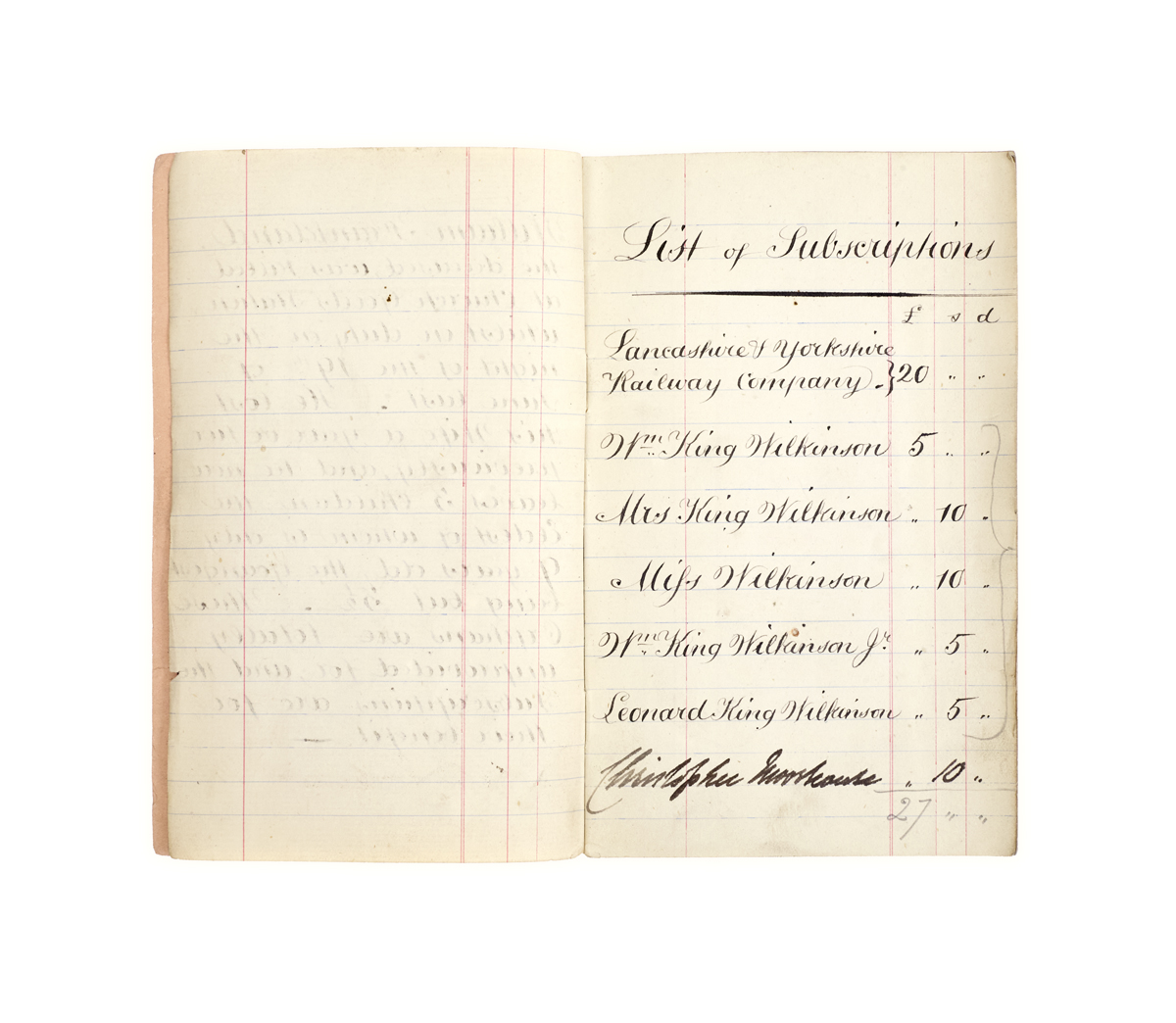
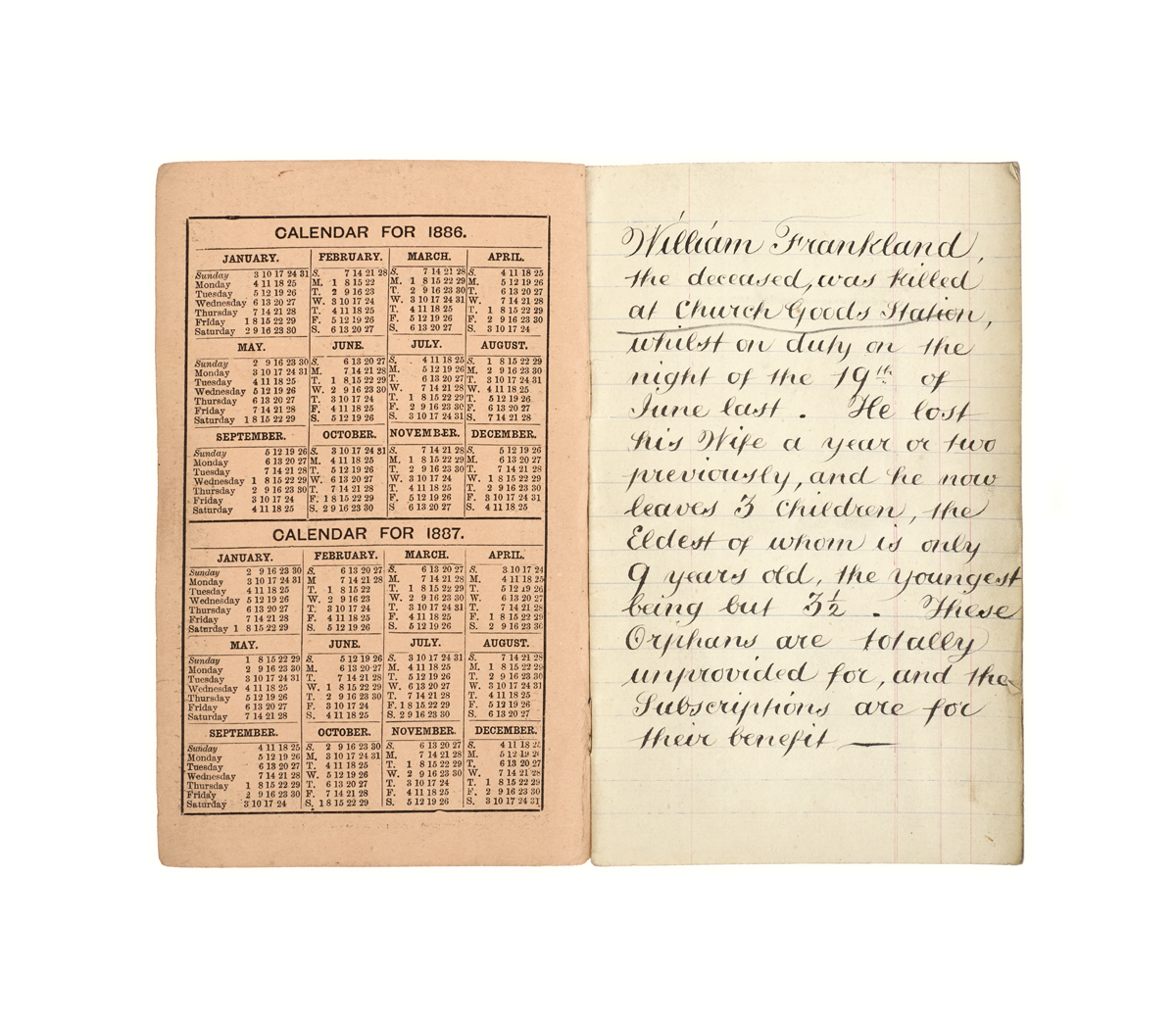
An archive of c. 50 items comprising a memorandum book from the Lancashire Royal Infirmary containing a manuscript list of subscriptions for the maintenance of Frankland’s children, a telegram from the Lancashire and Yorkshire Railway Company, pressed copies of autograph letters from William Wilkinson and Leonard King Wilkinson to Christopher Moorhouse and H.M. Cooper of the Lancashire and Yorkshire Railway Company, autograph letters signed from Moorhouse and Cooper to the Wilkinsons, one autograph letter signed by a local rector, and manuscript copies of receipts of funds received by the Wilkinsons on behalf of John Frankland for the benefit of William Frankland’s three children; some dust-soiling to the paper wrappers containing pressed copies, else very well preserved.
Added to your basket:
A large collection of manuscript correspondence relating to the death of William Frankland.
An interesting archive relating to the death of William Frankland, a Lancashire railway worker killed in a shunting accident, consisting largely of manuscript correspondence from his father’s landlords – two solicitors evidently working pro bono – fighting to obtain an insurance payout from the railway company responsible for Frankland’s death, to be used for the maintenance of his three orphaned children, all under the age of ten.
William Frankland of Accrington was killed at Church Station (now Church and Oswaldtwistle Station) whilst on duty on 19 June 1886; he had lost his wife a year or two before the accident and his youngest son, aged three and a half, had been raised from birth by a relative as a result of the family’s straitened circumstances and his mother’s ongoing illness. The others, aged eight and nine, were entrusted after their father’s death to their grandfather, John Frankland, described in the correspondence as a ‘poor farmer’. A letter from the rector of Clitheroe confirms that the ‘Rwy Co. has paid £10 for the poor man’s funeral expenses, but nothing … for the children who are – I am informed – too young to do anything for themselves. Wm Frankland was not in any insurance co. or burial fund that his relatives know of; except it be in the Fund which I think every Railway employee must join’.
The King-Wilkinson family possessed a significant amount of land in and around Slaidburn (by 1927 they owned almost 6000 acres scattered across forty farms), including the Edge, the farm where William Frankland’s father lived. Solicitors Leonard King-Wilkinson and William King-Wilkinson Jr here intervene with the Lancashire and Yorkshire Railway Insurance Company, requesting that they provide funds for the newly orphaned children, an endeavour which would take several months to resolve.
The company first denied any obligation, writing that his circumstances ‘show no liability whatever on the part of the Company – in fact he was found run over while performing his work, and he was unable to give any account of the transaction which was witnessed by his person, and the inference was that he slipped under the wagons in connection with which he was working’. However, the company admitted that they were required to pay £29 for the maintenance of the children (they had used £10 of Frankland’s insurance fund on the funeral), which they insisted on distributing through a subscription fund, perhaps a sort of tontine scheme.
The subscribers are listed as the railway company (£20), Mr King Wilkinson (£5), Mrs King Wilkinson (10s), Miss Wilkinson (10s), Mr King Wilkinson Jr (5s), Leonard King Wilkinson (5s), and Christopher Moorhouse of the Lancashire and Yorkshire Railway Insurance Company (10s). Much of the correspondence consists of disputes between the King-Wilkinsons and the railway company (who failed to respond to the solicitors’ letters for over a month after Frankland’s death) regarding the frequency of instalments to be paid and the particulars of the subscription scheme, as well as manuscript copies of receipt of the funds by Frankland’s father.
The letters contained here span from the period immediately after Frankland’s death to May 1888, when the insurance company had made the last of its required payments, the intervention of the King-Wilkinsons and the difficulties presented by the railway company providing an unusual insight into questions of labour and social welfare in Lancashire at the end of the nineteenth century.