‘A Simple Peasant Woman’ Against Protestantism
GILLET, Didiere.
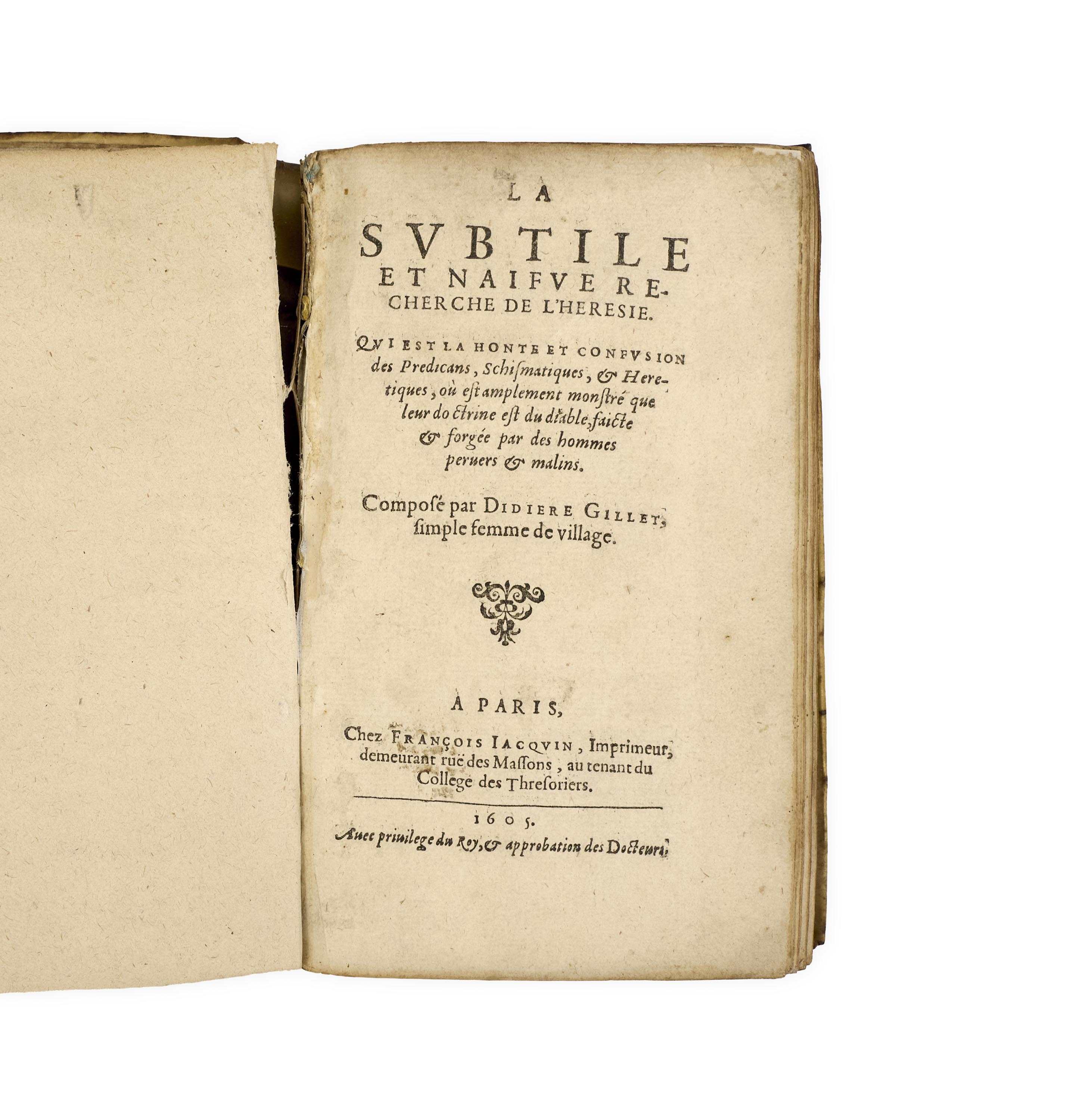
La subtile et naifve recherche de l’heresie. Qui est la honte et confusion des predicans, schismatiques, et heretiques, où est amplement monstré que leur doctrine est du diable, faicte et forgée par des hommes pervers et malins. Composé par Didiere Gillet, simple femme de village. Paris, François Jacquin, 1605.
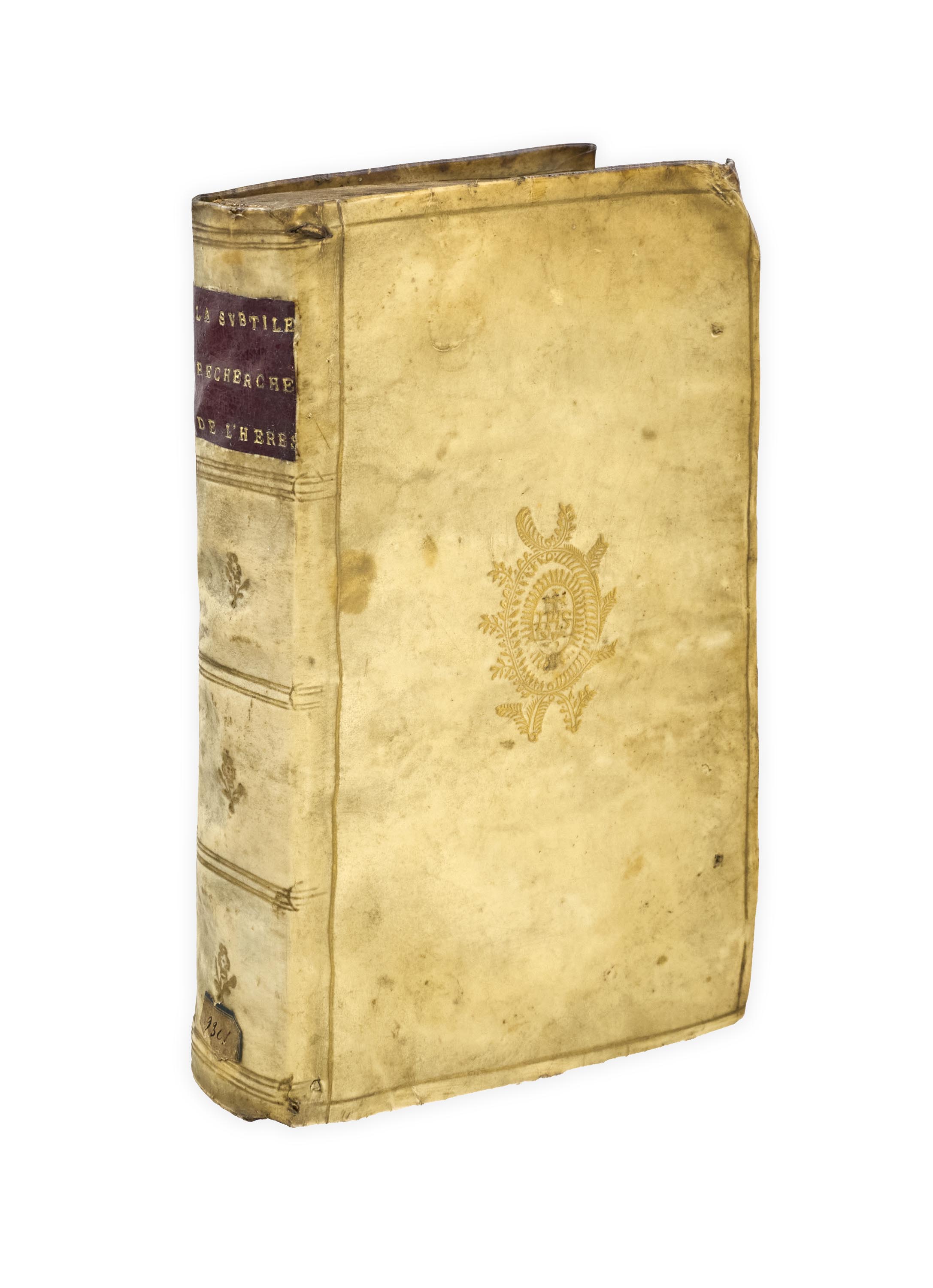
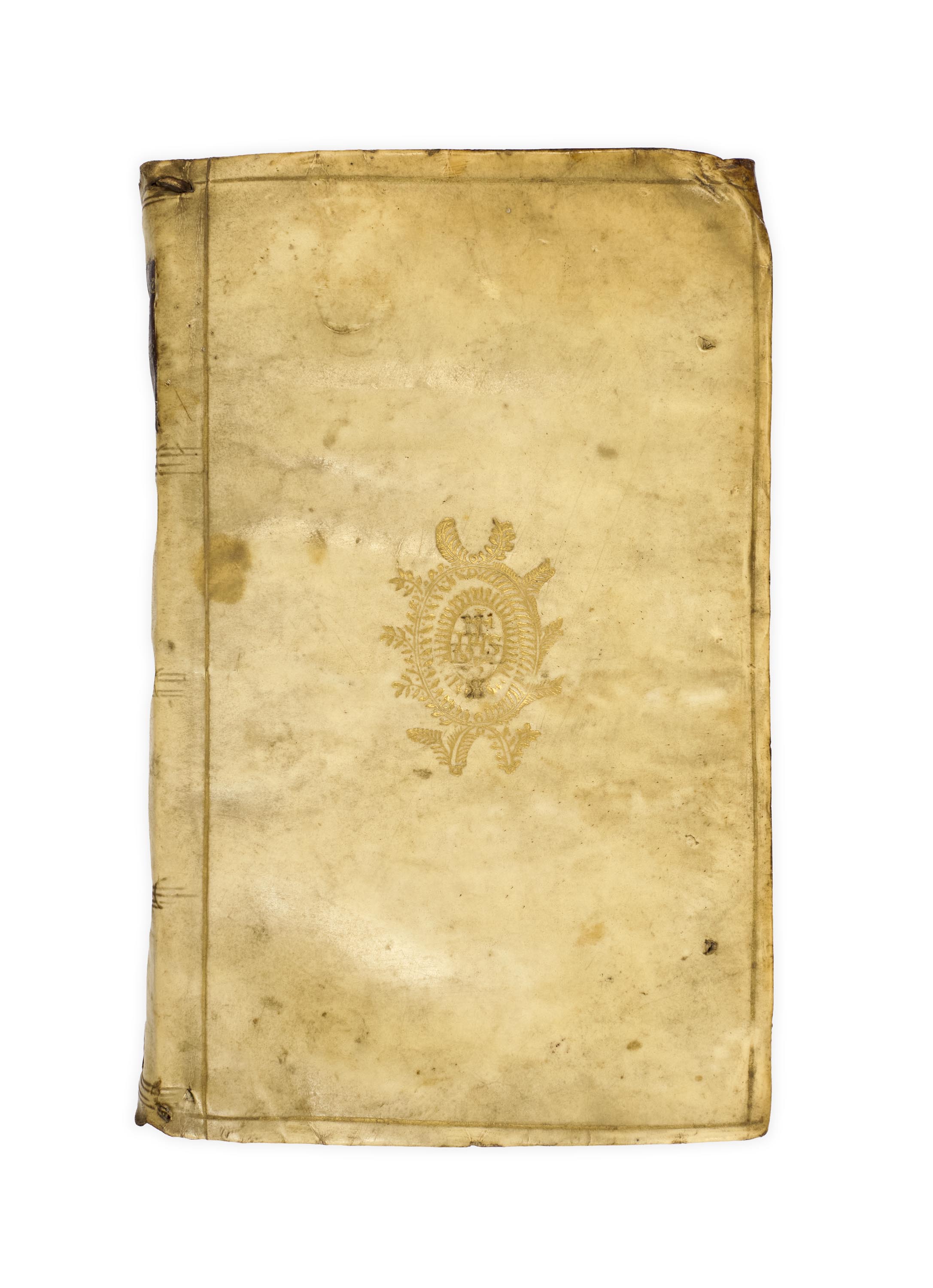
8vo, pp. 12, [4], 11, [1, blank], 429, [1]; bound without final blank leaf, woodcut initials and headpieces; some toning, small worm track to outer margins of pp. 113–145, light damp-staining to upper corners from p. 321; a very good copy re-cased in contemporary limp vellum, single gilt fillet borders and gilt oval centrepieces formed from wreaths to covers, the upper cover with central ‘IHS’ device superimposed over the initials ‘H.D.B.’, the lower cover with central ‘MA’ device, flat spine ruled in gilt and with repeated gilt flower stamp, later gilt-lettered red morocco spine label, all edges gilt; ties wanting, endbands worn, some cockling and staining, endpapers renewed, front hinge splitting at head; 1887 bookplate of Victor Duchâtaux with signature of his son-in-law Georges Henri Renard below.
Added to your basket:
La subtile et naifve recherche de l’heresie. Qui est la honte et confusion des predicans, schismatiques, et heretiques, où est amplement monstré que leur doctrine est du diable, faicte et forgée par des hommes pervers et malins. Composé par Didiere Gillet, simple femme de village.
Very rare first edition of this remarkable Counter-Reformation attack on Protestantism by Didiere Gillet, ‘a simple peasant woman’, the title overtly blaming heresy on ‘perverse and cunning men’, dedicated to two powerful Catholic women.
Literally nothing is known of Didiere Gillet (no other works bear her name), and it has even been suggested that she is a fiction, her name a cover for a male Jesuit writer seeking ‘perhaps to make the point that even someone as naive as a peasant woman could unmask the antichristian errors of the heretics’ (Clark, Thinking with Demons (OUP, 1997), p. 343). Internal evidence, however, surely suggests otherwise, that she was in fact a real and rare female contributor to the religious debates of her time; she is certainly treated as such by the few other scholars who have discussed her work.
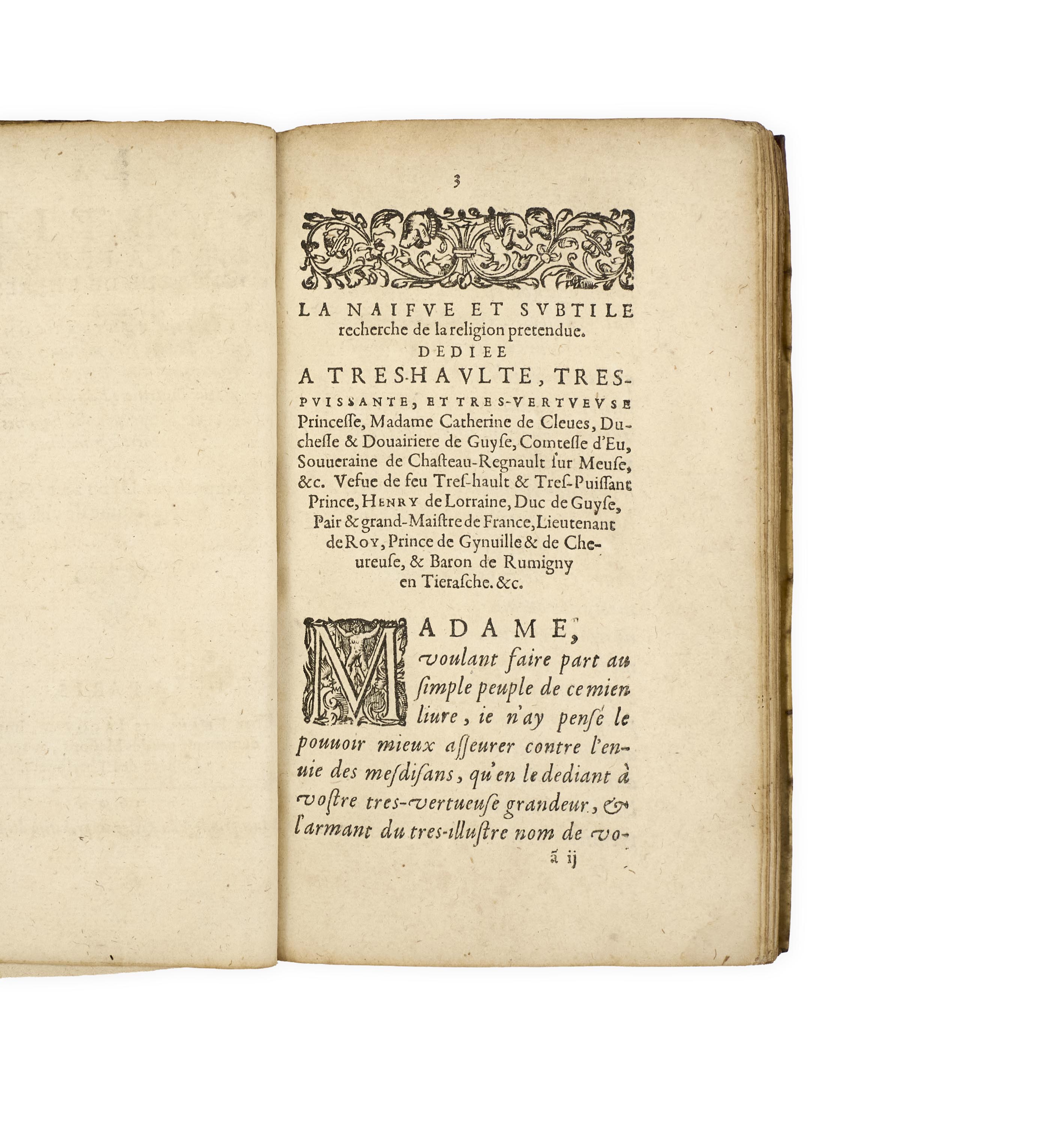
In her dedicatory epistle to Catherine of Cleves (1548–1633) – wife of Henri I, Duc de Guise, founder of the Catholic League – Gillet refers to her own father as a ‘loyal officer’ of the Duc, and to Catherine as her protector and ‘one of the best Catholics in the world’. Verses in honour of Anna d’Este (1531–1607) follow, with admiring references to the Guises’ efforts to stamp out heresy. Gillet’s preface to the reader – which describes Luther and Calvin as ‘monsters’ – defends her work by asking why God should not use Christian women to champion the true faith.
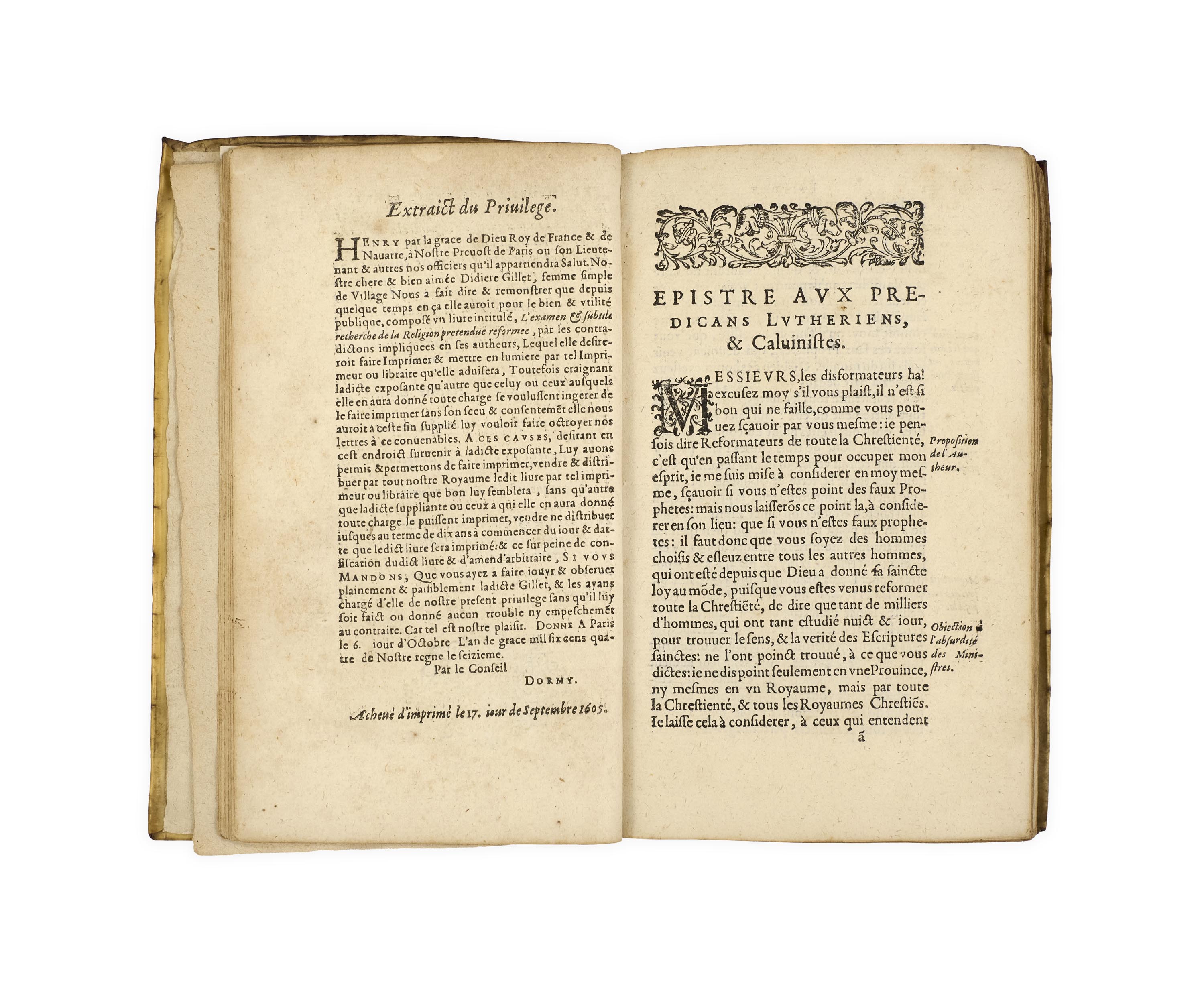
The privilege, issued in the name of Henri IV, refers directly to ‘nostre chère et bien aimée Didiere Gillet, femme simple de village’, and grants her permission to issue her work through the printer of her choice. Personal privileges addressed to women were extremely rare in this period: Michèle Clément and Michel Jourde, in their work on Louise Labé, note only five such women between 1505 and 1604, Gillet among them. In her preface, Gillet attributes any faults in printing to her unavailability when her work was going through the press.
The text proper opens with an address to Lutheran and Calvinist preachers, labelling them as ‘disformateurs’ rather than ‘reformateurs’. A series of chapters then deals with the attributes of God denied by heretics (his omniscience, omnipotence, mercifulness, justness, etc.), concluding that heretics believe in nothing at all. Further chapters follow on the Mass; the Ten Commandments; the Holy Scriptures; Purgatory; the Virgin Mary; the saints and images thereof; Lent and fasting; the Holy Land; holy water; the sign of the cross; prayers for sins; marriage; and the Trinity. The concluding section identifies ten ‘marks’ for ‘knowing’ true religion.
No copies traced in the UK and only one located in the US (University of Pennsylvania). USTC 6025948. A second edition appeared in 1609, also very rare.