The Known and Imaginary World in Restoration England
HEYLYN, Peter.
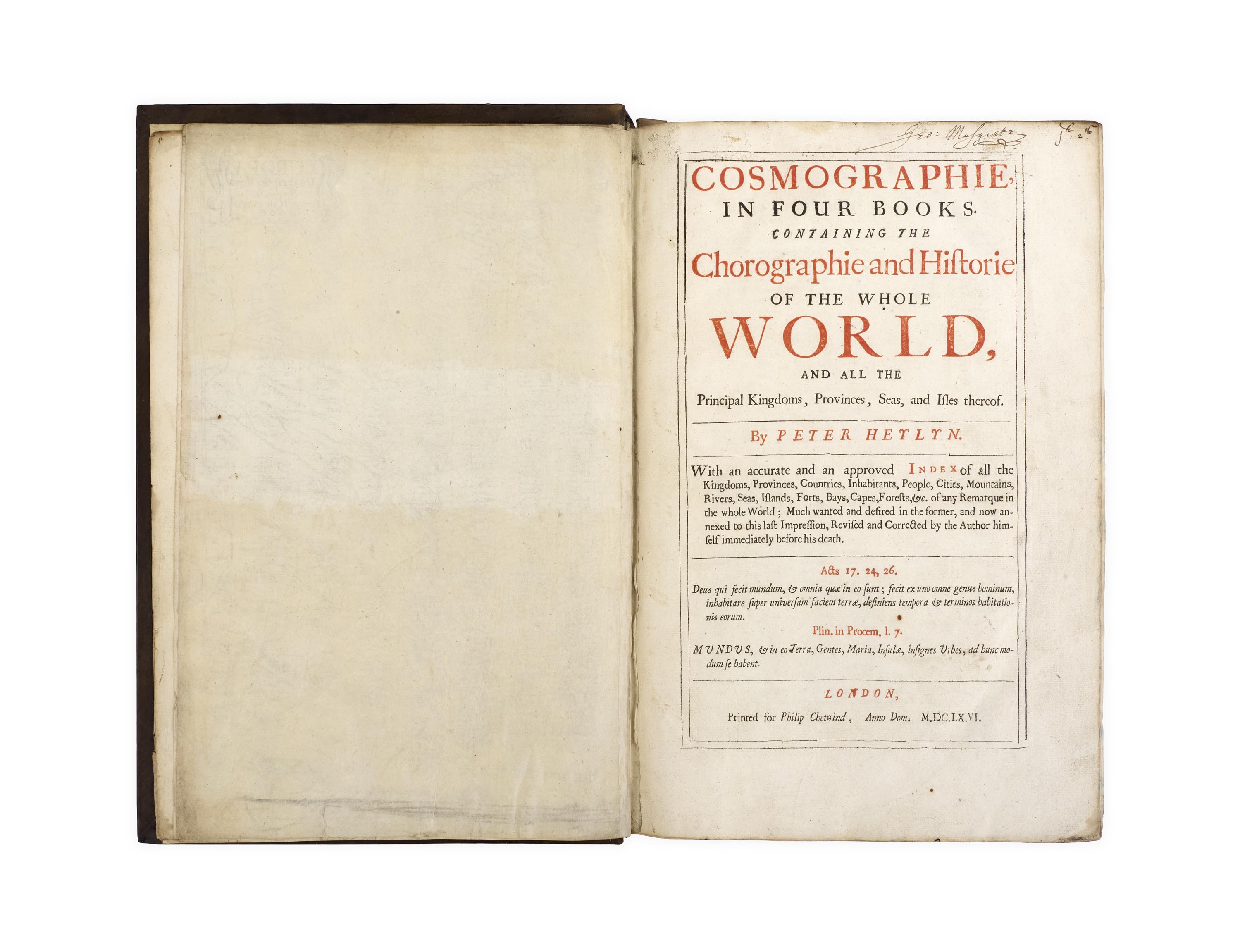
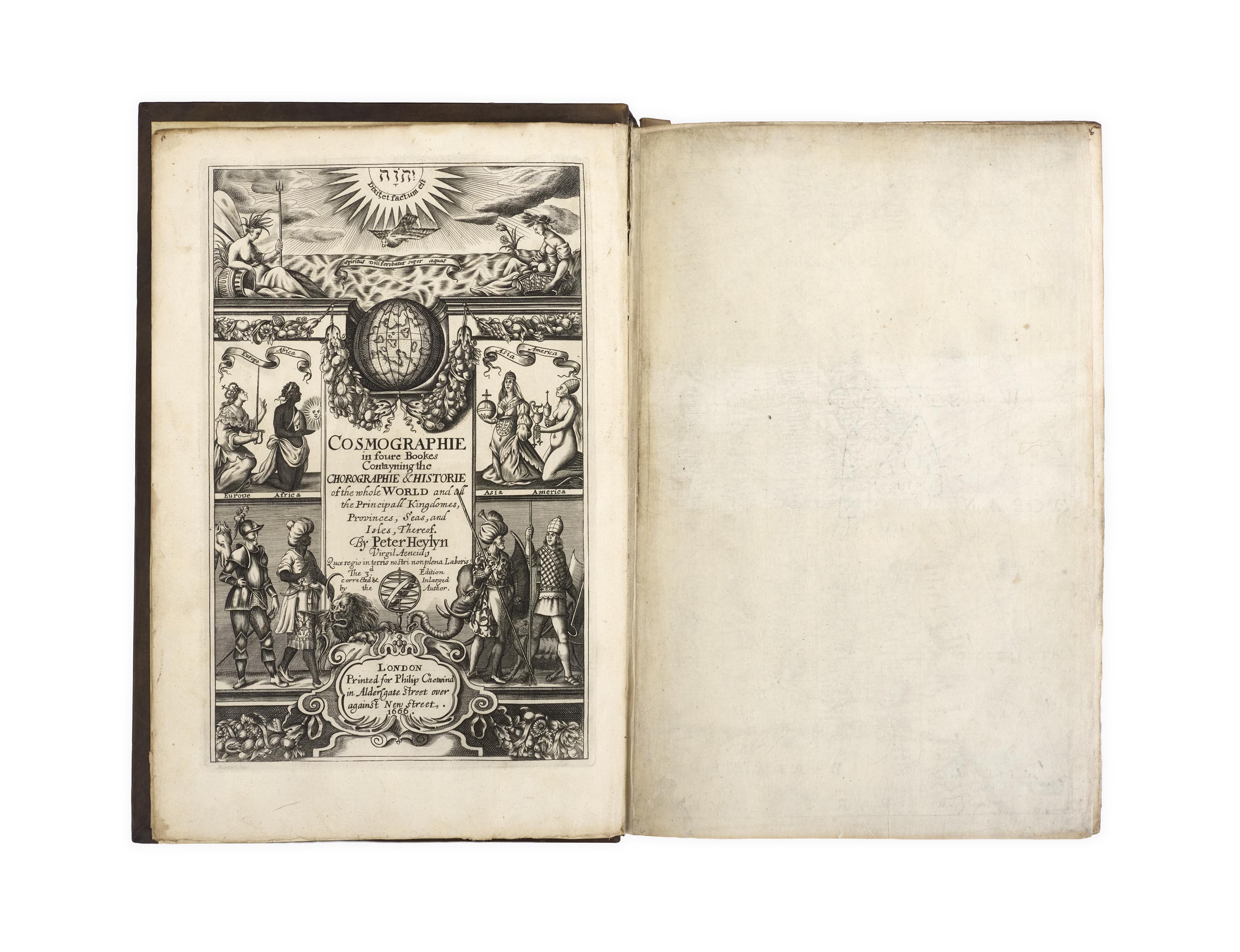
Cosmographie in four Books: containing the Chorographie and Historie of the whole World, and all the principal Kingdoms, Provinces, Seas and Isles thereof. London, Philip Chetwind, 1666 [i.e. 1667].
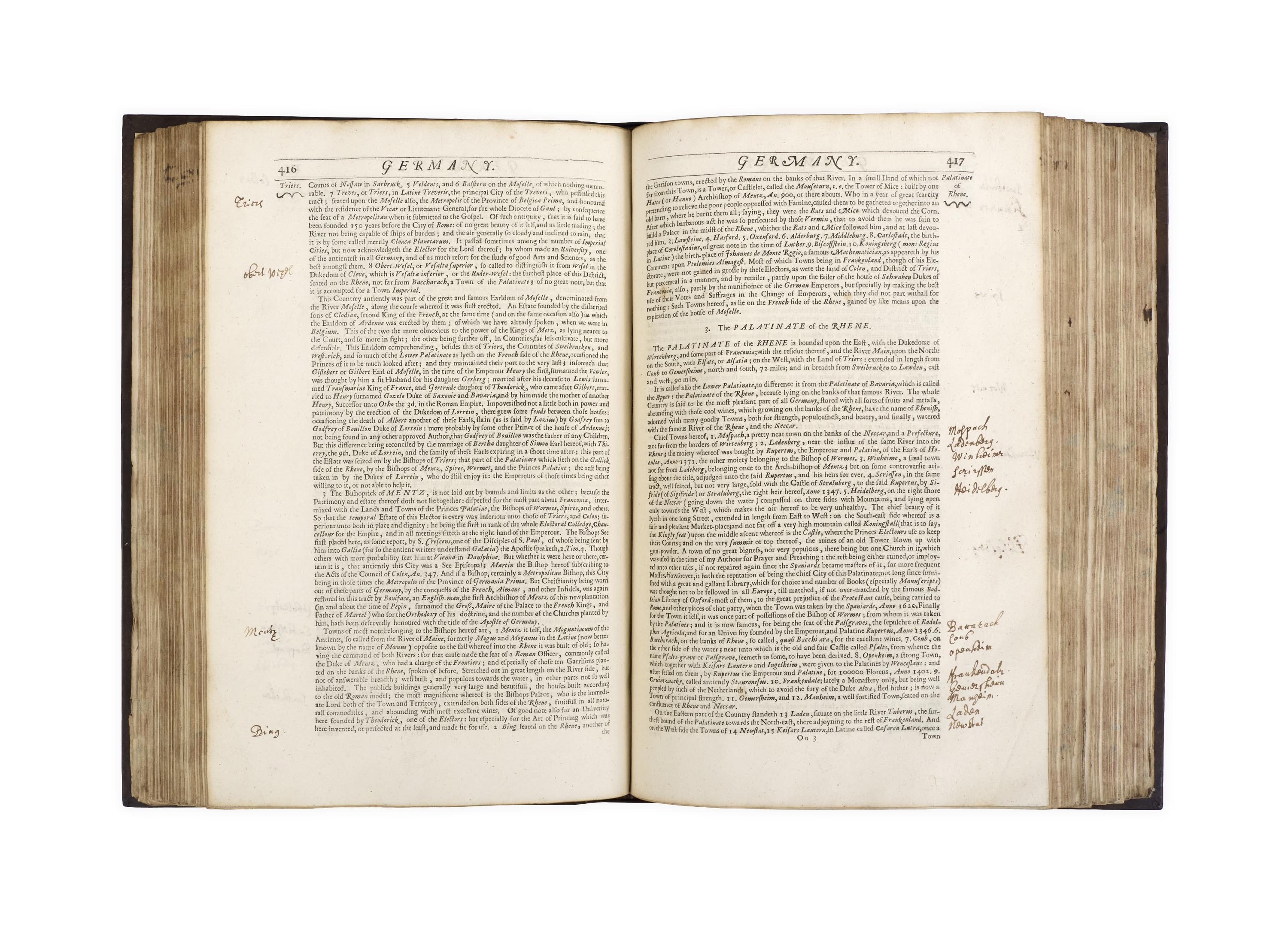
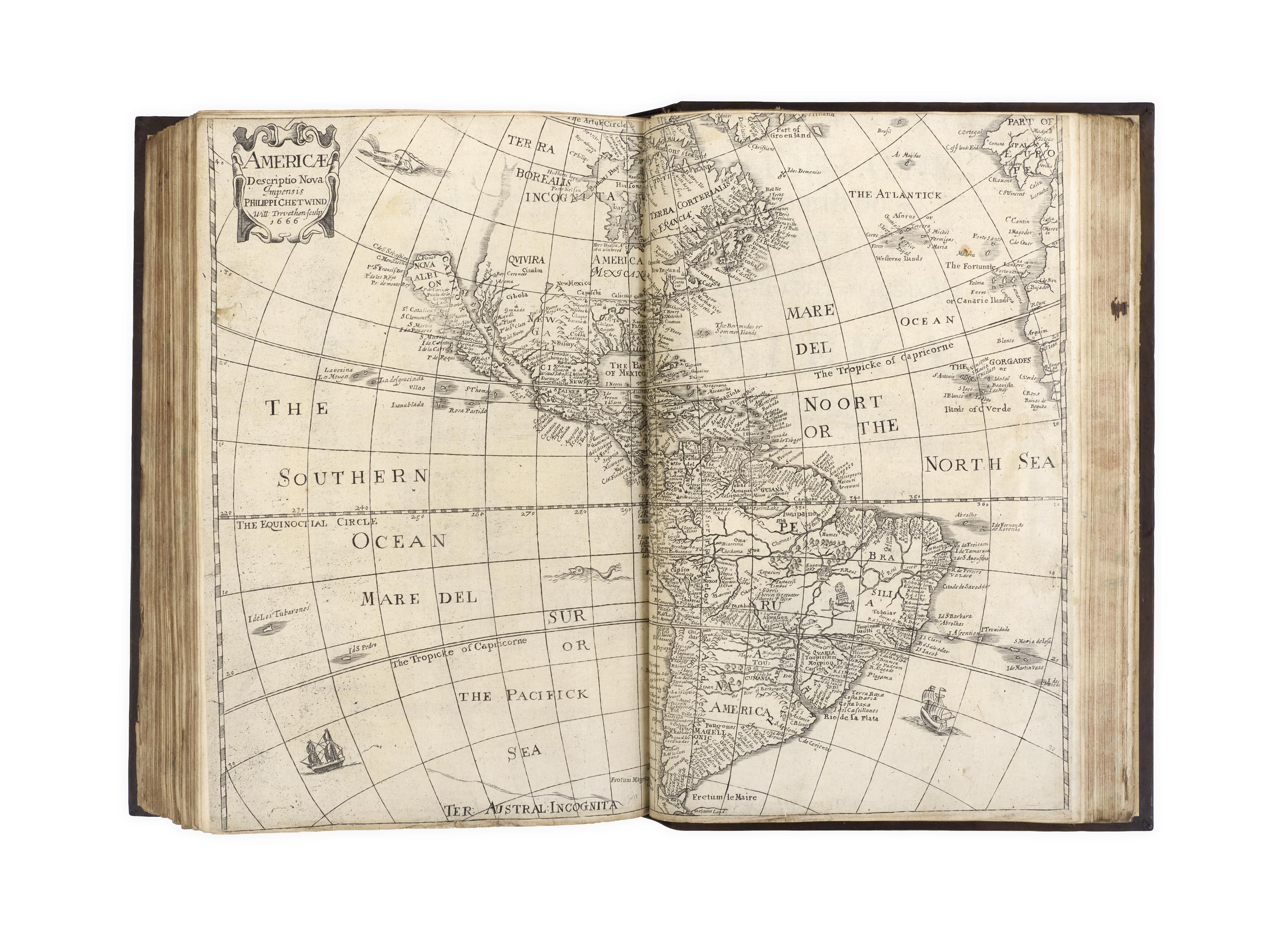
Folio, pp. [12], 1098 [i.e. 1088], [4], 1089–1095, [41] (of 43, wanting final page of index); with an additional engraved title page and four double page engraved maps of Europe, Asia, Africa and America mounted on stubs; title-page printed in red and black, five divisional title-pages dated 1665, 1665, 1665, undated, and 1667; the maps reinforced with Japanese paper on the edges, but a good copy; in recent calf, preserving the original calf covers; ownership inscription to the title-page of George Musgrave with his annotations in the margins in the section on Germany, and on a loose leaf laid in (originally an endpaper).
Added to your basket:
Cosmographie in four Books: containing the Chorographie and Historie of the whole World, and all the principal Kingdoms, Provinces, Seas and Isles thereof.
Third edition of Peter Heylyn’s Cosmographie, one of the most ambitious English geographical surveys of the seventeenth century. The final appendix discusses ‘Terra Australia Incognita, or the Southern Continent’ and various voyages across Australia, Papua New Guinea and the Solomon Islands, as well as fanciful descriptions of the poetically inspired lands of Utopia, New Atlantis, Painters Wives Island, The Lands of Chivalrie, and The New World in the Moon.
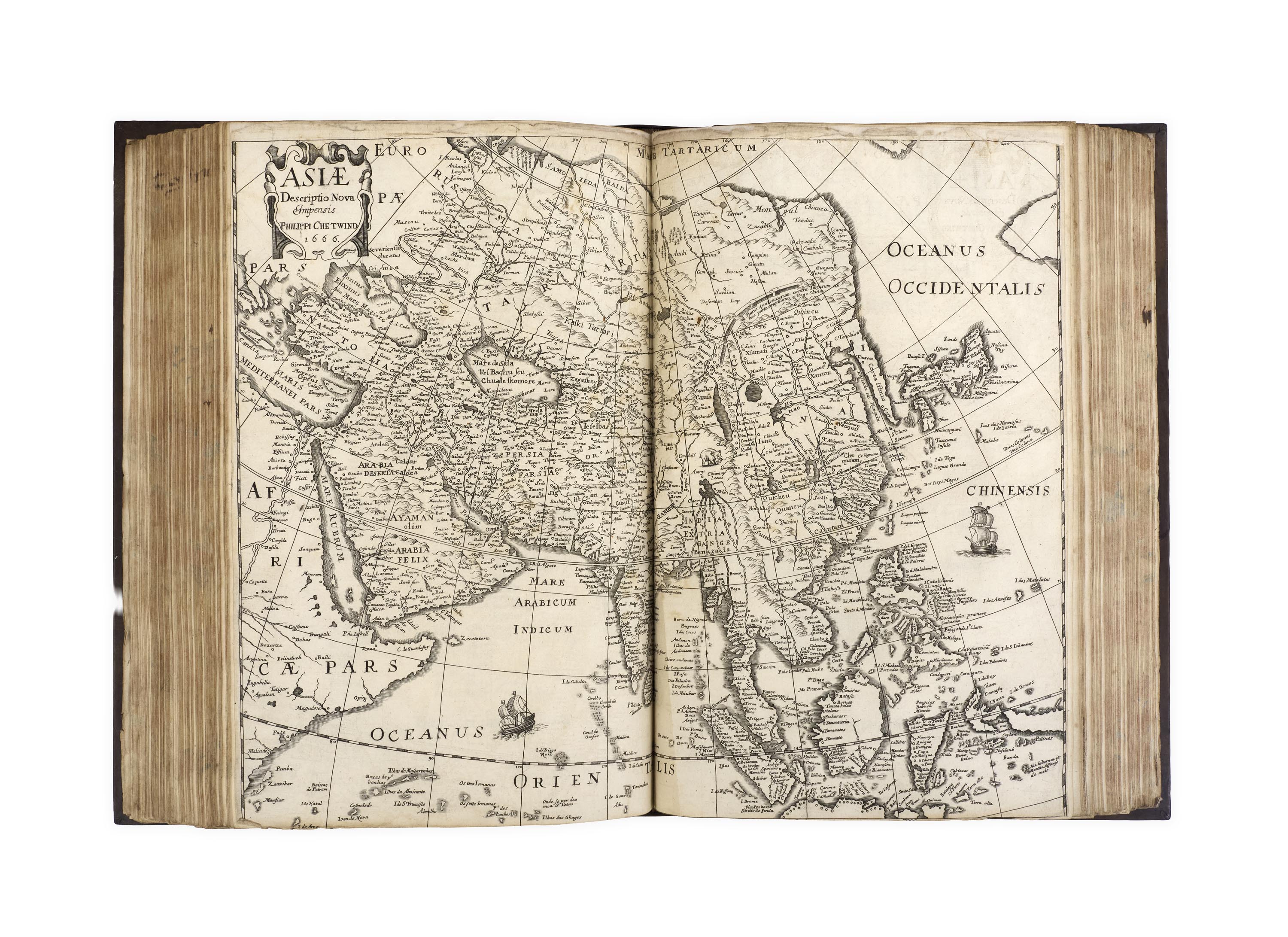
A prominent polemicist and Royalist clergyman, who served as Chaplain-in-Ordinary to Charles I, Peter Heylyn (1599–1662) conceived his Cosmographie (1652) as a comprehensive English survey of the known world, which would combine chorography and history with political and theological description of each of the continents. It is enlarged from the author’s earlier Microcosmos (1621) reflecting both the rapid expansion of geographical knowledge in the seventeenth century and Heylyn’s deeply rooted conviction that the study of nations was inseparable from their civil and ecclesiastical history. Its detailed survey extends from the kingdoms of Western Europe to Muscovy, Arabia, India and China, and across the Atlantic to the English colonies in America, making it an indispensable work of reference in Restoration England and ‘sufficiently well regarded that the council of state saw fit to obtain a copy for their better instruction’ (ODNB). It contains four, fine double-page maps of Europe, Asia, Africa, and America, with the latter showing California as an island.
Provenance:
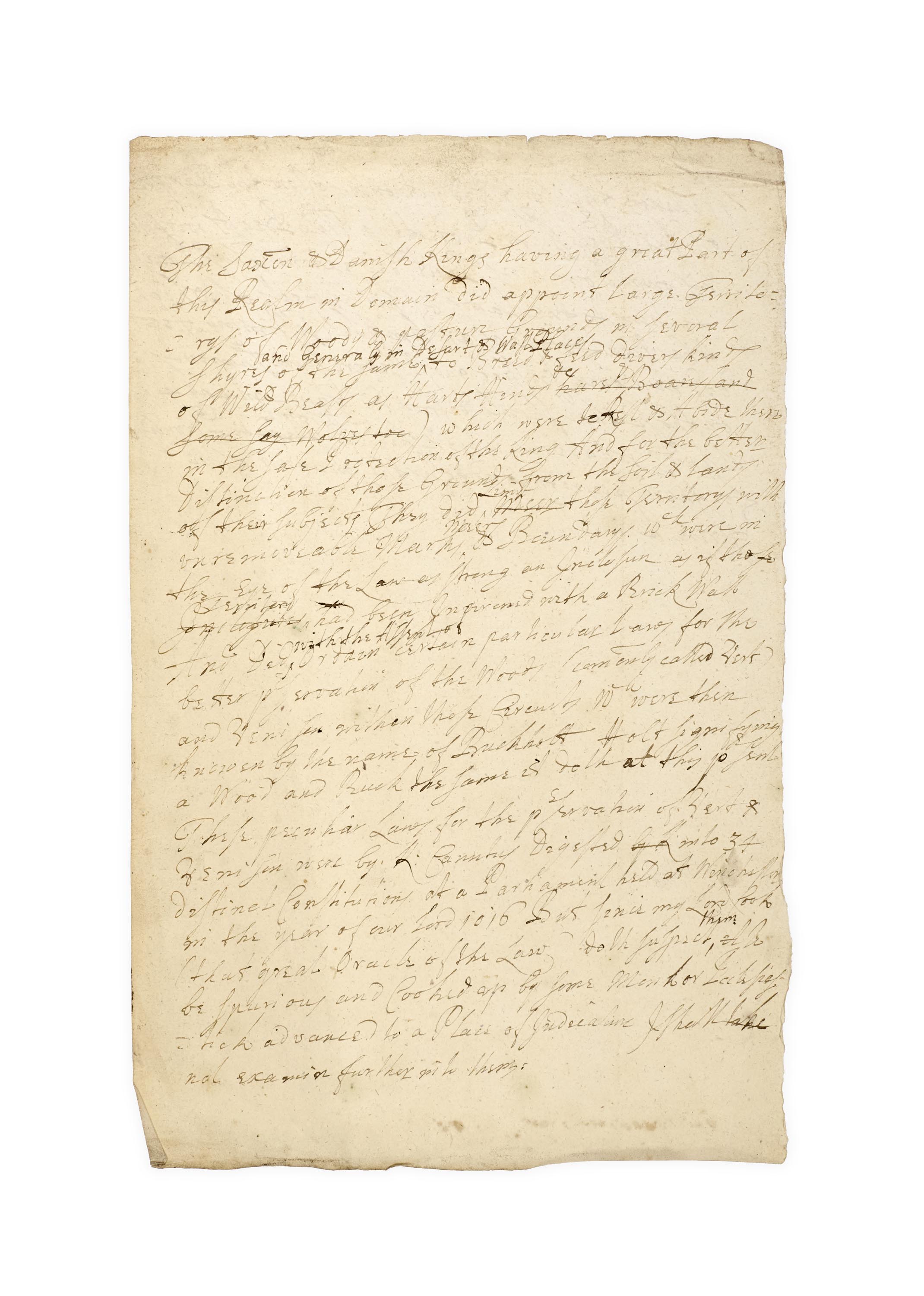
George Musgrave (1648–1721) of Nettlecombe, Somerset, brother of the physician and antiquary William Musgrave (1655–1721, Fellow of the Royal Society, for which he acted as secretary, and editor of the Philosophical Transactions in 1685). George, who studied at Exeter College, Oxford, and then qualified as a barrister, was a friend of Edward and Mary Clarke, the friends and correspondents of John Locke. The loose leaf consists of notes made on the Saxon and Danish kings discussing the establishment of royal forests, hunting rights, and the preservation of venison under King Canute.
ESTC R177977; Wing H1691A.