Risen From the Dead

The Pilgrims of the Sun; a Poem … London, John Murray, and Edinburgh, William Blackwood, 1815.

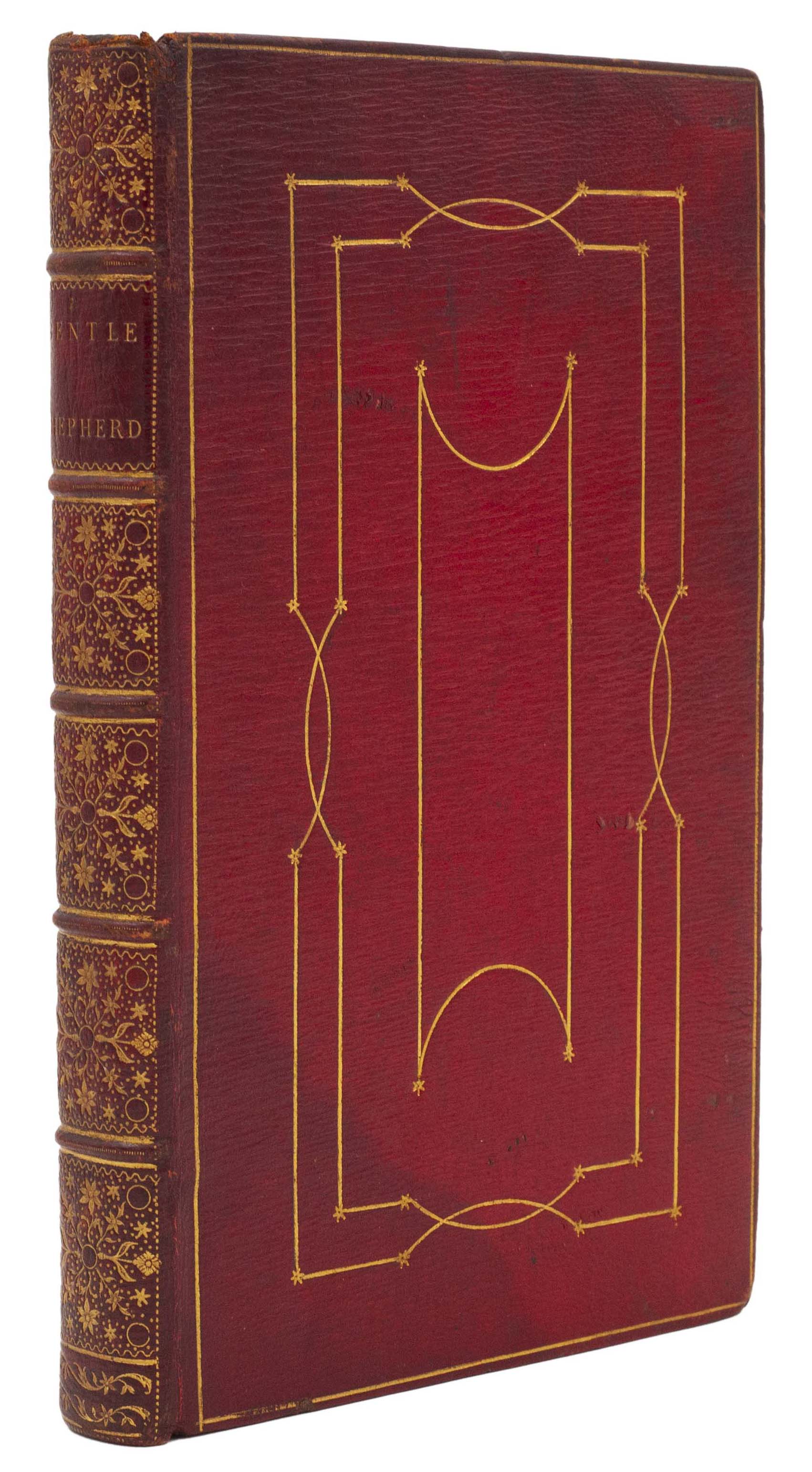
8vo, pp. [10], 148, [2 (advertisement, blank)], with half-title; a fine copy, uncut in later half calf with marbled sides; rebacked, covers bowed; contemporary ownership inscription of Charles Moray to title, later armorial bookplate of the House of Abercairny (the Moray family seat).

£200

Approximately:
US $271€228

Add to basket Make an enquiry

Added to your basket:
The Pilgrims of the Sun; a Poem …

Checkout now

First edition, first issue, of a long poem by the Scottish shepherd and poet James Hogg, dedicated to Byron and detailing the journey of a local young woman, Mary Lee, to a heavenly world and back to earth, escorted by the spirit Cela.

The work is dedicated to Byron ‘Not for thy crabbed state-creed, wayward wight, | Thy noble lineage, nor they virtues high’, but for ‘thy bold and native energy’. Hogg (c. 1770–1835) is perhaps best known for The Queen’s Wake, a lengthy narrative poem on the return of Mary, Queen of Scots to Scotland from France (first 1813); by this time his reputation as ‘one of the leading poets of his generation was now established. As a rival of Scott and Byron among the fashionable poets of the 1810s he produced a formidable output in the years following the publication of The Queen’s Wake. The third edition of that poem (1814) contains important revisions and was followed in 1815 by Pilgrims of the Sun, dedicated to Byron’ (ODNB).

Here, the gentle maiden Mary Lee is granted magnificent visions of the sun, sea, earth, and heavens with her companion, Cela, a ‘wight … with face like angel’s, mild and sweet; | his robe was like the lilly’s bloom, | and graceful flowed upon his feet’. Cela returns her to her home in Carterhaugh, and she – now invisible – witnesses her widowed mother mourning her death.

Mary Lee awakens in the tomb, moments before a corrupt monk attempts to cut off her fingers to steal the rings with which she has been buried, and returns to her home and marries a gentle harpist, to her a reincarnation of her beloved Cela. At the end is a shorter piece, ‘Superstition’; both poems had been intended for a projected volume entitled ‘Midsummer Night’s Dreams’.

The first issue, published in Edinburgh in December 1814, has Murray named first in the imprint. After reading the poem in full, Murray was disappointed, and he issued it in London with a cancel title demoting himself from publisher to distributor only.