French Annotators of Livy
LIVY.
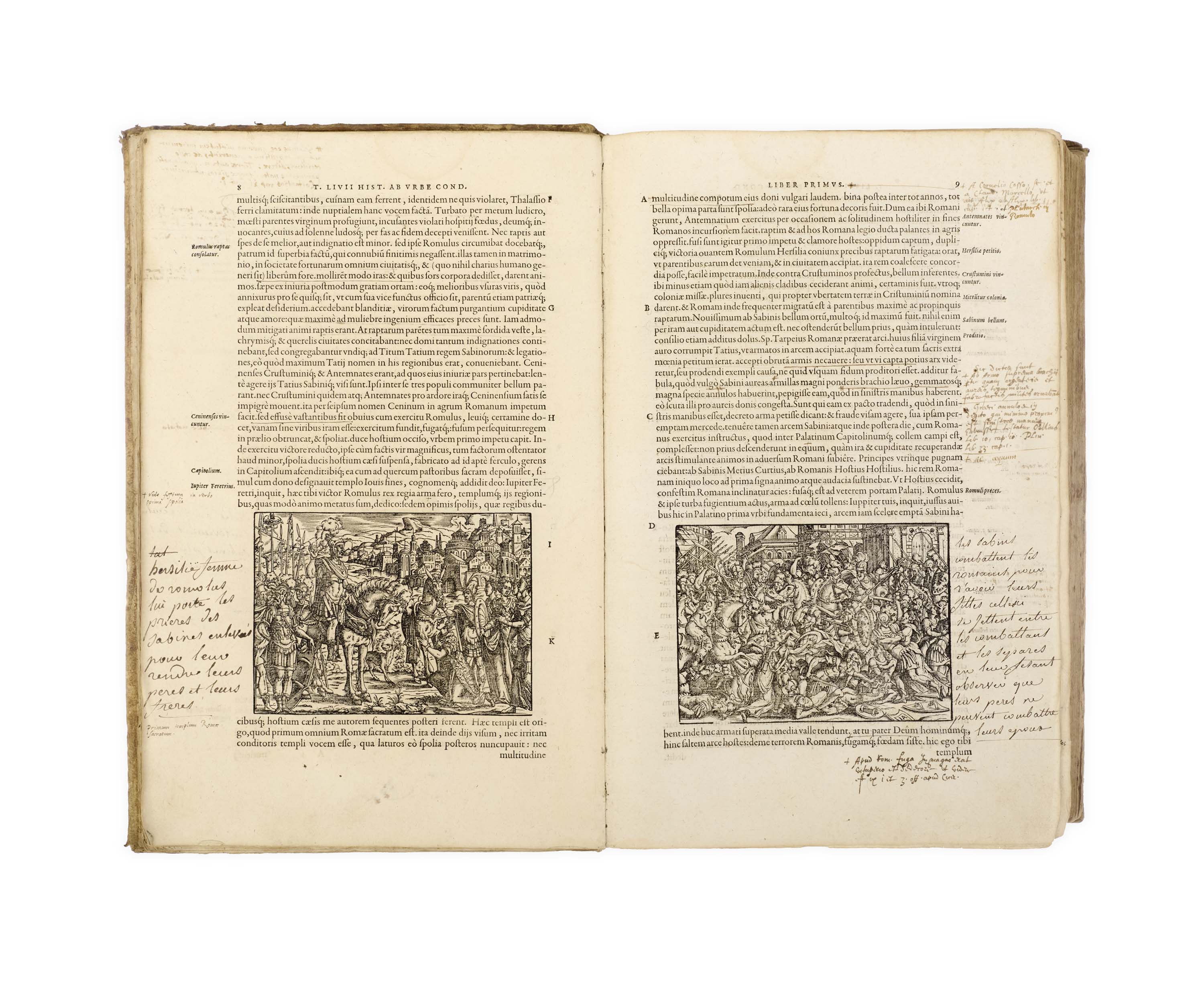
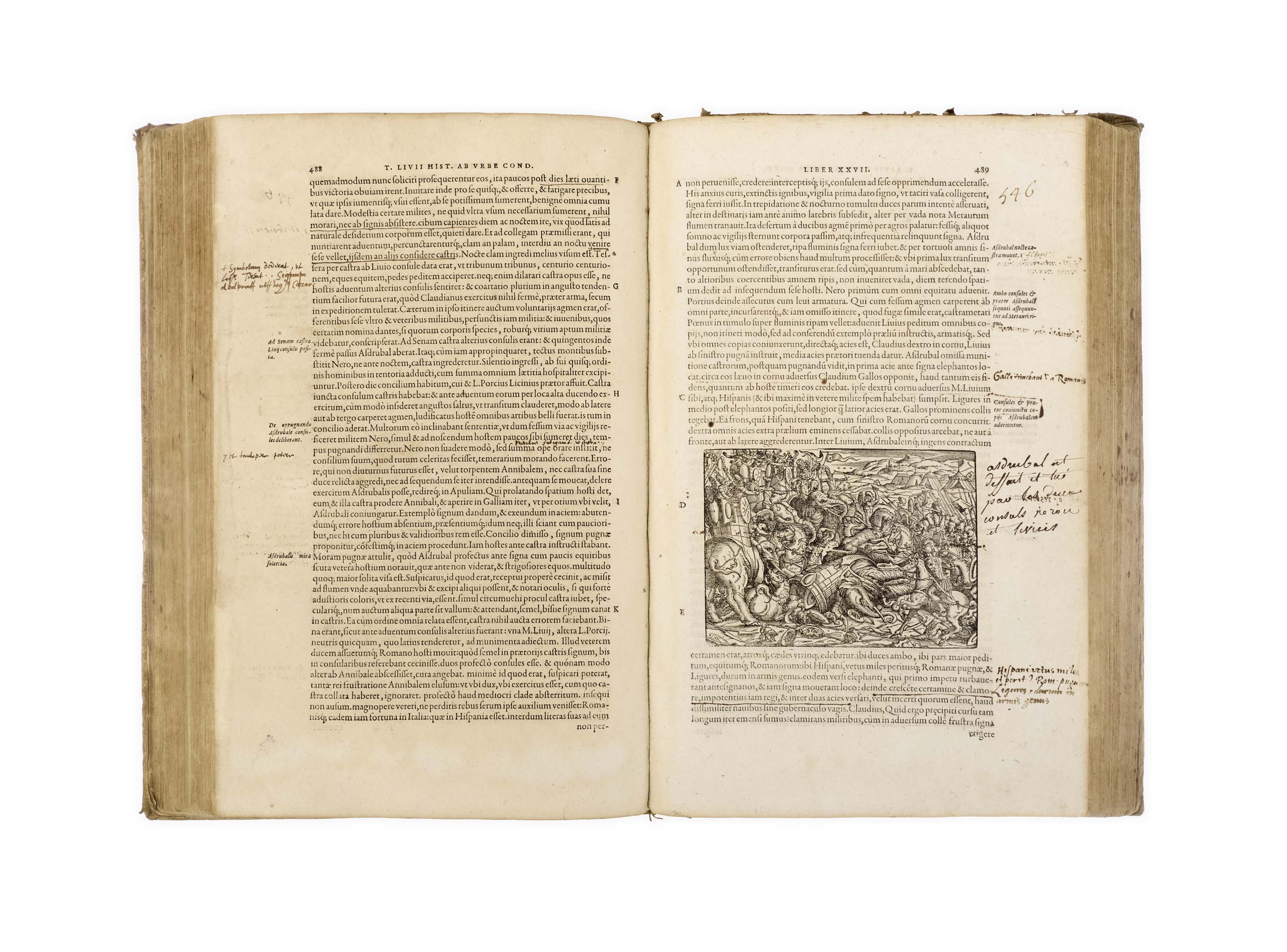
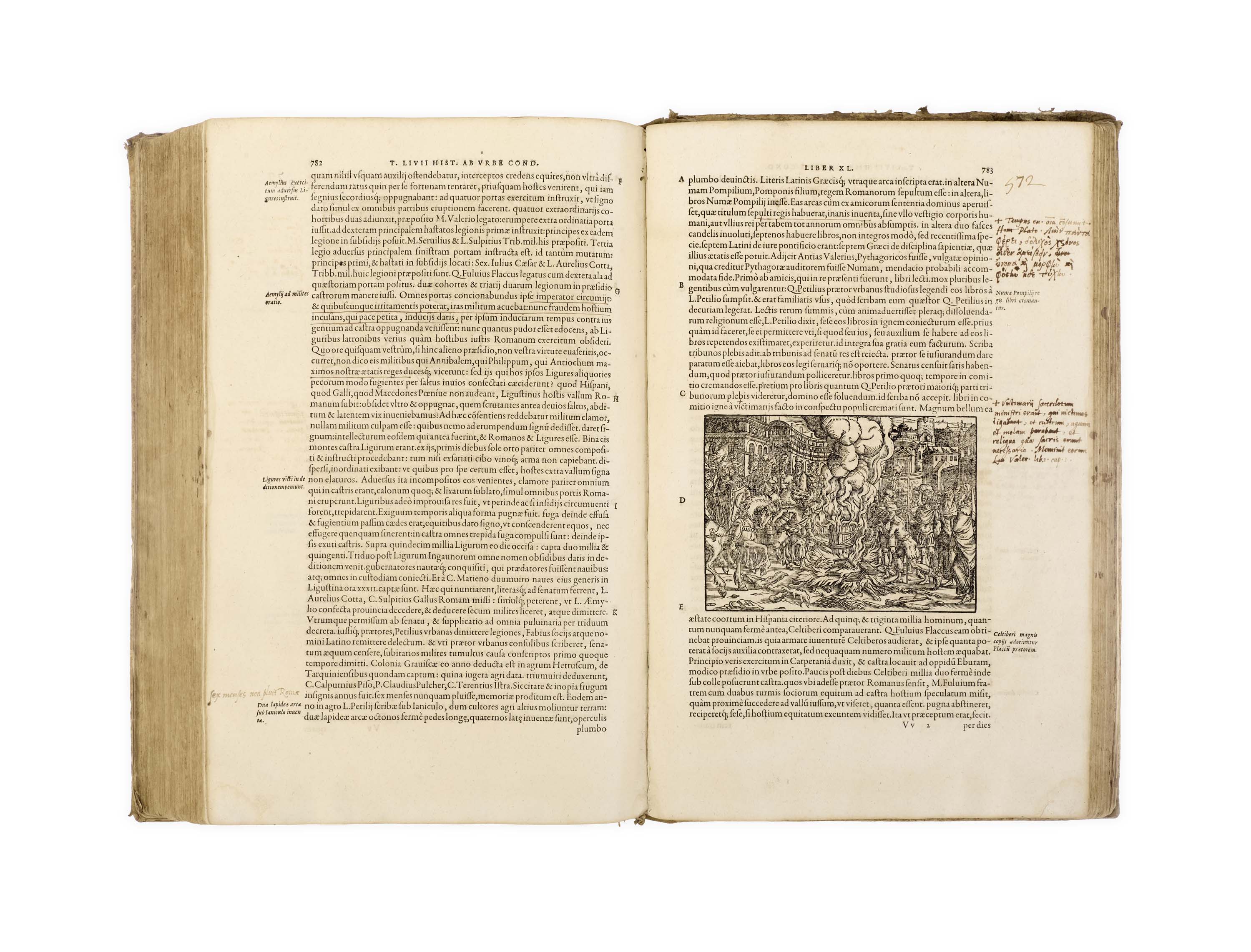
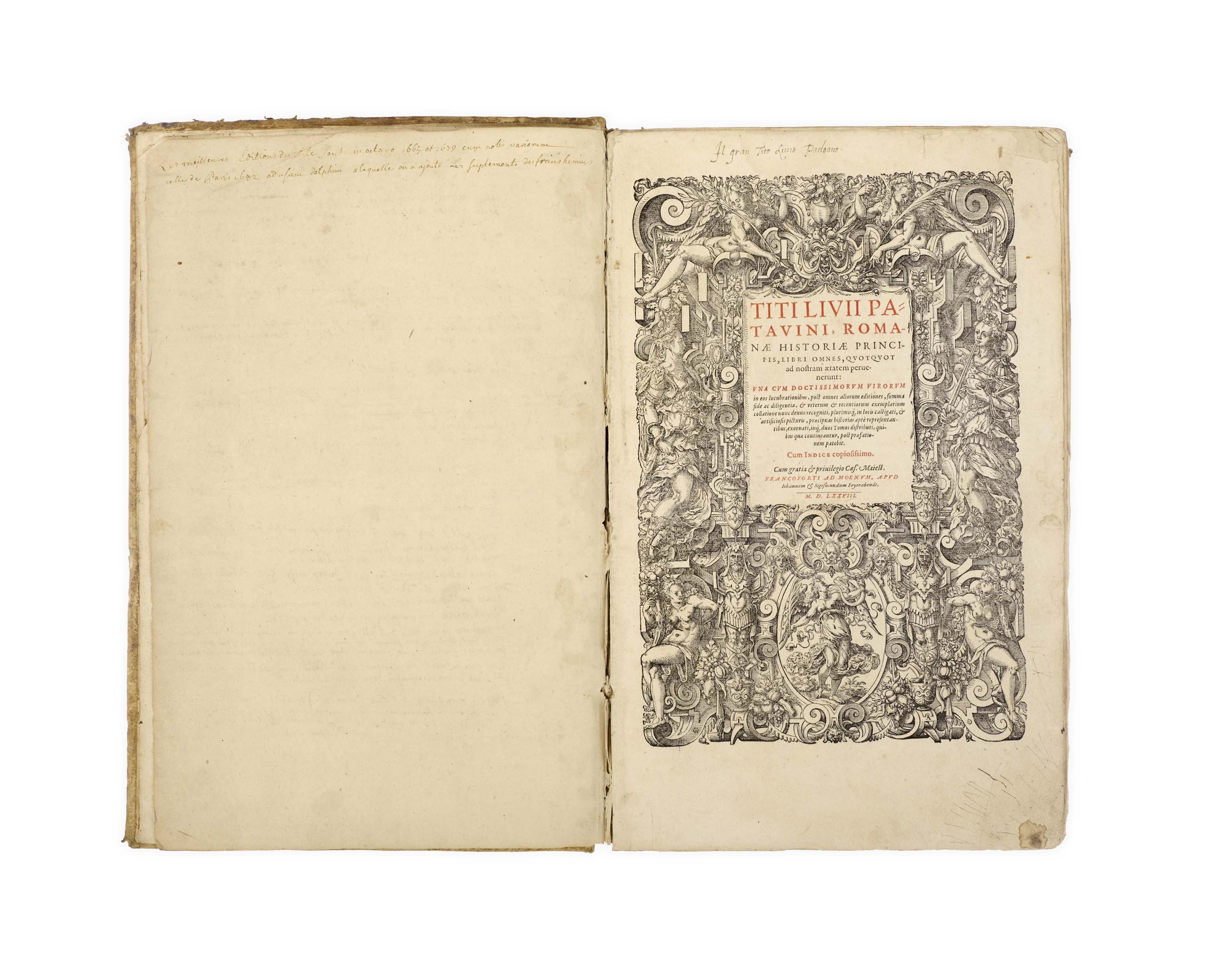
Libri omnes, quotquot ad nostrum aetatem pervenerunt: una cum doctissimorum virorum in eos lucubrationibus, post omnes aliorum editiones … nunc denuo recogniti, plurimisque in locis castigati, & artificiosis picturis, praecipue historias apte representatibus, exornati … cum indice copiosissimo. Frankfurt, [Georg Rab for] Johann and Sigismund Feyerabendt, 1578.
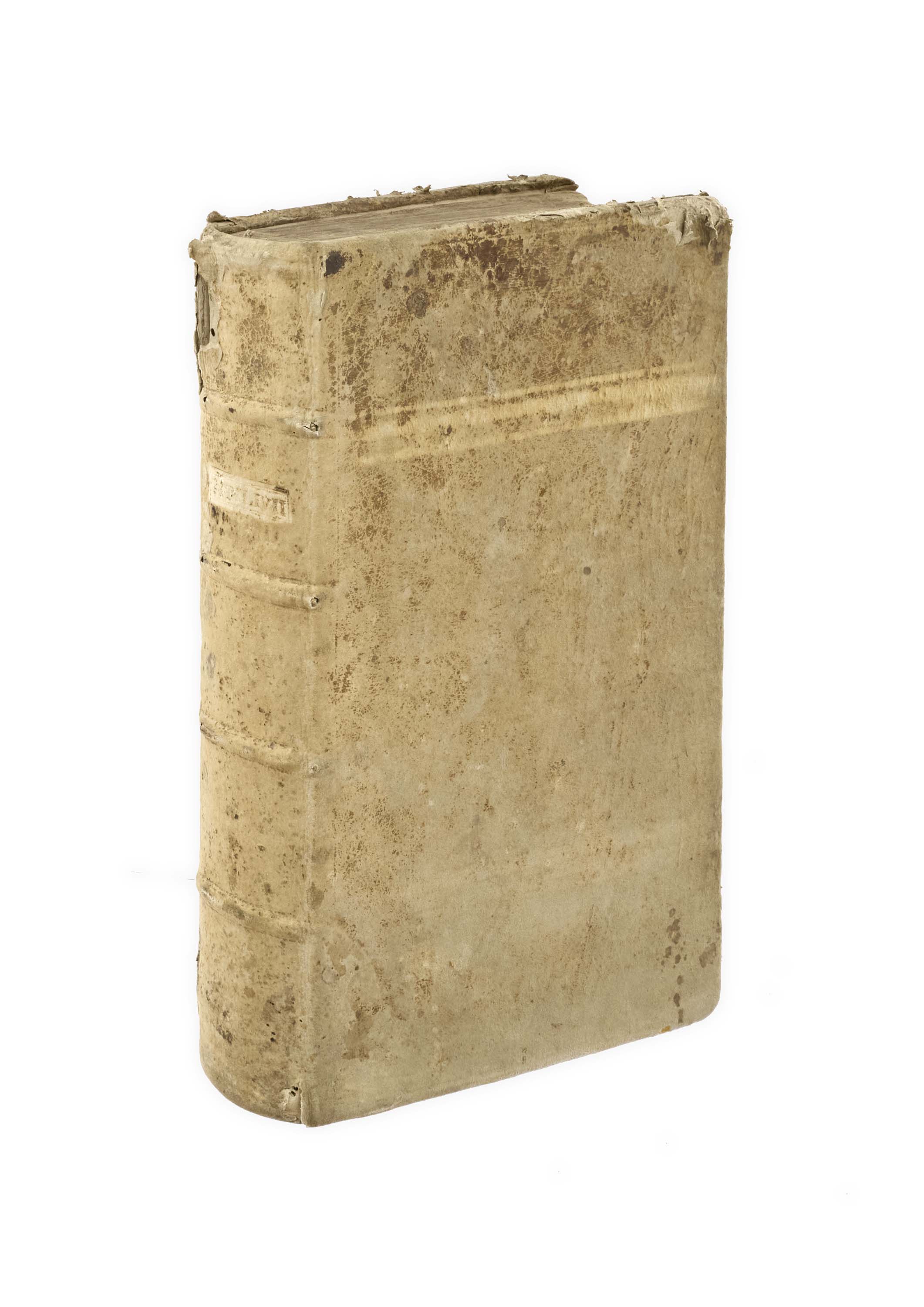
Vol. I only (of II), folio, pp. [xxxvi], ‘805’ (recte 907), [25]; title printed in red and black within elaborate woodcut border, woodcut initials and tailpieces, fine woodcut illustrations by Jost Amman; occasional light browning, some ink stains and show-through from annotations, upper corner of title-page slightly torn, large paper-flaw to 2D1 affecting text and woodcut on verso, small hole to lower margin of 2M3, short marginal closed tear to t3, but a well-margined copy retaining some deckle edges; bound in contemporary French deerskin, traces of lettering on spine from a lost lettering-piece, spine lined with French manuscript waste on vellum, sewn on 4 tawed thongs; rather worn with small areas of loss (particularly to head of spine and head of rear cover), short cracks to rear joint; annotations and underlining to almost every page of the text of Livy, in various different hands in French, Latin and occasionally Greek (some annotations faded), manuscript numbering, obscured inscription to front pastedown dated 1720, extensive notes in Latin and French on flyleaves.
Added to your basket:
Libri omnes, quotquot ad nostrum aetatem pervenerunt: una cum doctissimorum virorum in eos lucubrationibus, post omnes aliorum editiones … nunc denuo recogniti, plurimisque in locis castigati, & artificiosis picturis, praecipue historias apte representatibus, exornati … cum indice copiosissimo.
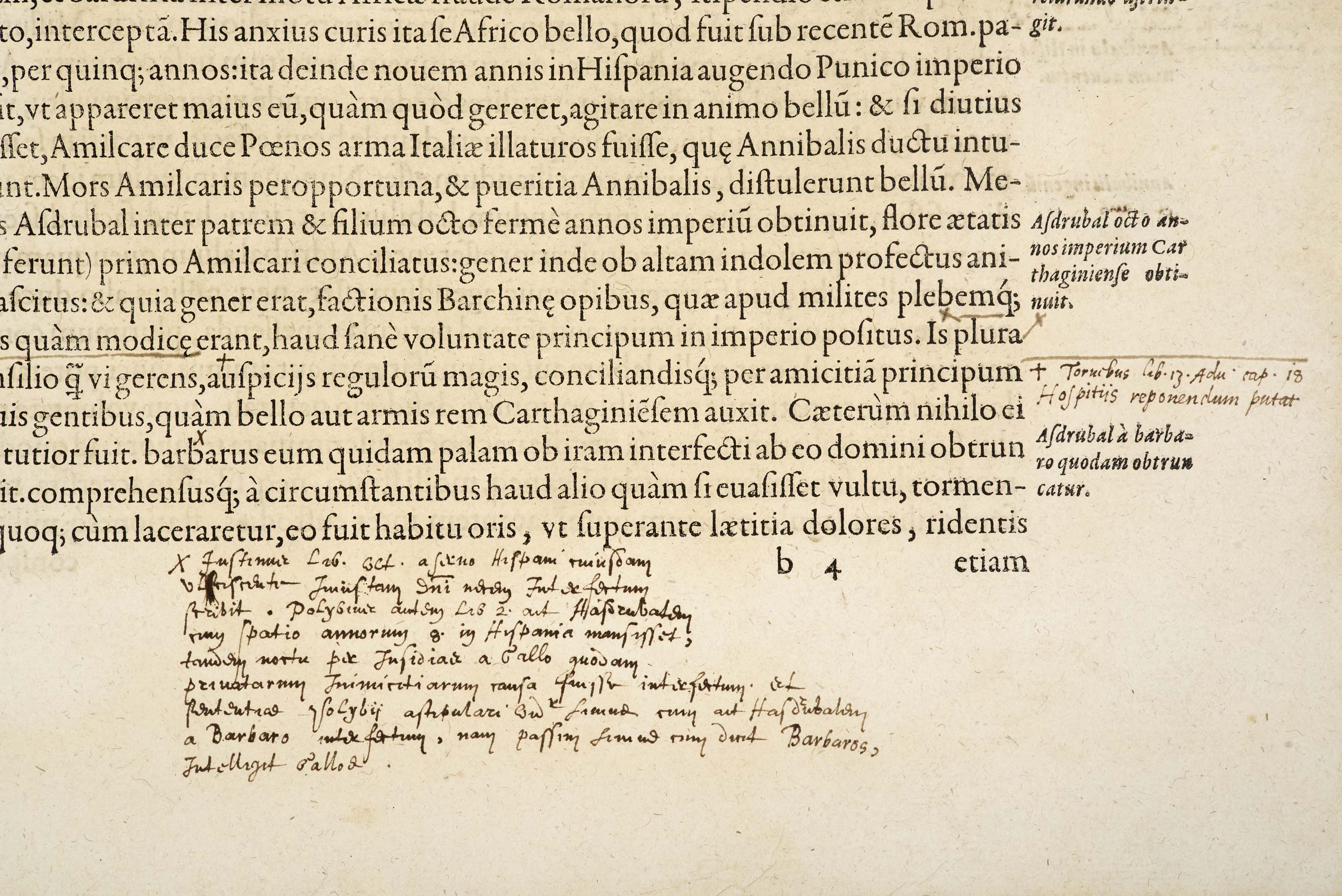
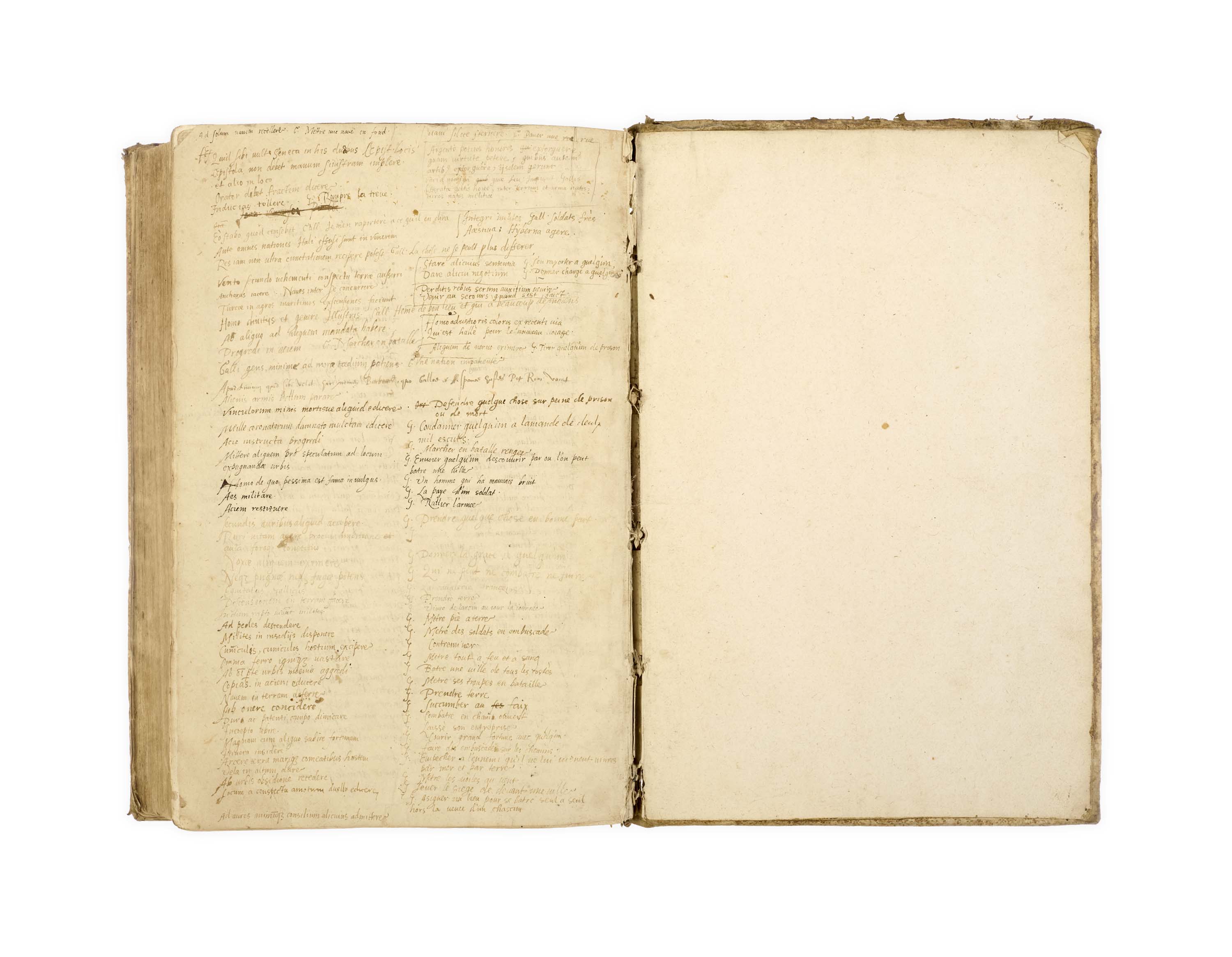
An elegantly illustrated and scholarly edition of Livy, with extensive annotations. The text of Livy is supplemented with the epitome of Florus, located at the start of each relevant book and in the gaps left by the missing books, and a comprehensive index of events at the end, which has been supplemented by an early reader with a three-page list of Latin quotations with a French translation. The text is provided with printed letters down the inner margin of each page, which are then used in the index to locate sections of text more accurately. One of the readers has added numbers to the margins, which in the latter part of the book recur on the upper corner of each recto, perhaps giving the date ab urbe condita.
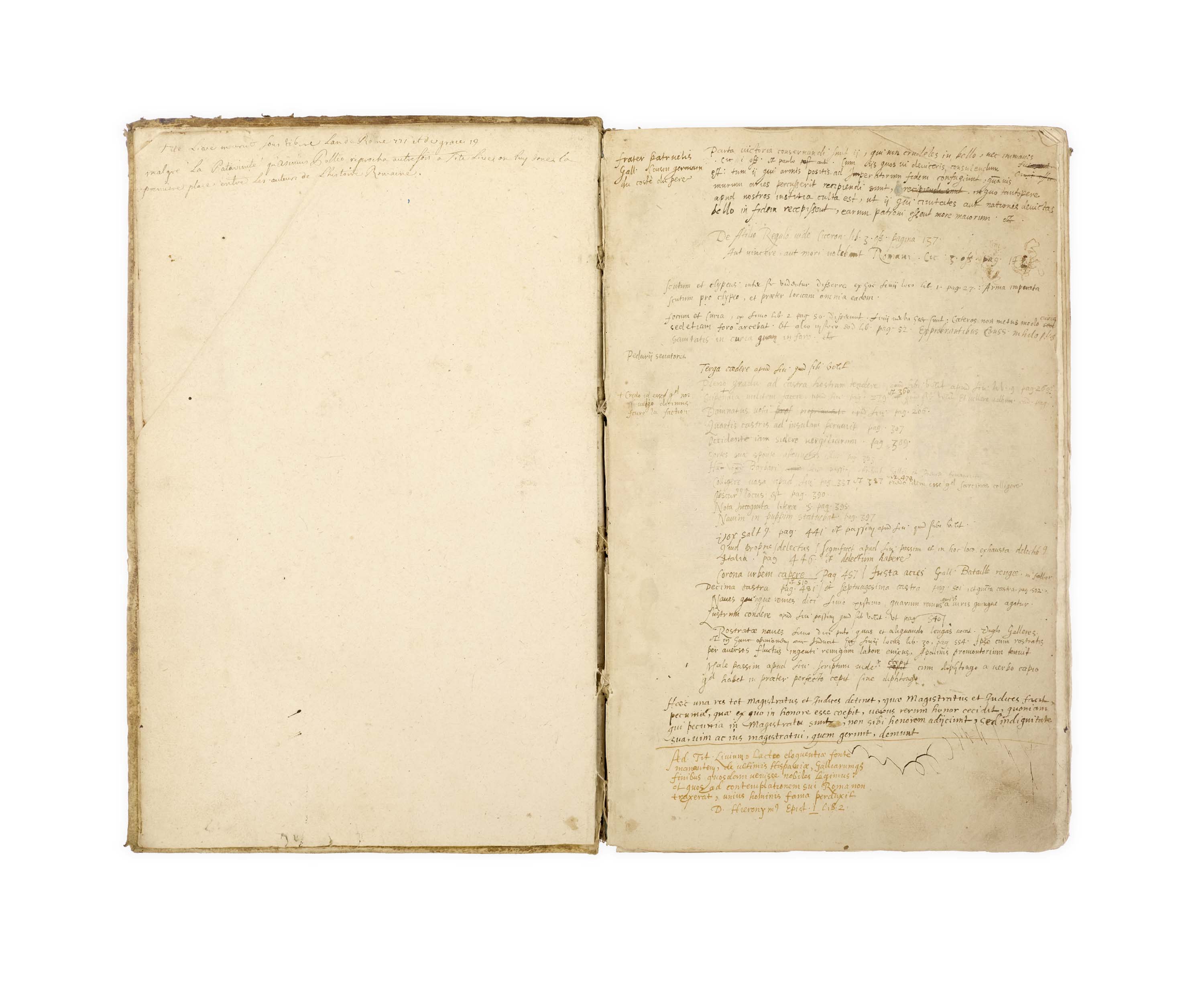
The annotations comprise marginal notes in several contemporary, seventeenth-century, and eighteenth-century French hands, a few of which are neat humanist hands. The front flyleaf contains a full page of notes from the text, written at different times in different coloured inks, most of which are extracts with page references or quotations from other authors (Cicero and Jerome). The marginal annotations provide alternative readings, corrections and additions to the text of Livy, as well as expansions and explanations, and occasionally a repetition of the text in the margin: these all show close reading and understanding of the text. A few of the annotations contain Greek text, for example on Vv2r there is a quotation from Plato about time. There are captions in French provided in the margin for most of the woodcut illustrations, in a larger and somewhat messy eighteenth-century hand, occasionally crossed through when the illustration has been misinterpreted.
This is the first of two volumes that comprise this edition, containing the whole of the text of Livy and the epitome of Florus; the second volume contained the annotations and other shorter supplementary texts.
Jost Amman’s illustrations to Livy first appeared in the 1568 Feyerabendt edition, and were considered significant enough to be issued separately as Icones Livianae (Frankfurt, 1572; VD16 L 2467), with verse captions by Philipp Lonicer.
USTC 698612; VD16 ZV 9798.