The Nile, Prester John, and Unicorns
[LOBO, Jerónimo; Lorenzo MAGALOTTI, translator.]
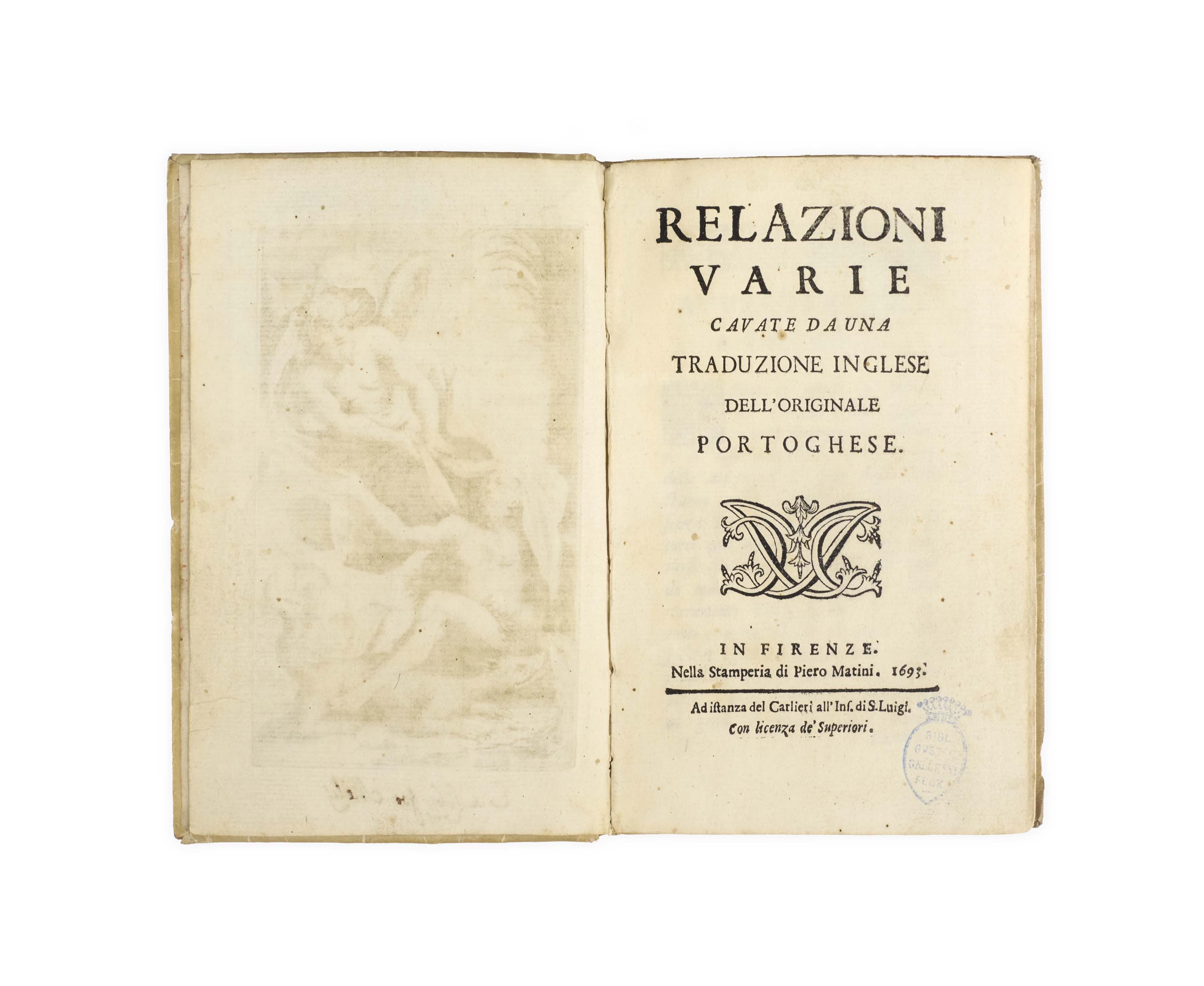
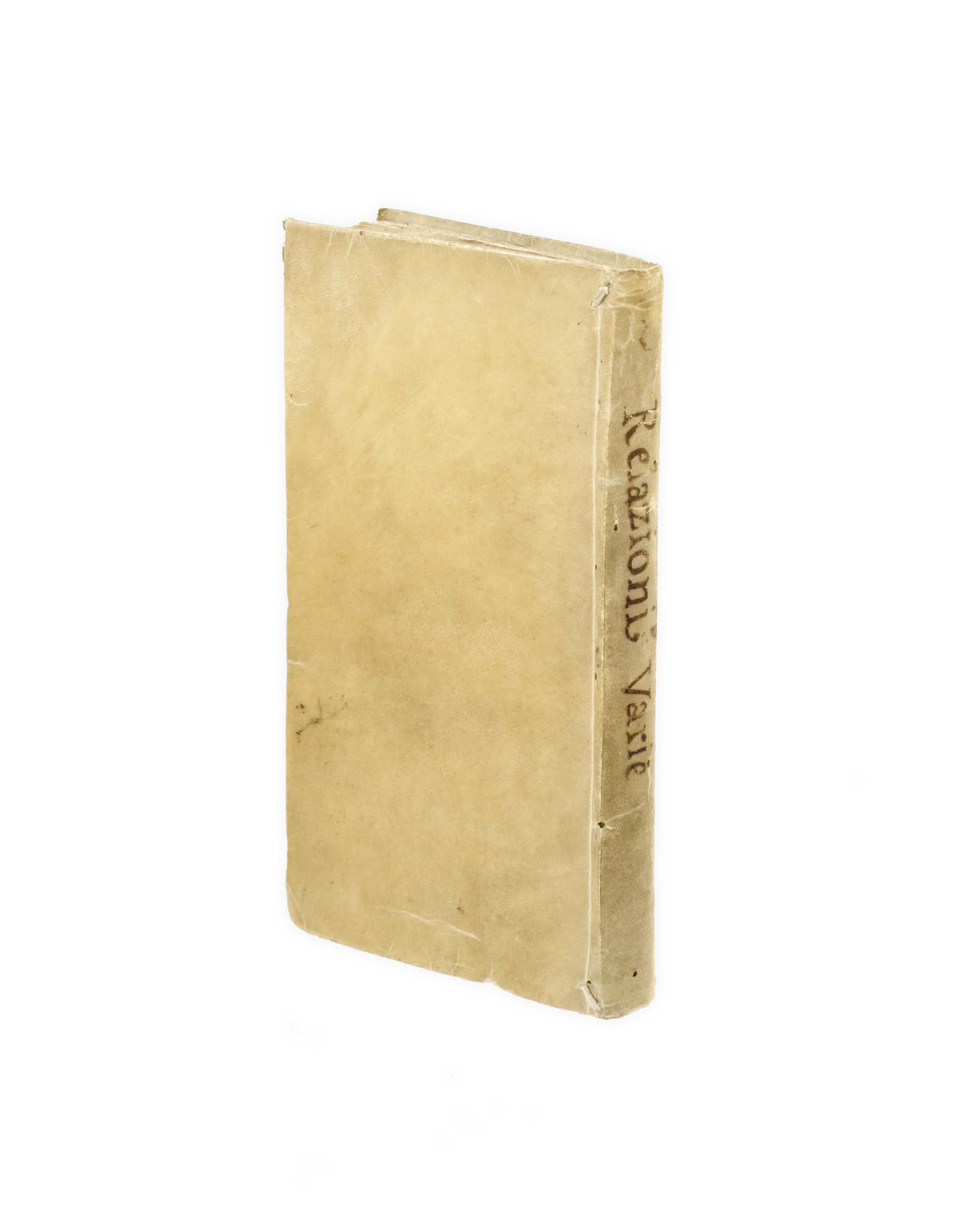
Relazioni varie cavate da una traduzione inglese dell’originale portoghese. Florence, Piero Matini, 1693.
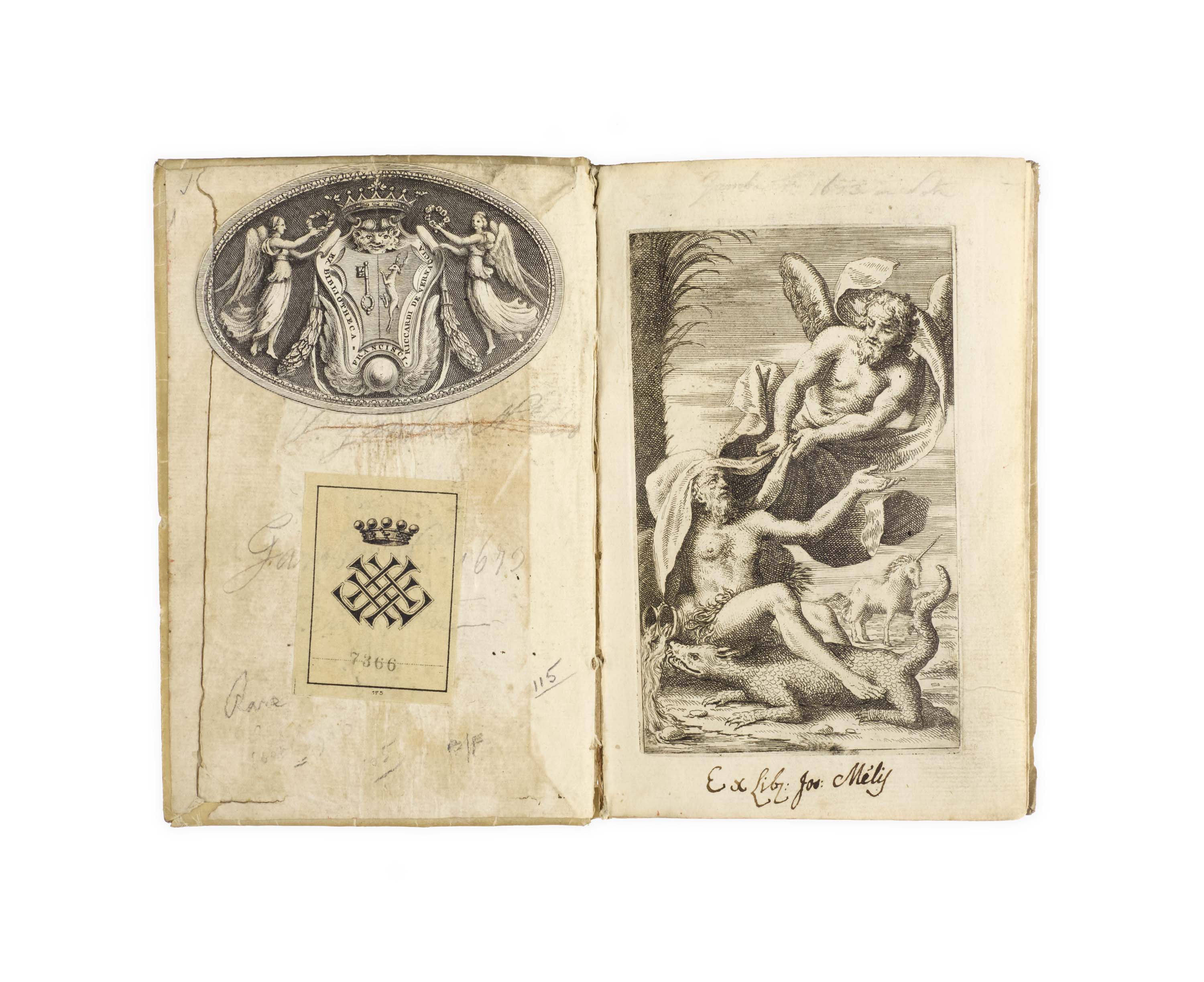
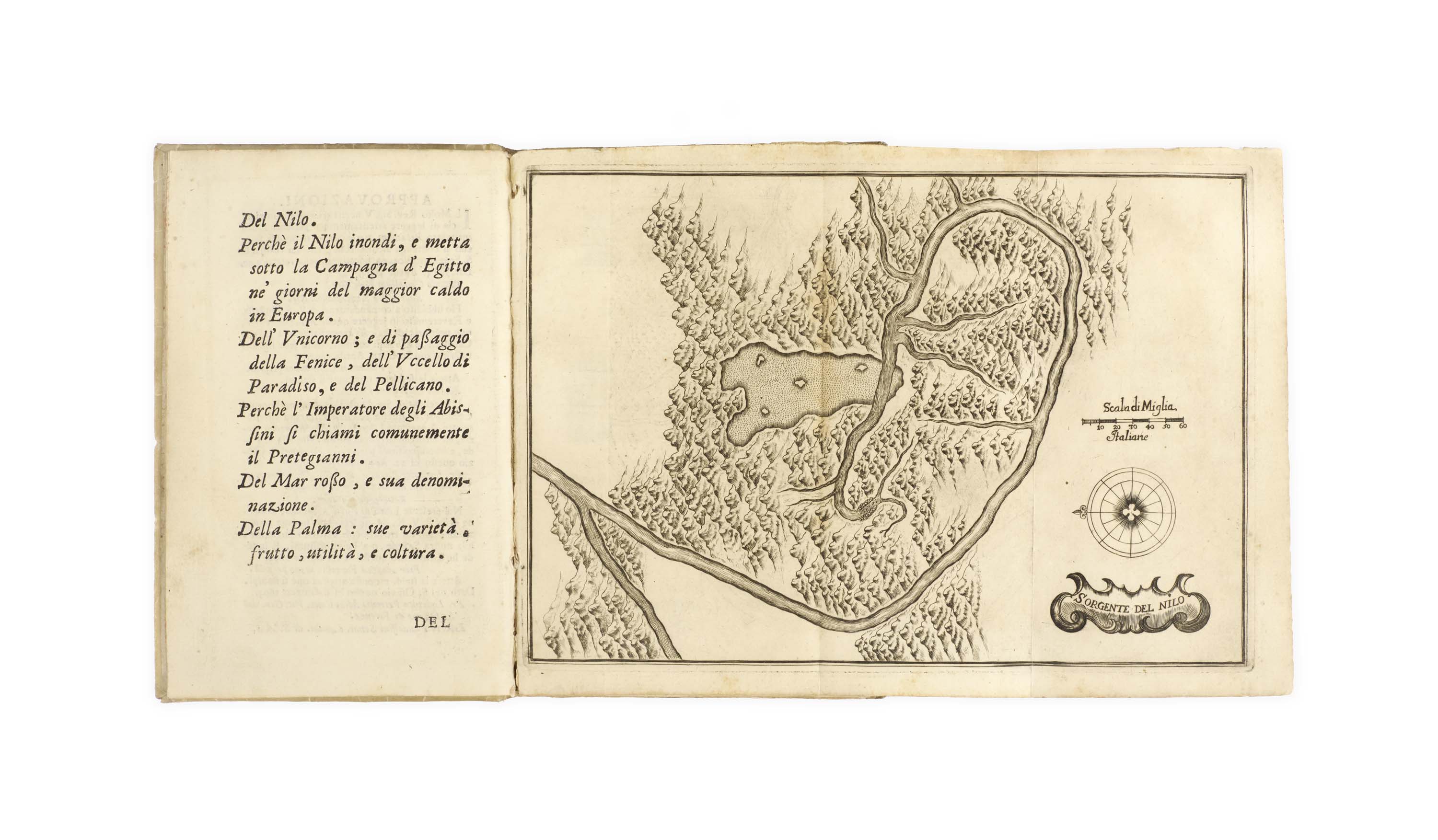
8vo, pp. [6], 112, with engraved frontispiece depicting the allegory of the river Nile, and engraved folding map of the source of the Nile; a beautiful, clean copy, bound in contemporary limp vellum, title in manuscript to spine, small wax stain to front cover; contemporary ownership inscription of Josephus Melis to frontispiece, nineteenth-century oval engraved armorial bookplate of Francesco Riccardi del Vernaccia and monogram bookplate of Horace de Landau to front pastedown, nineteenth-century stamp of Gustavo Galletti to title (see below).
Added to your basket:
Relazioni varie cavate da una traduzione inglese dell’originale portoghese.
First edition in Italian of one of the earliest and most important works on Ethiopia and the river Nile, particularly noteworthy for the inclusion of an engraved map of the sources of the Nile published here for the first time. A fine copy with a distinguished chain of provenance.
Jerónimo Lobo (1596–1678), a Portuguese Jesuit missionary, arrived in Ethiopia from Goa together with nine other Jesuit priests in 1625, following the conversion of the Emperor Susenyos I to the Catholic faith a few years earlier. Lobo travelled widely through the country, visiting various sites including the source of the Blue Nile at Gish Abay near Lake Tana, until 1633 when he was expelled following the abdication of Susenyos and the return of the country to the Ethiopian Church.
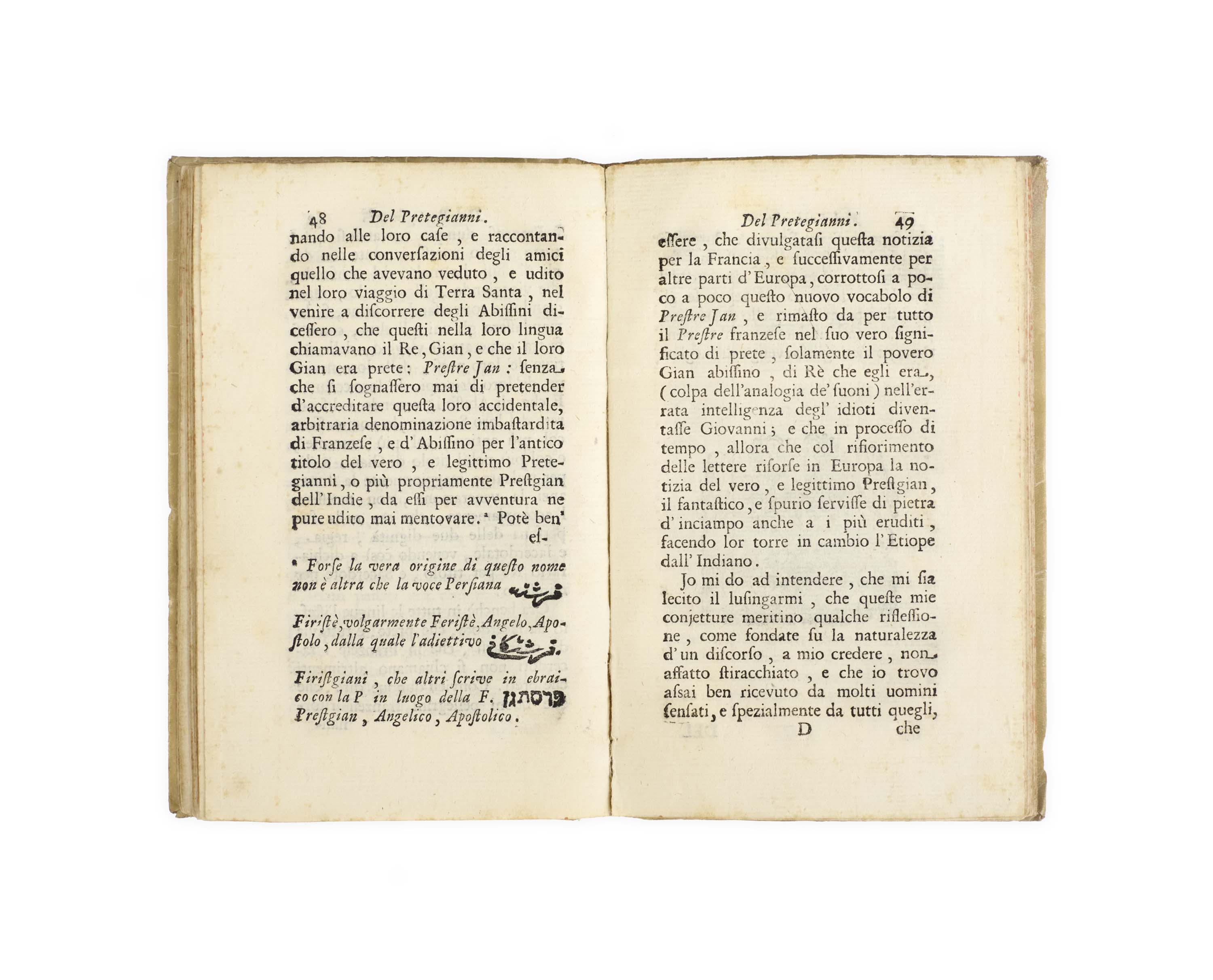
Lobo’s account includes a description of the Nile and its seasonal flooding; crocodiles, unicorns, birds of paradise, pelicans, and the phoenix; a chapter on the legendary Prester John; a description of the Red Sea; and a discussion on the palm tree, its varieties, cultivation, fruits, and uses. It had previously been published in English as A Short Relation of the River Nile: of its Source and Current; of its Overflowing the Campagnia of Ægypt: ‘The first edition appeared in 1669 when Wyche translated the Portuguese manuscript brought to London by Sir Robert Southwell, who acquired it from Lobo himself at Lisbon. The whole work was not printed until 1728, when a complete manuscript account of Lobo’s travels in Africa, 1624–32, was discovered by Legrand, who translated it into French’ (Blackmer).
However, both the allegorical frontispiece depicting Father Nile under a palm tree, with a crocodile at his feet and a unicorn in the background, and the folding map of the sources of the Nile were not included in the English edition and appear here for the first time.
Provenance:
1. Seventeenth-century ownership inscription of Josephus Melis.
2. Marquess Francesco Maria Riccardi del Vernaccia (1794–1863), chamberlain to Grand Duke Ferdinand III of Tuscany, a bibliophile who built a large library of over 6000 volumes, including many incunables.
3. Count Gustavo Camillo Galletti (1805–1868), celebrated Florentine bibliophile who assembled a large and important collection, sometimes acquiring entire libraries of other illustrious bibliophiles, such as those of Gaetano Capponi, the abbot Tommaso Galli, and that of Marquess Riccardi della Vernaccia.
4. Baron Horace de Landau (1824–1903), collector, bibliophile, and banker, representative of the Rothschild banking house in Turin and, from 1866, Florence; in 1879 he acquired almost the whole library of Camillo Galletti which he added to his own, already large library. The collection was further increased by his niece, Mme Hugo Finaly (1850–1938, née Jenny Ellenberger), and eventually dispersed in a series of sales after the death of her son, Horace de Finaly (1871–1945).
USTC 1751848; Blackmer 1022 (English edition); Fumagalli 98 bis; Hilmy I, 390; Sommervogel IV, col. 1897.