Lockean Commonplace and Hydrostatics
[LOCKE.]
Manuscript commonplace book including a detailed analysis of Locke’s Essay concerning humane Understanding (1690), and a treatise on hydrostatics. [Late 17th to early 18th century].
4to manuscript, brown ink on paper in a single legible hand, pp. [6], 55 (including six ruled blank leaves), [20, blanks], [24], with two diagrams; in very good condition, but disbound.
Added to your basket:
Manuscript commonplace book including a detailed analysis of Locke’s Essay concerning humane Understanding (1690), and a treatise on hydrostatics.
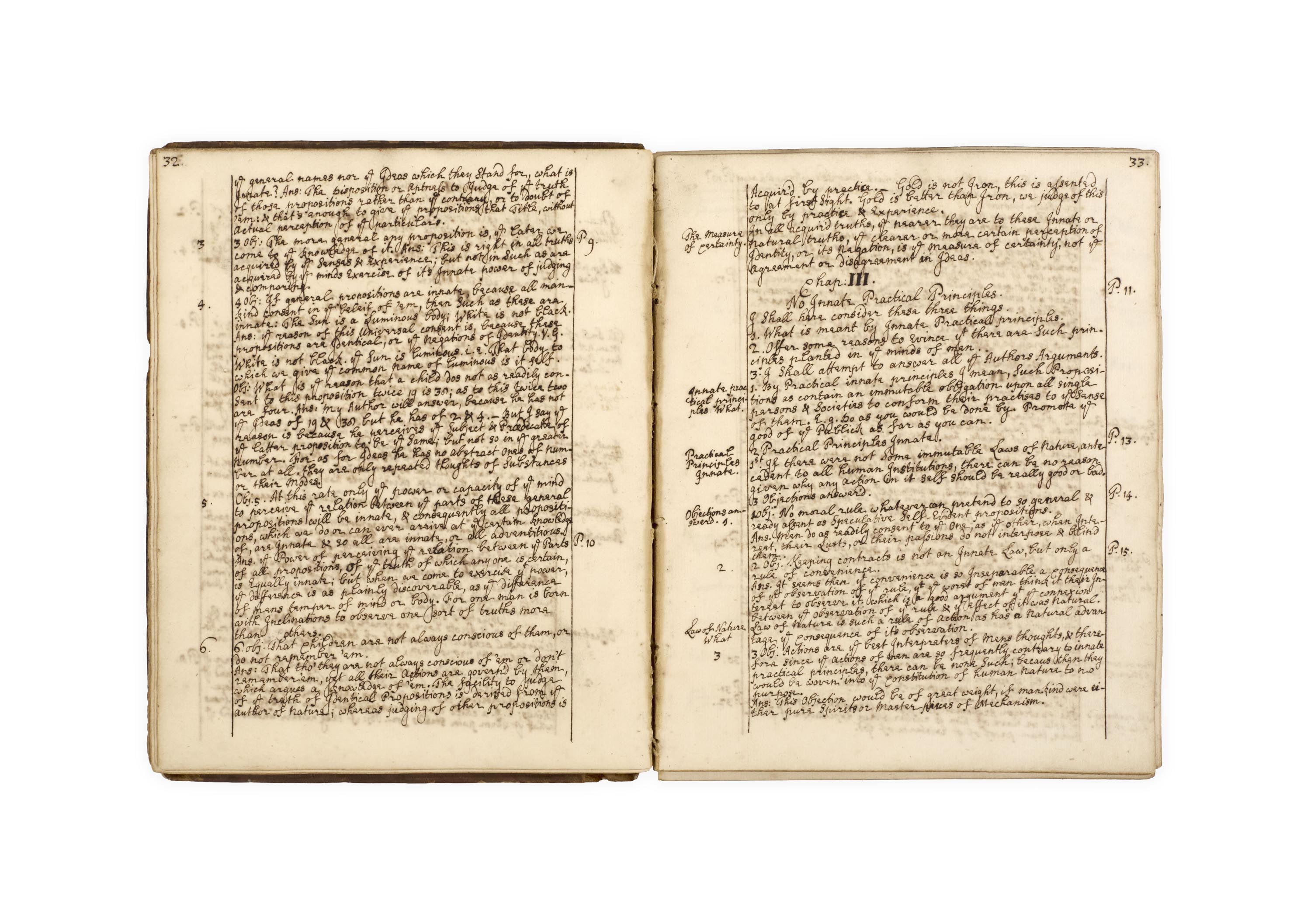
A more than usually interesting manuscript, begun as a commonplace book but largely occupied by a chapter by chapter response to Locke’s Essay (on pp. 31–49) and a seemingly original introduction to ‘Hydrostaticks’, including a passage on fireworks.
The analysis of Locke seems to be based on Henry Lee’s voluminous Anti-Scepticism, or, Notes upon each Chapter of Mr Lock’s ‘Essay concerning human Understanding’ (1702), to which it is keyed by pagination references in the margin. ‘Lee was a principal early critic of Locke, broadly similar in approach to John Norris, James Lowde, John Sergeant, Edward Stillingfleet, and G. W. Leibniz. His main charge was that Locke’s epistemology led to scepticism, particularly in natural and revealed religion … Locke’s friends were dismissive of Lee’s book’ (ODNB), and James Tyrrell thought its sheer size and exhaustiveness a barrier to readership: ‘Oftentimes one cannot tell whether [Lee] writes for or against your opinion’, and he spends time explaining ‘in his own way when indeed it was much clearer before’; but George Hickes for example thought that it ‘perfectly demolished’ the Essay ‘from part to part’. Indeed the present manuscript is evidence that it was read with interest, and its current reader has managed to condense Lee’s most salient points without the exhaustive exposition.
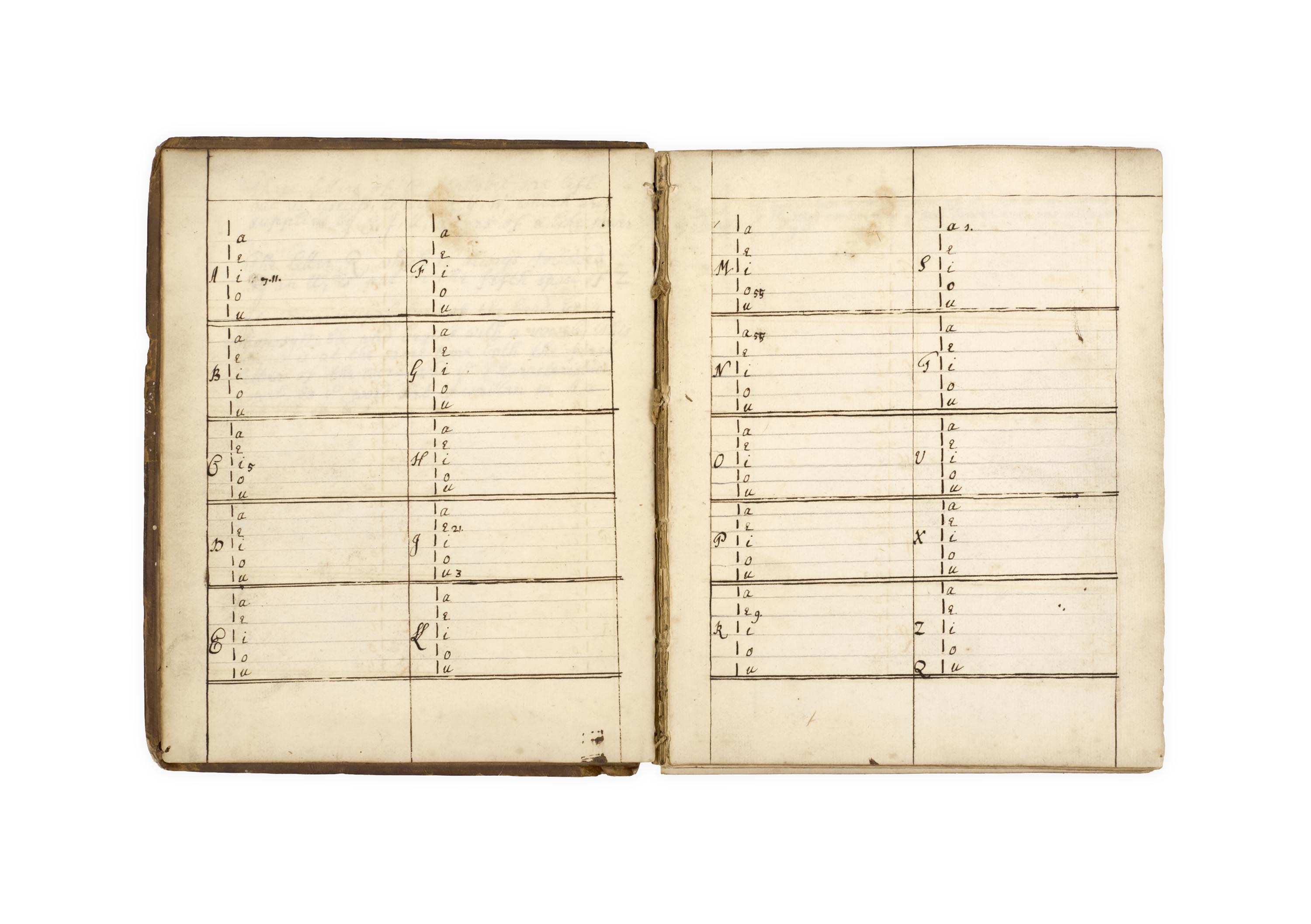
The engagement with Locke here is not limited to Lee’s criticism of the Essay: the volume is prefaced by an unused index table following the method proposed by Locke in his Method for Common-place-books (1685); and one of the several completed entries, on ‘Identitas’, is a long extract from Thomas Beconsall’s Doctrine of a General Resurrection (1697), with its passing reference to, and criticism, of Locke’s Essay. There are also some excerpts from George Cheyne’s Philosophical Principles (1705), an ambitious Newtonian work which also drew on and quoted from the Essay.
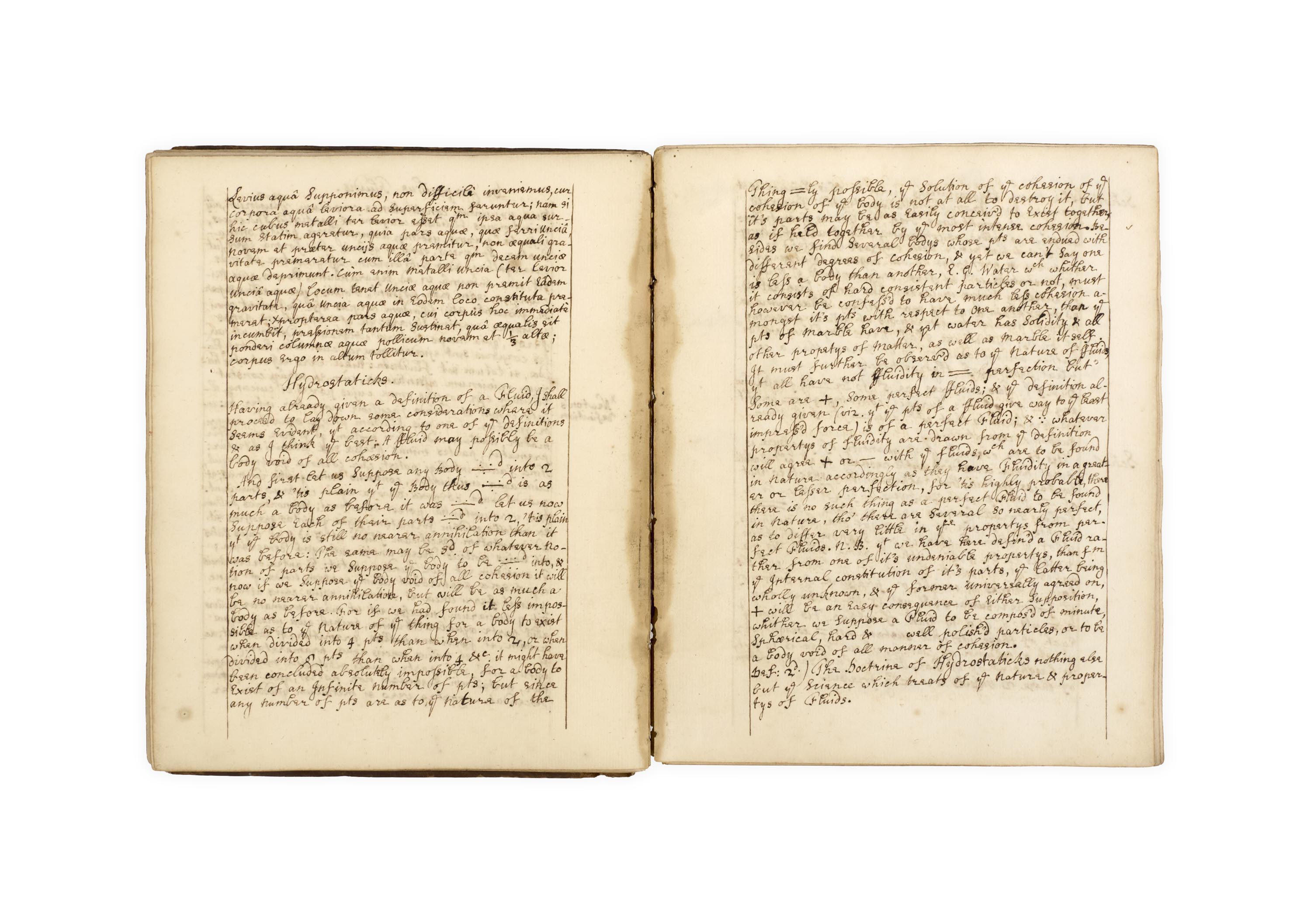
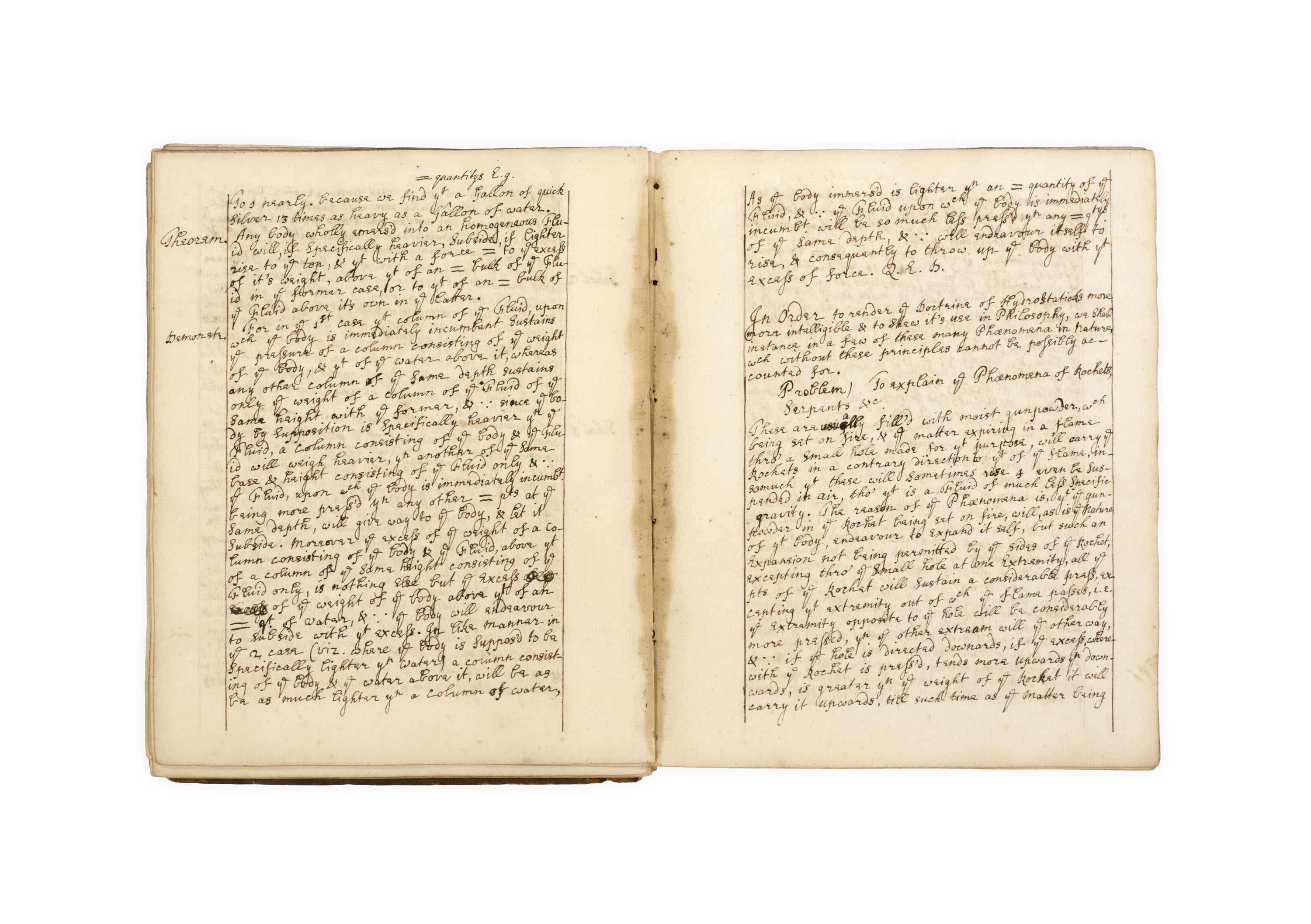
Here the compiler’s interest in Cheyne is confined to laws of motion, which feeds well into the treatise that follows, which has a one-page introduction in Latin under the heading ‘De Corporibus Fluidis’ referencing Newton, essentially a long definition of the nature of a liquid, followed by a treatise in English on ‘Hydrostaticks’. This is ‘rather an introduction to ye Science, than a compleat system’, which is seen as also encompassing in some measure the study of fluid dynamics. The author deals with the action of pressure on fluids, the behaviour of fluids in vessels and tubes, the tendency of liquids to form spheres, specific gravity, etc., followed by some passages on ‘a few of these many Phaenomena in nature’, including in ‘Rockets, Serpents &c’ (i.e. fireworks), suction, barometry, and syphons.