NEGRI, Stefano.
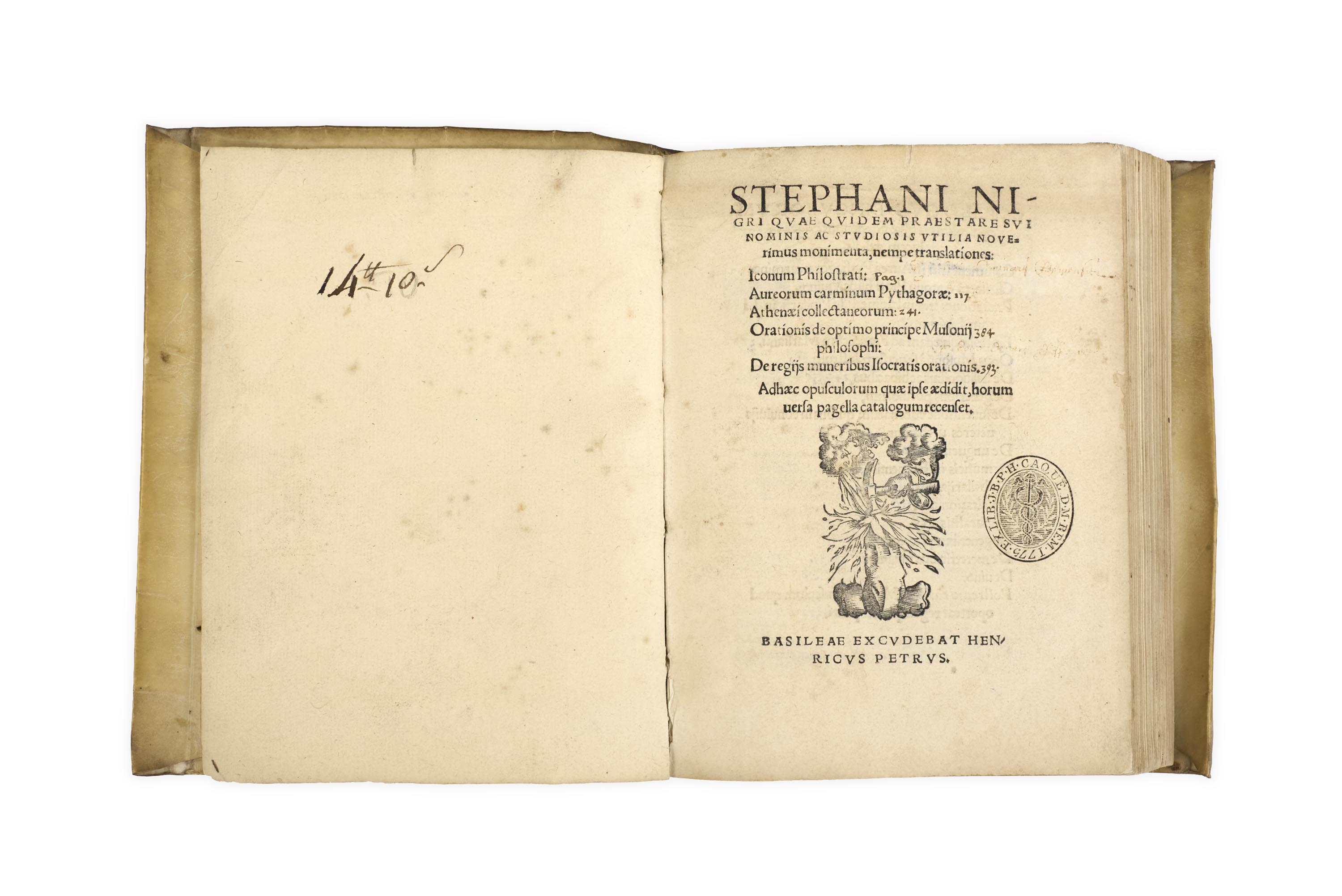
Stephani Nigri quae quidem praestare sui nominis ac studiosis utilia noverimus monimenta, nempe translationes: Iconum Philostrati, Aureorum carminum Pythagorae; Athenaei collectaneorum, Orationis de optimo principe Musonii philosophi, De regiis muneribus Isocratis orationis. Ad haec opusculorum quae ipse aedidit, horum versa pagella catalogum recenset. Basel, Heinrich Petri, August 1532.
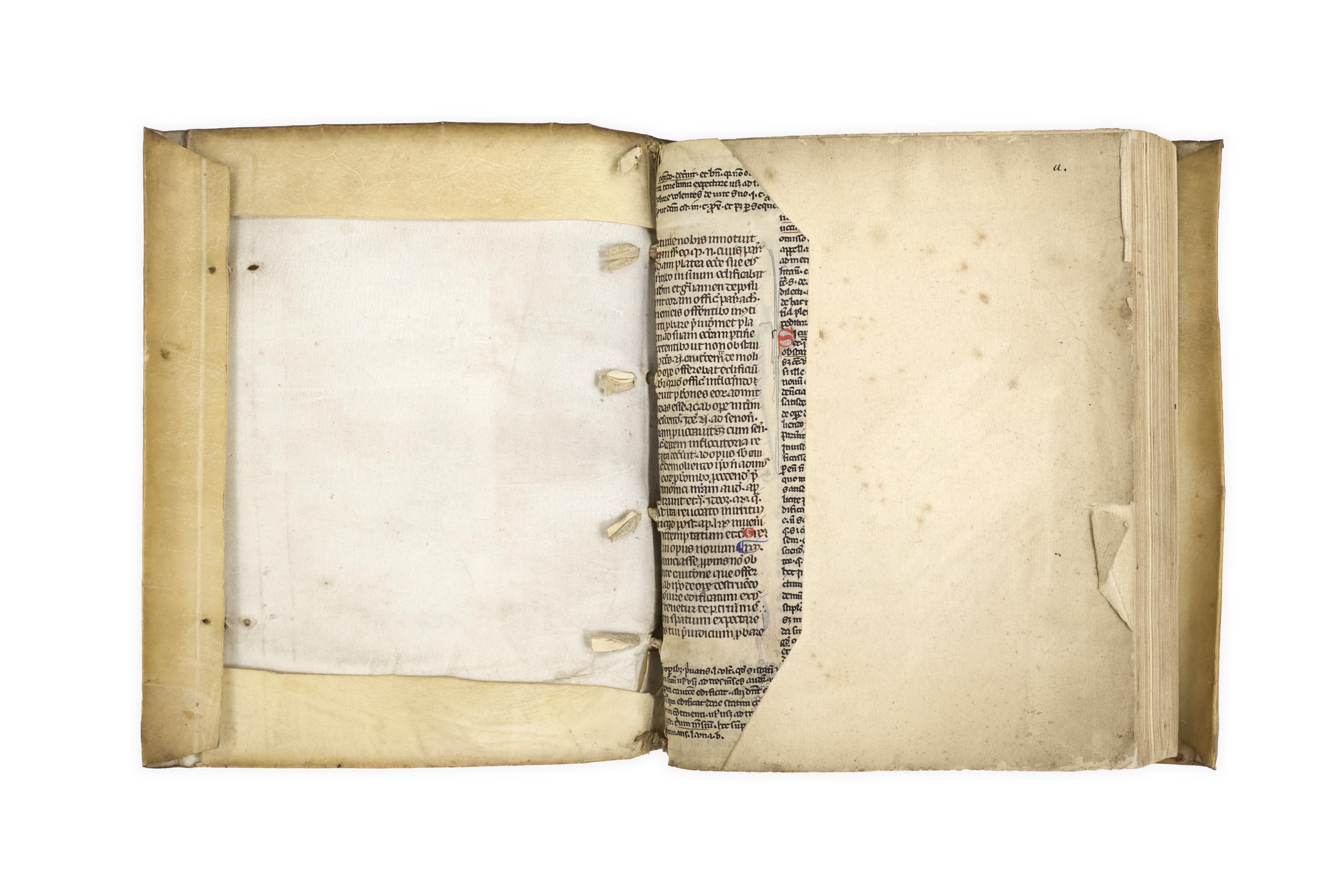
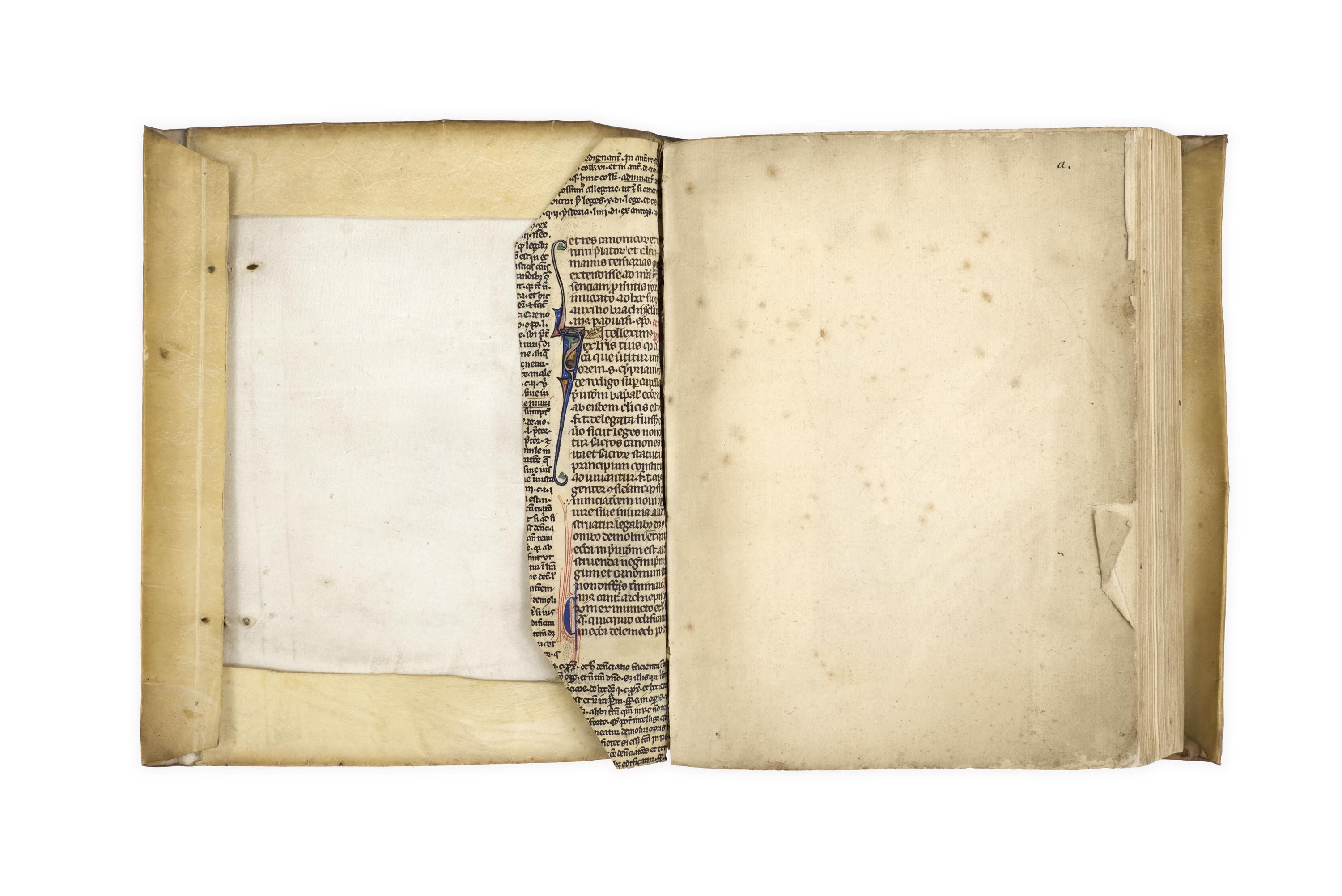
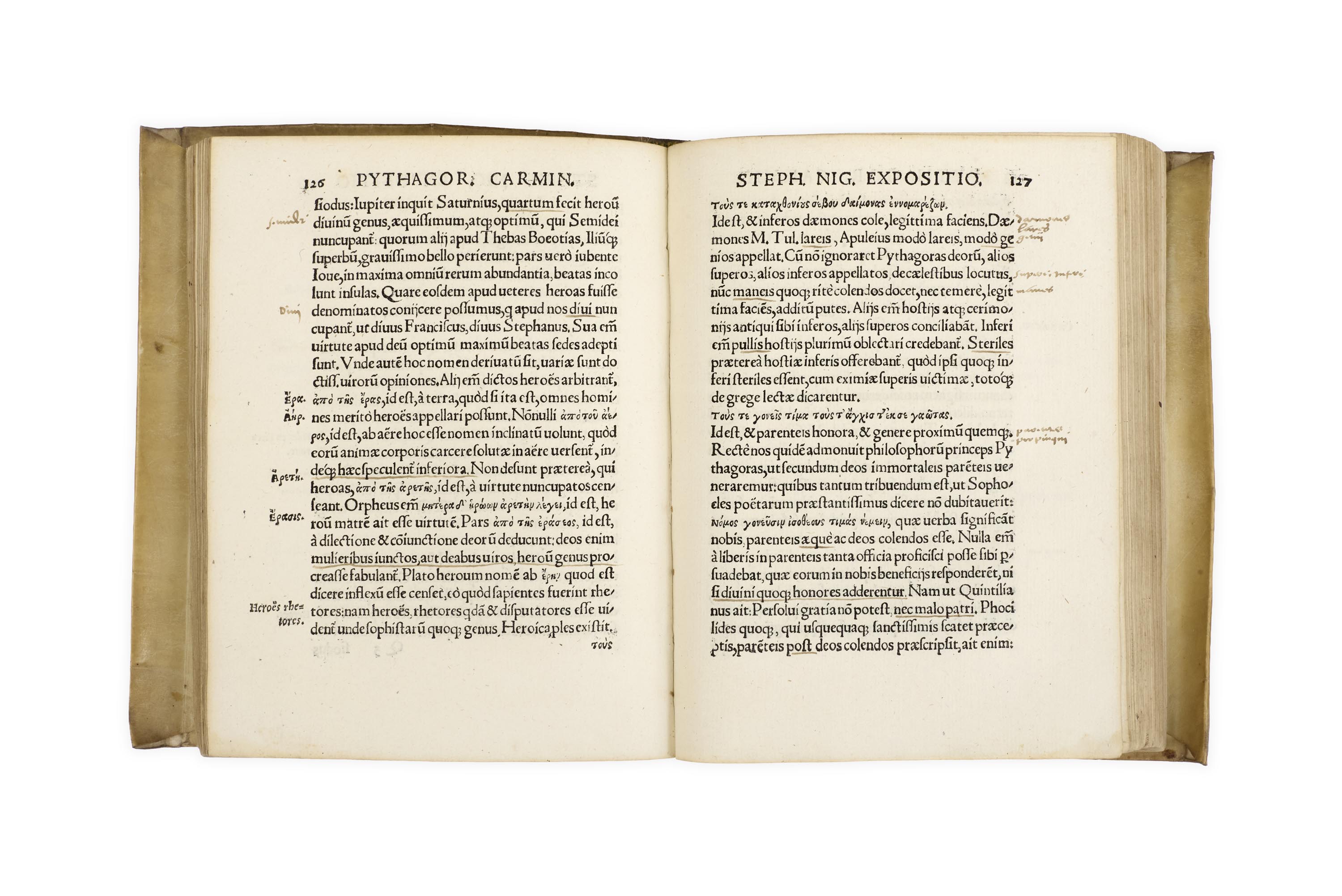
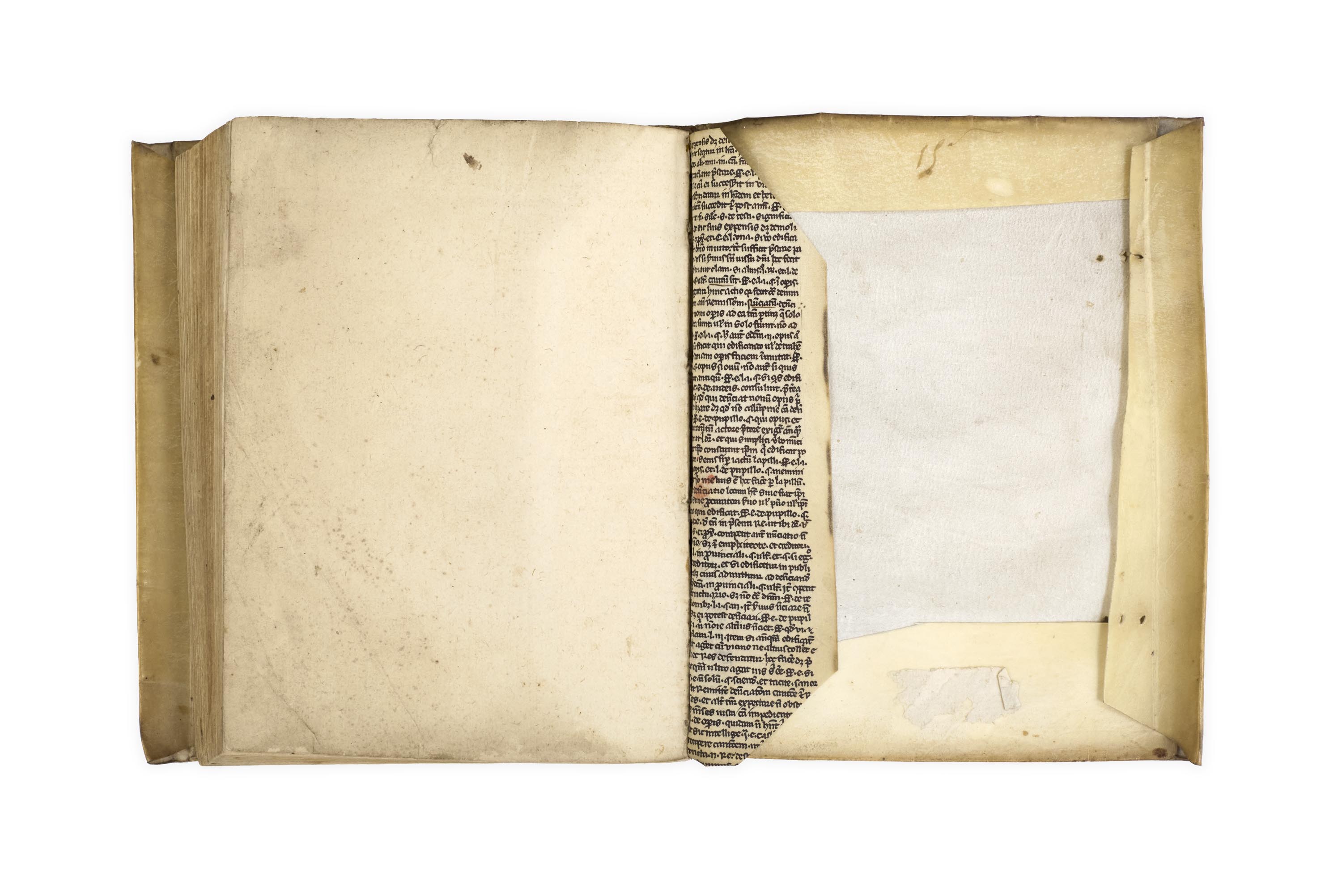
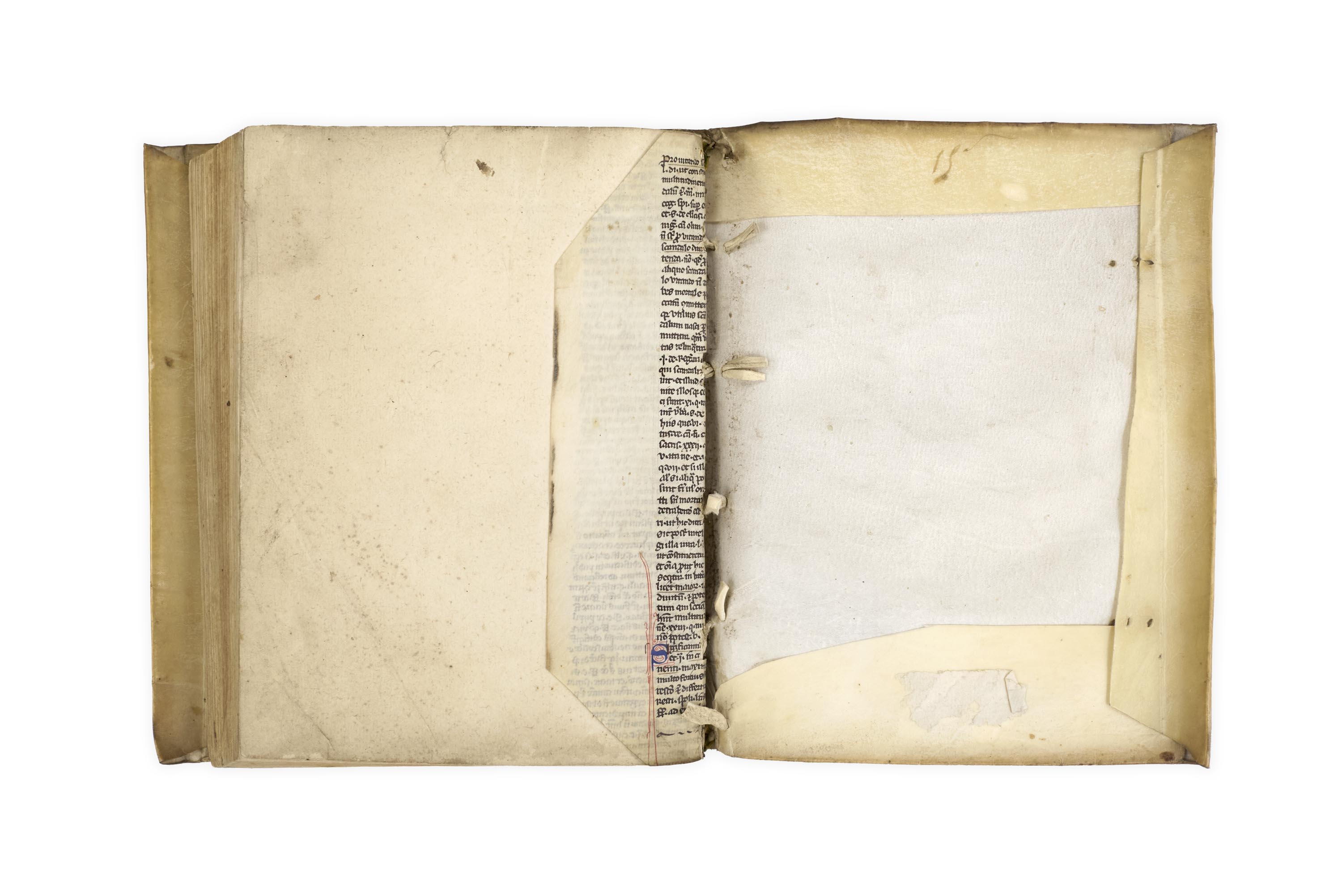
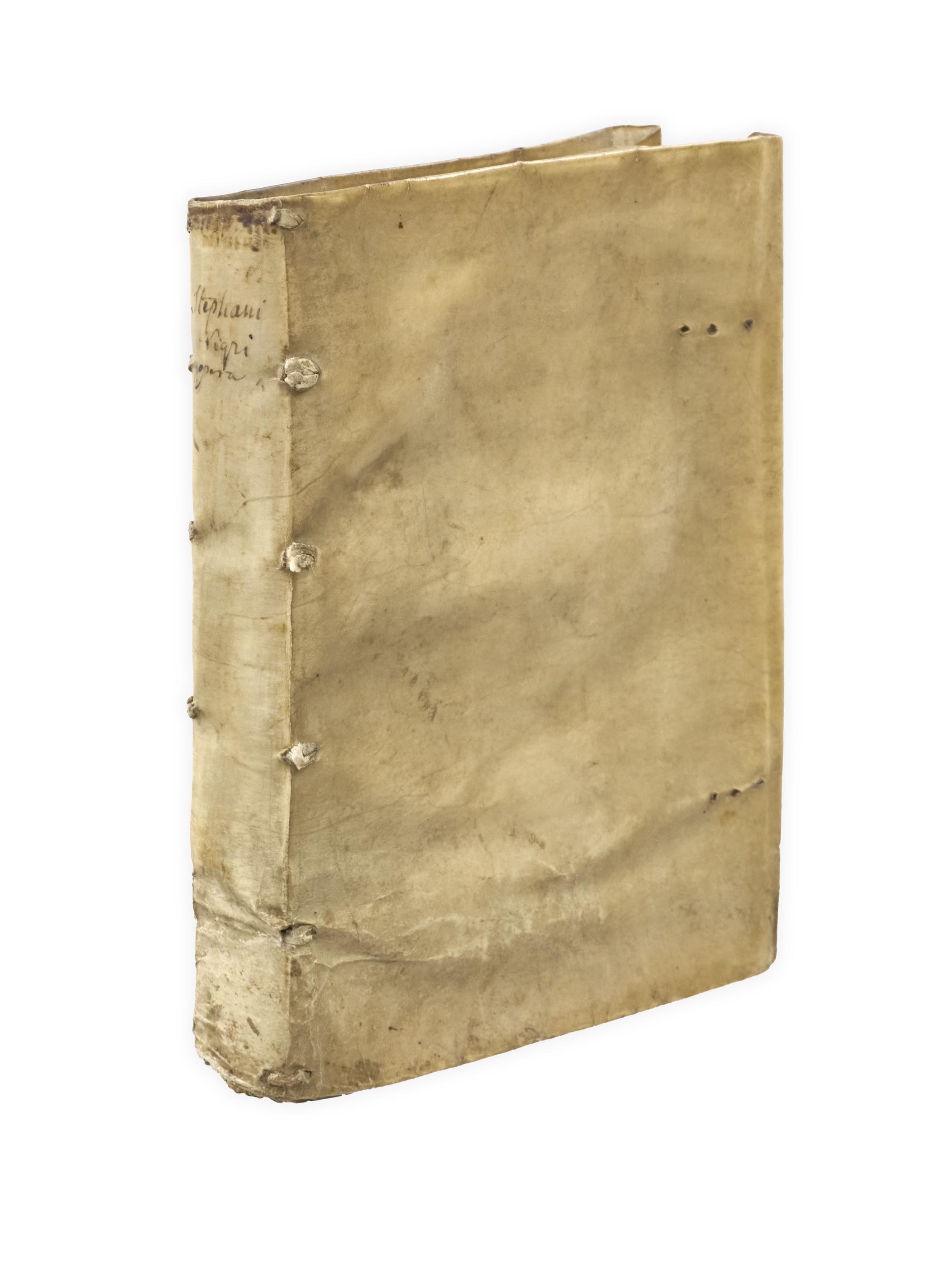
4to, pp. [24], 405 (recte 407), [1]; text in Latin and Greek, woodcut printer’s device to title and final page, initials; small chips to edges of title-page, small tape repair to recto of last leaf, occasional light creasing to corners; overall a very good, clean copy in contemporary French limp vellum, title in manuscript at head of spine, yapp edges, flyleaves and spine-liner preserving fragment of a fourteenth-century manuscript (see below); some cockling at foot of spine and to covers, ties wanting; erased seventeenth-century ownership inscriptions to title and last page (seminary of Reims), oval stamp to title ‘Ex lib. J.B.P.H. Caqué D.M. Rem. 1775’; occasional annotations and underlining in a near-contemporary hand.
Added to your basket:
Stephani Nigri quae quidem praestare sui nominis ac studiosis utilia noverimus monimenta, nempe translationes: Iconum Philostrati, Aureorum carminum Pythagorae; Athenaei collectaneorum, Orationis de optimo principe Musonii philosophi, De regiis muneribus Isocratis orationis. Ad haec opusculorum quae ipse aedidit, horum versa pagella catalogum recenset.
Handsome Petri edition of the collected works of Stefano Negri (1475–1540), Milanese professor of Greek, first published at Milan in 1521.
The text opens with Negri’s Latin translation of an important work on late Greek art attributed to Philostratus known as the Eikones, describing, in two books, paintings in a gallery at Naples. This is followed by a commentary on the Golden Verses attributed to Pythagoras; five letters on Greek and Latin literature addressed to the children of Antoine Duprat, cardinal and chancellor of France; lectures on Homer, Pindar, and Livy; a work on gluttony based on Athenaeus; and short pieces on Musonius and Isocrates.
Manuscript fragments
Fragment of a leaf (195 x 130 mm) from the Decretals of Gregory IX (France, first half of fourteenth century), Decretals 5.31.18 and 5.32.1–4, with the Glossa Ordinaria of Bernard of Parma, in Latin; written in a good gothic hand, 34 lines of text on both recto and verso surrounded by 60 (recto) and 52–54 (verso) lines of gloss, text on recto with four-line illuminated initial ‘I’ (Intelleximus ex literis tuis) in the form of a dragon biting its own back in shades of blue, green and mauve, and burnished gold, with ivy leaf marginal extensions, and 3-line initial ‘C’ in blue with red penwork, gloss to verso with two two-line initials in red with blue penwork and in blue with red penwork, ruled with plummet; corners trimmed, very well preserved.
Completed in 1234 under the editorship of the Dominican Raymond of Peñafort, the collection of canon law known as the Decretals or Liber extra was one of the greatest achievements of the papacy of Gregory IX. It soon attracted numerous glossators, not least, as here, the noted Italian canonist Bernard of Parma (d. 1266). These attractive fragments contain chapters relating to the construction and destruction of church buildings.
Provenance: Jean Baptiste Pierre Henri Caqué (1751–1805), doctor of medicine from Reims.
USTC 694665; VD16 N 457; Adams N276.