Annotated Indian Animal Fables
VISHNU SHARMA, attributed, et al; Jean Antoine DUBOIS, translator.
Le Pantcha-tantra, ou les cinq ruses, fables du Brahme Vichnou-Sarma; Aventures de Paramarta, et autres contes, le tout traduit pour la première fois sur les originaux indiens … Paris, J.-S. Merlin, 1826.
8vo, pp. xvi, 415, [1]; some foxing throughout, show-through from marginal annotations, otherwise a good, uncut copy; in contemporary half black calf with marbled sides, spine gilt-ruled in compartments and lettered directly in gilt, marbled endpapers; endcaps lost, short split to rear joint, some wear to spine and board edges, covers rubbed; contemporary ownership inscription to half-title ‘ex libris Ferdinand Lefevre’, his marginal annotations in ink and occasional pencil to c. 110 pages.
Added to your basket:
Le Pantcha-tantra, ou les cinq ruses, fables du Brahme Vichnou-Sarma; Aventures de Paramarta, et autres contes, le tout traduit pour la première fois sur les originaux indiens …
First edition of this French translation of the Panchatantra, an ancient Indian collection of animal fables, of The Adventures of Guru Paramartha, a Tamil compilation of satirical stories, and of other oriental tales, by the French Catholic missionary Jean-Antoine Dubois, with remarkable annotations by a contemporary reader.
Dubois (1766–1848) served for many years as a missionary in India before working for the Society of Foreign Missions of Paris; his published output included an influential work on the manners and customs of the Indian people. Two important oriental works are translated by him here. The Panchatantra, the most famous collection of fables in India and a significant influence on the Arabian Nights and the Fables of La Fontaine, teaches the principles of good government and public policy through the medium of animal stories. The Adventures of Guru Paramartha, composed in Tamil by the Italian Jesuit missionary Costanzo Giuseppe Beschi (1680–1747), satirises the foibles and conceited ignorance of gurus and their disciples, and ‘is the most entertaining book in Tamil literature, bubbling over with wit and humour’ (Catholic Encyclopedia).
The extensive annotations by the unidentified ‘Ferdinand Lefevre’ whose name appears on the half-title evince a deep intellectual engagement with the Panchatantra, and with the fundamental questions it raises about human behaviour and interaction.
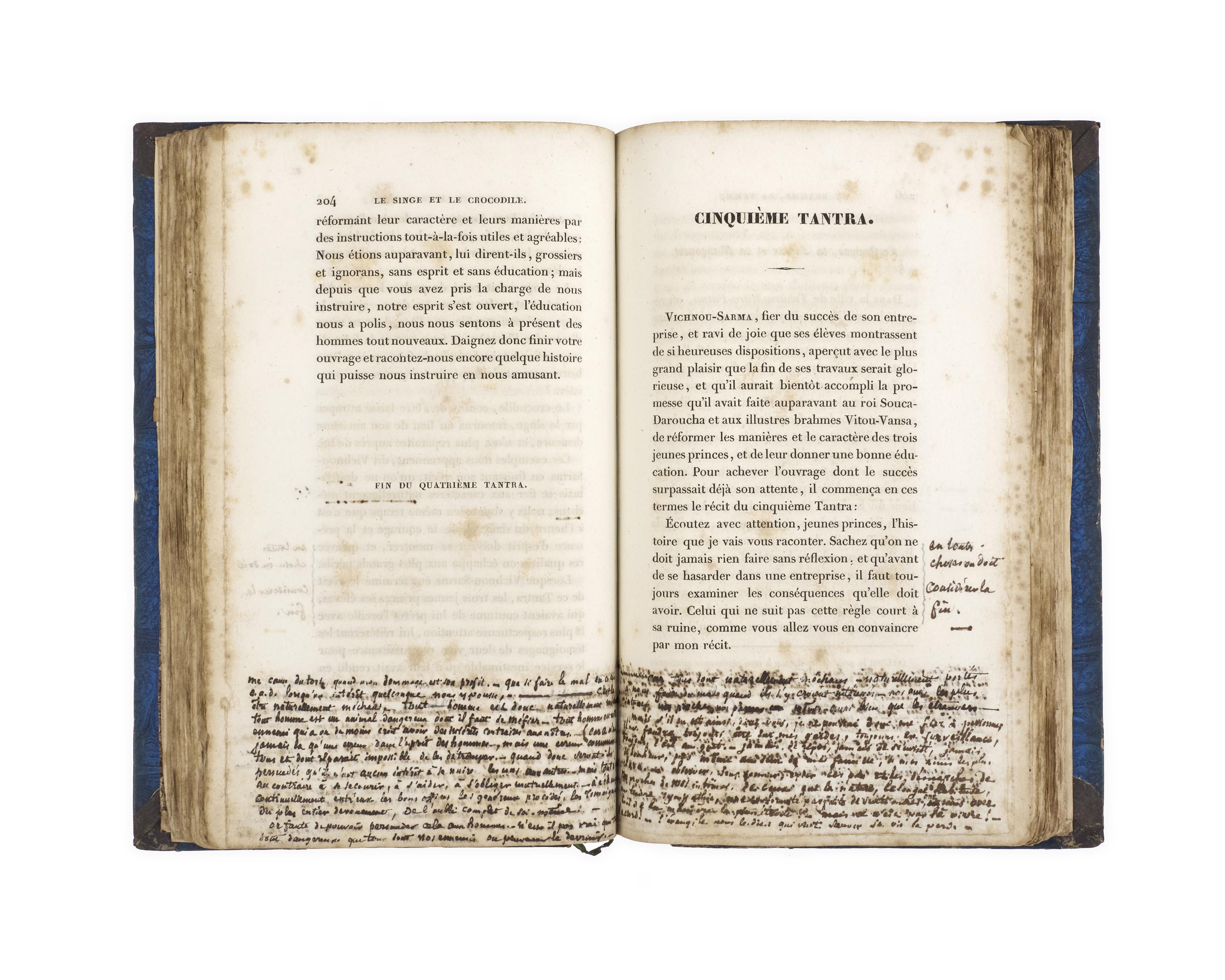
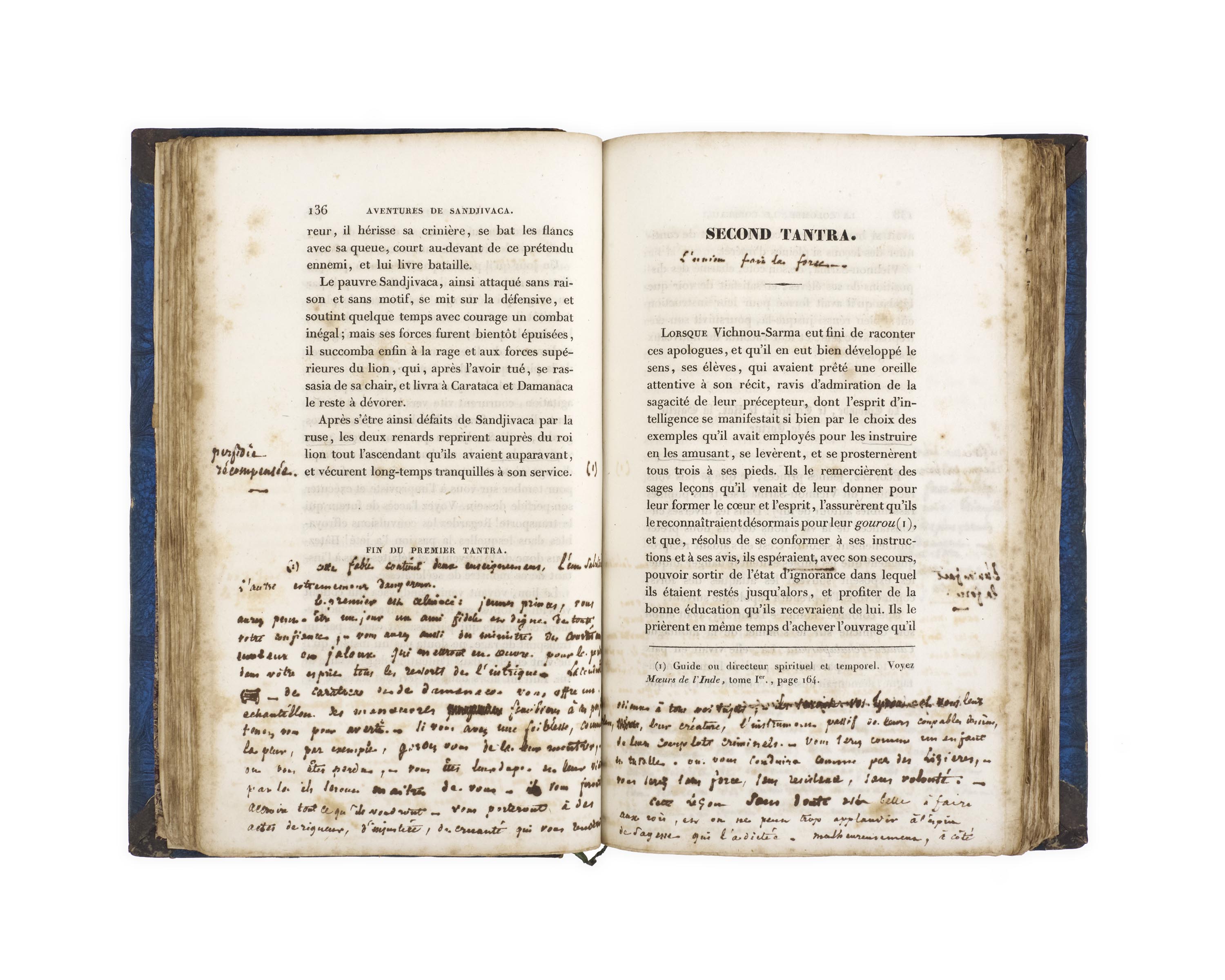
Several of the annotations attempt to capture the essence of a story. Beside the fable of ‘the king and the elephant’, for example, Lefevre writes: ‘all men are kings, and all of them subjects, since they all depend upon one another, the greatest like the smallest, the strongest like the weakest’, (trans.). He is clearly absorbed by what he reads: in book 1, for example, he imagines what the jackal Damanaka might have replied to his sidekick Karataka (‘Damanaca pourrait lui repondre …’). At the conclusion of the first book he provides a long summary, beginning ‘this fable contains two teachings, the one salutary, the other extremely dangerous’. At the end of book IV, he takes issue with the precept ‘he who reveals his thoughts to another before knowing theirs is heading for ruin’, writing as follows: ‘If everyone followed this rule …. each would keep their thoughts to themselves – men would live among one another like veritable werewolves.’
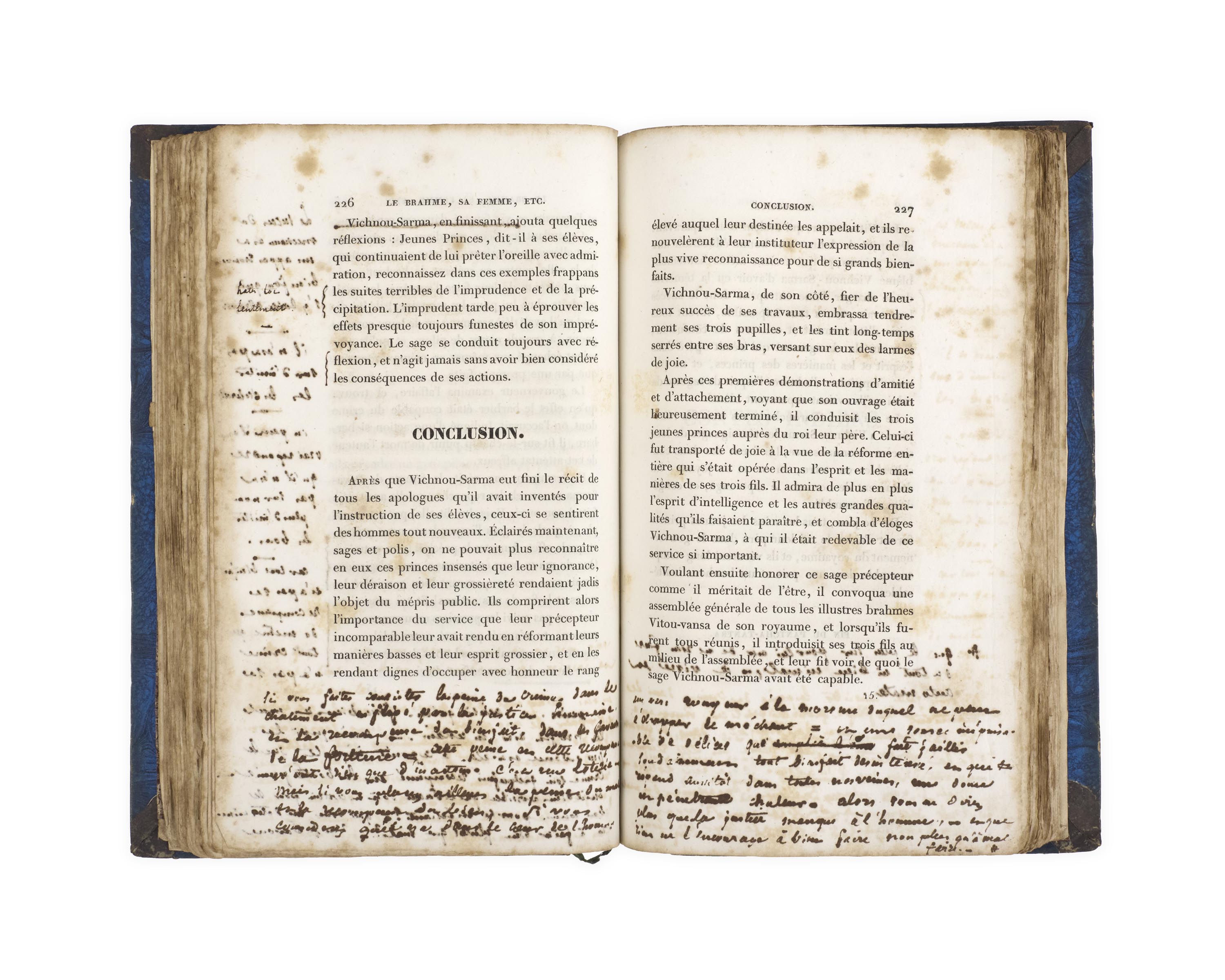
In densely written notes to the lower margins of pp. 203–8, Lefevre directly addresses the author (‘Vichnou-Sarma’) over his use of the phrase ‘caractères naturellement méchans’, opening as follows: ‘What do you mean by naturally bad? Are they characters constantly driven to hurt, to do harm for harm’s sake, with no interest or goal other than to enjoy the suffering of their victims? But there is no such character among the human race … But if you mean …. those who are driven to do bad when they believe it to be in their interest, then I ask you what man is not naturally bad?’ In another long note at the conclusion of the last book, he engages with questions of punishment and justice.