The Lord’s Vineyard
PEZZI, Lorenzo.
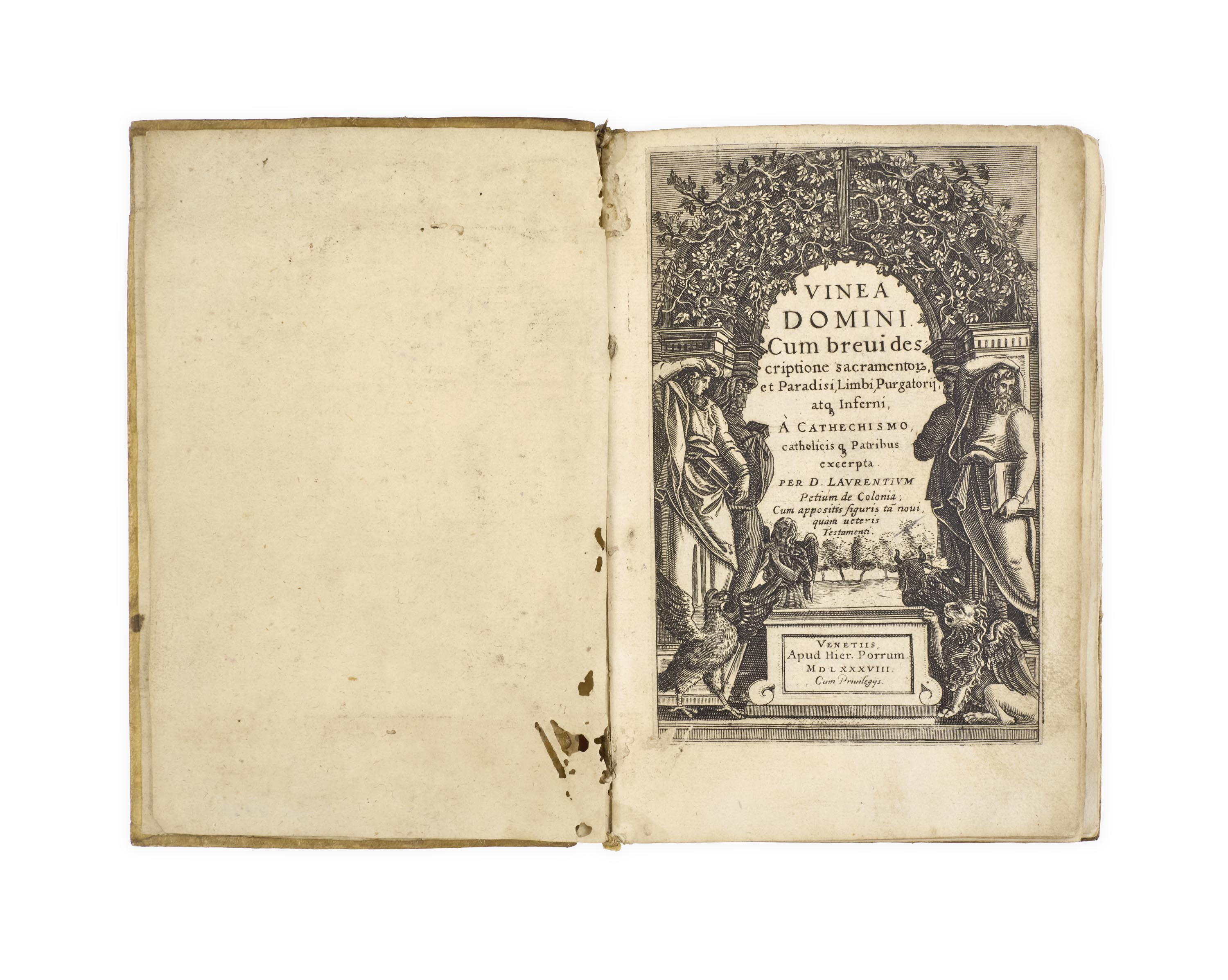
Vinea domini. Cum brevi descriptione sacramentor[um] et Paradisi, Limbi, Purgatorii, atq[ue] Inferni, a Cathechismo catholicisq[ue] Patribus excerpta … Cum appositis figuris ta[m] novi, quam veteris Testamenti. Venice, Girolamo Porro, 1588.
8vo, pp. [24], 59, [6], 62–186, [2, blank]; engraved title-page, engraved portrait of the author to A4v, double-page engraving to **1v–**2r, twelve full-page engravings, printer’s device to E7r, woodcut initials, head- and tailpieces; some worming to inner margin of title and to lower margins towards the end, ink stains to p. 51; a good copy in contemporary vellum, title in manuscript to spine; marked, some worming to hinges and pastedowns; inscription to front pastedown ‘Visto 1597 et admesso 1598’, stamped date to rear pastedown ‘29 Jul 1938'.
Added to your basket:
Vinea domini. Cum brevi descriptione sacramentor[um] et Paradisi, Limbi, Purgatorii, atq[ue] Inferni, a Cathechismo catholicisq[ue] Patribus excerpta … Cum appositis figuris ta[m] novi, quam veteris Testamenti.
First edition of this handsomely illustrated work on the sacraments and the afterlife by Lorenzo Pezzi of Cologna Veneta, with copper-engraved plates by the publisher Girolamo Porro.
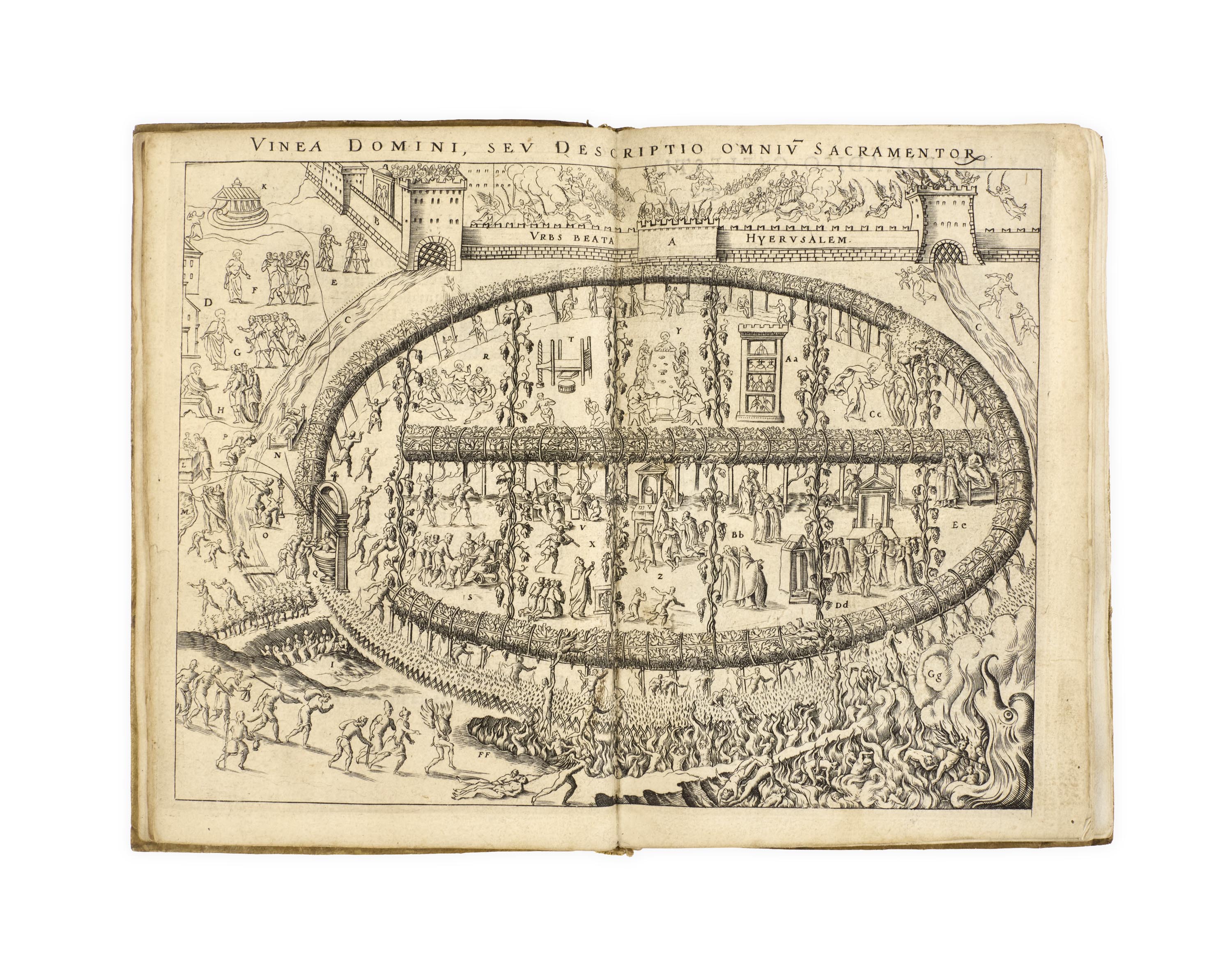
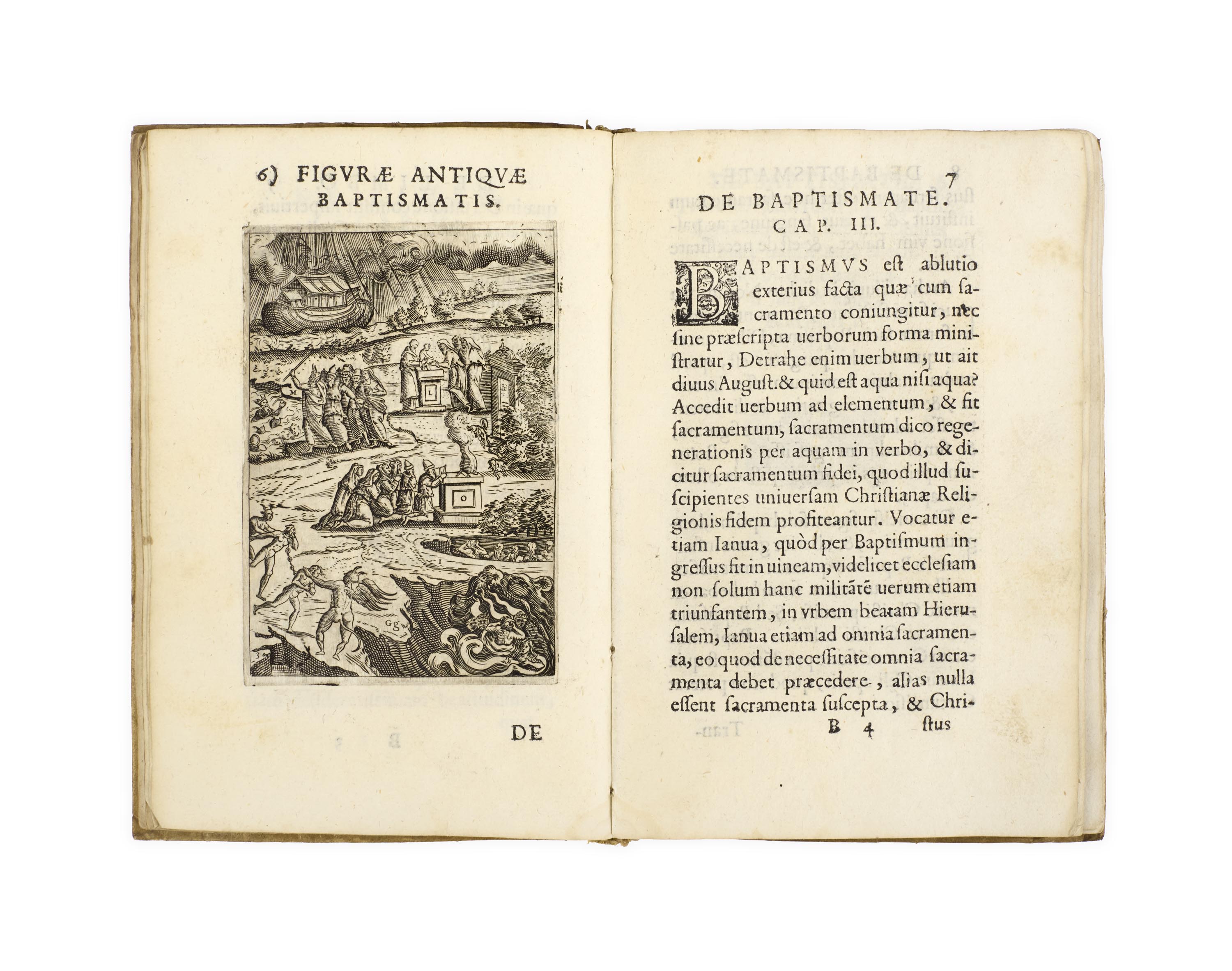
The text begins with a remarkable emblematic double-page engraving of the ‘Lord’s vineyard’ featuring, for example, the city of Jerusalem as Paradise, Noah’s Ark, the Hellmouth, God with Adam and Eve, and the Last Supper. The engravings that follow depict souls in Paradise, Limbo, Purgatory, and Hell, and the seven sacraments of baptism, confirmation, penance, communion, ordination, matrimony, and extreme unction.
The engravings are recorded in several states. In this copy the portrait is in the smaller, second state, the double-page engraving in an early, unshaded state, and the twelve subsequent engravings in a later state with letters added in, keying them to the double engraving. Another issue of the same year has Porro’s imprint erased and replaced with that of the heirs of Francesco Ziletti.
The second part of the work (from p. 61) takes the form of a dialogue on the sacraments in general between an examiner and a cleric.
EDIT 16 CNCE 35555; Mortimer, Harvard Italian, 378; USTC 848039.