The Aldine Pliny
a Glassmaker’s Copy?
PLINY the Younger, Gaius SUETONIUS TRANQUILLUS, and Julius OBSEQUENS.
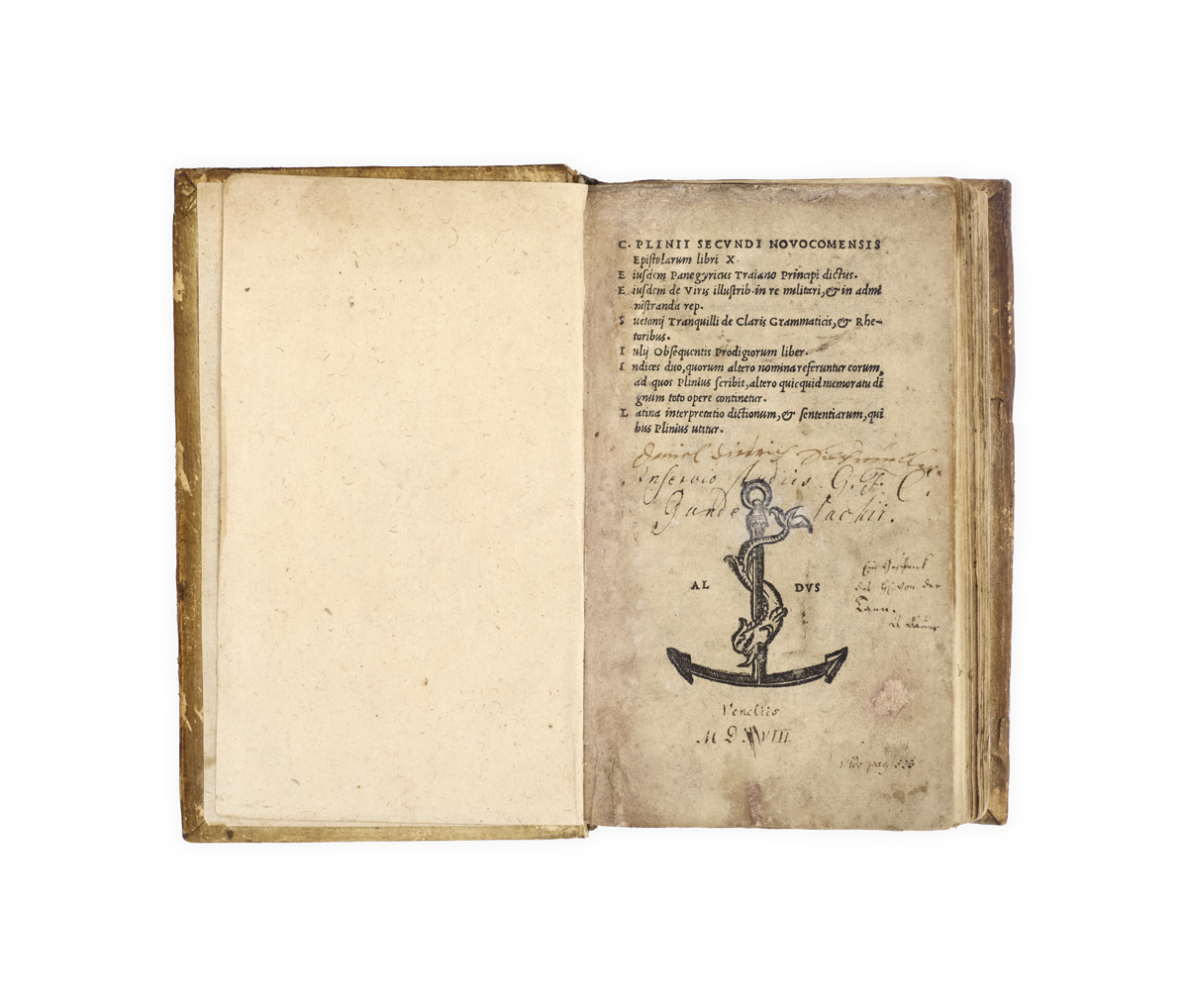
C. Plinii Secundi Novocomensis Epistolarum libri X. Eiusdem Panegyricus Traiano Principi dictus. Eiusdem de Viris illustrib. in re militari, & in administranda rep. Suetonii Tranquilli de Claris Grammaticis, & Rhetoribus. Iulii Obsequentis Prodigiorum liber. [(Colophon:) Venice, in the house of Aldus and Andrea Torresano, June 1518.]
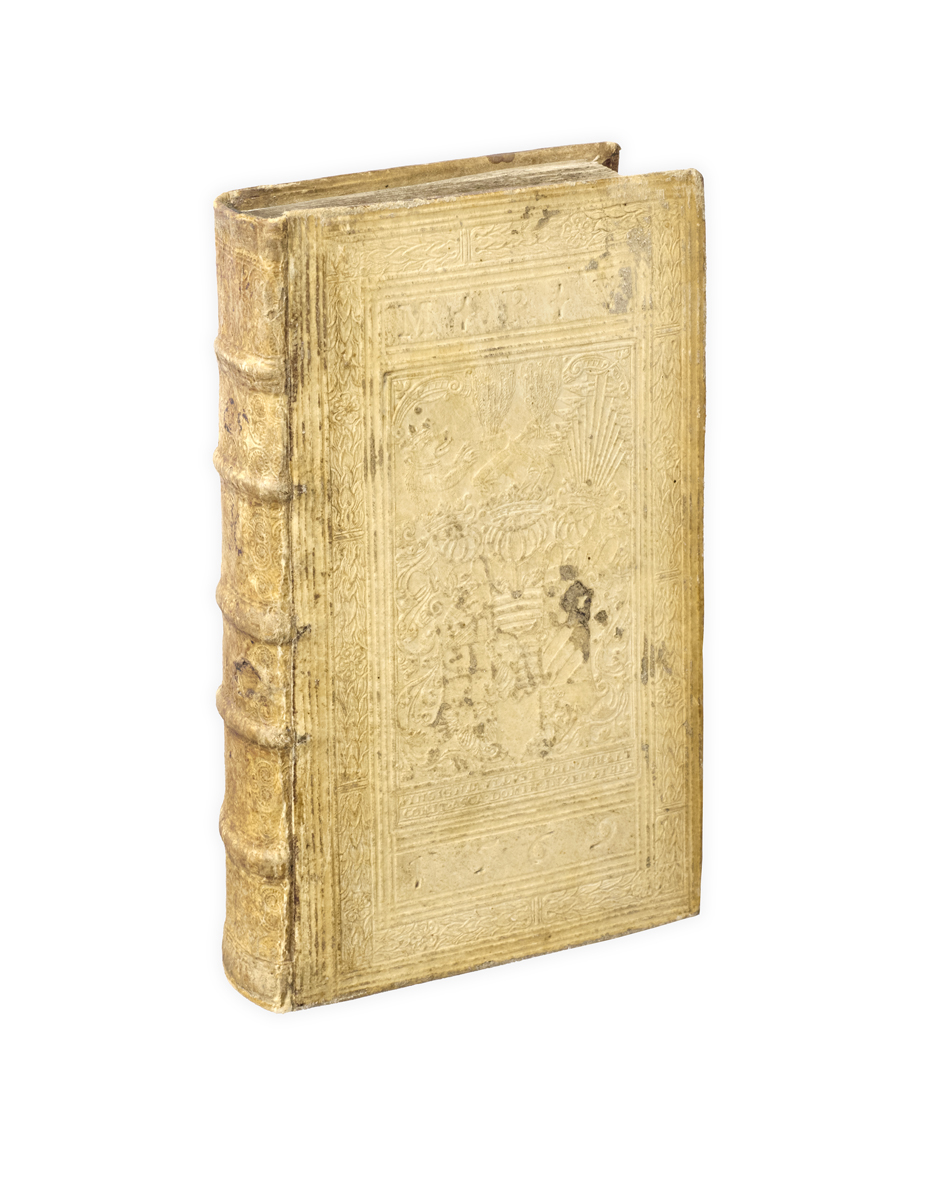
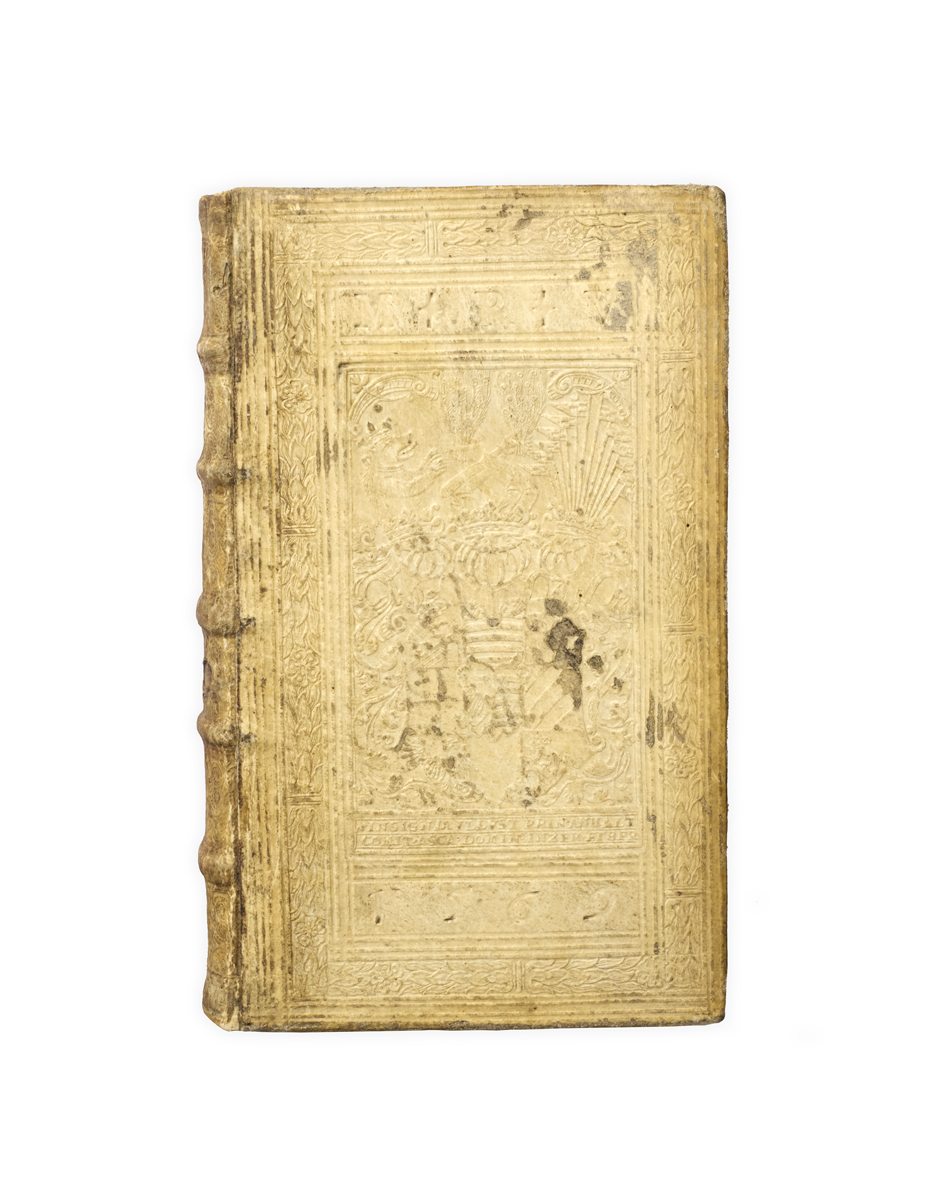
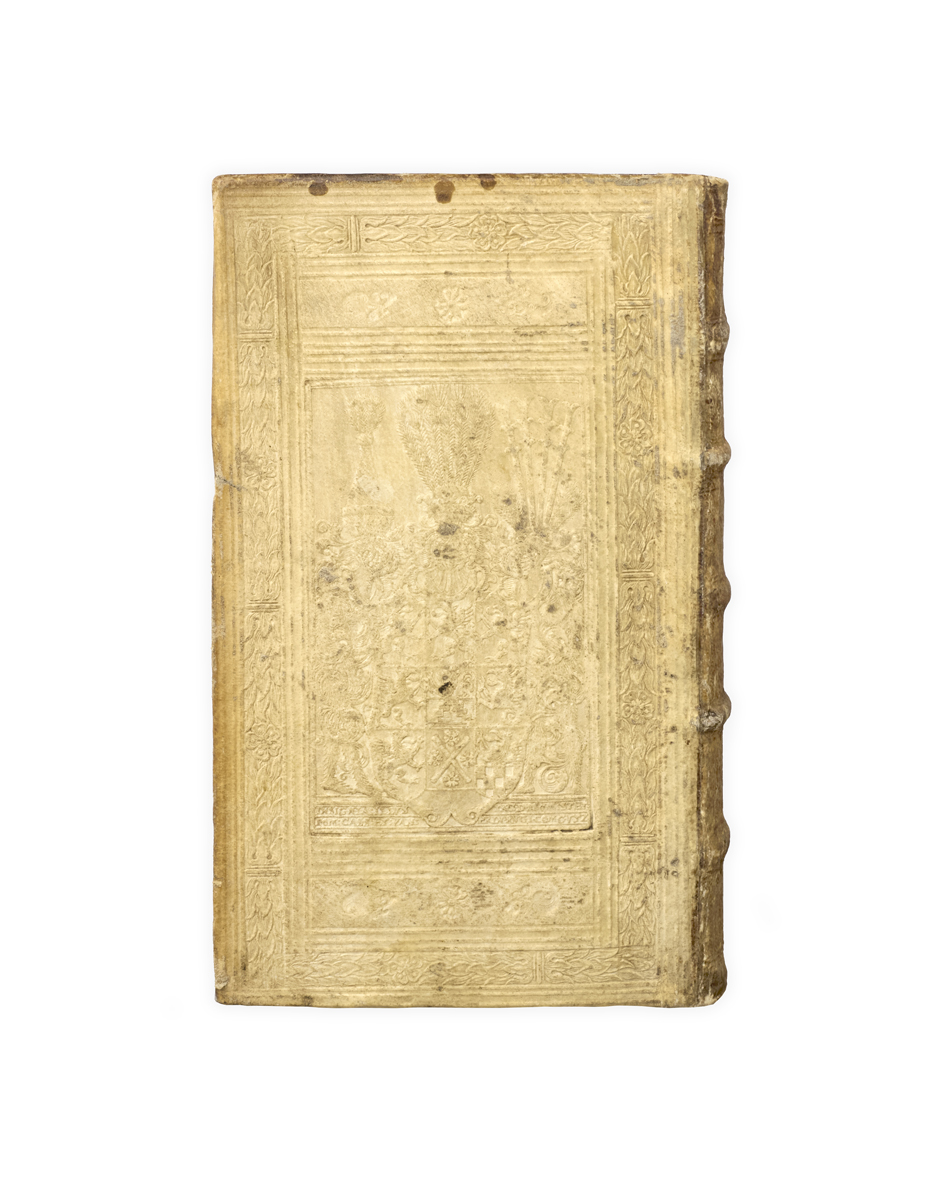
8vo, pp. [lviii], 525, [3]; italic letter, woodcut Aldine device to title-page and final verso; title soiled and strengthened in gutter with a few small paper repairs, small wormhole affecting first 4 ff. (partially repaired), some marginal staining and soiling, q3 repaired at lower corner, final leaf a little soiled and repaired in gutter , otherwise a good copy; recased in later sixteenth-century blind-stamped pigskin over wooden boards by Hans Cantzler of Wittenberg (see below), upper cover with the arms of Anhalt, the initials ‘M.R.V.’, and the date 1569, lower cover with the arms of Pomerania; very skilfully rebacked using old pigskin, edges somewhat rubbed, pastedowns renewed (covering old board liners of early printed waste; early annotations and underlinings in red and black ink to c. 10 pp. in multiple hands, sequential manuscript numbering provided for Pliny’s letters and lives, inscriptions to title-page of Daniel Dietrich Silchmüller and ‘Inservio studiis G.F.C. Gundelachii’, later inscription to title-page ‘Geschenck des GC von der ... Bauer’, armorial bookplate of Alexander Trotter to front pastedown.
Added to your basket:
C. Plinii Secundi Novocomensis Epistolarum libri X. Eiusdem Panegyricus Traiano Principi dictus. Eiusdem de Viris illustrib. in re militari, & in administranda rep. Suetonii Tranquilli de Claris Grammaticis, & Rhetoribus. Iulii Obsequentis Prodigiorum liber.
The second Aldine edition of the letters of Pliny the Younger, with marks of early German ownership and annotations.
As well as the letters, the volume contains his Panegyric to Trajan and his lives of illustrious men, together with Suetonius on grammarians and Julius Obsequens on prodigies or phenomena. This second edition contains an index of subjects not present in the first edition of 1508, and an interpretation of Greek passages, while retaining the previous dedication to Alvise Mocenigo.
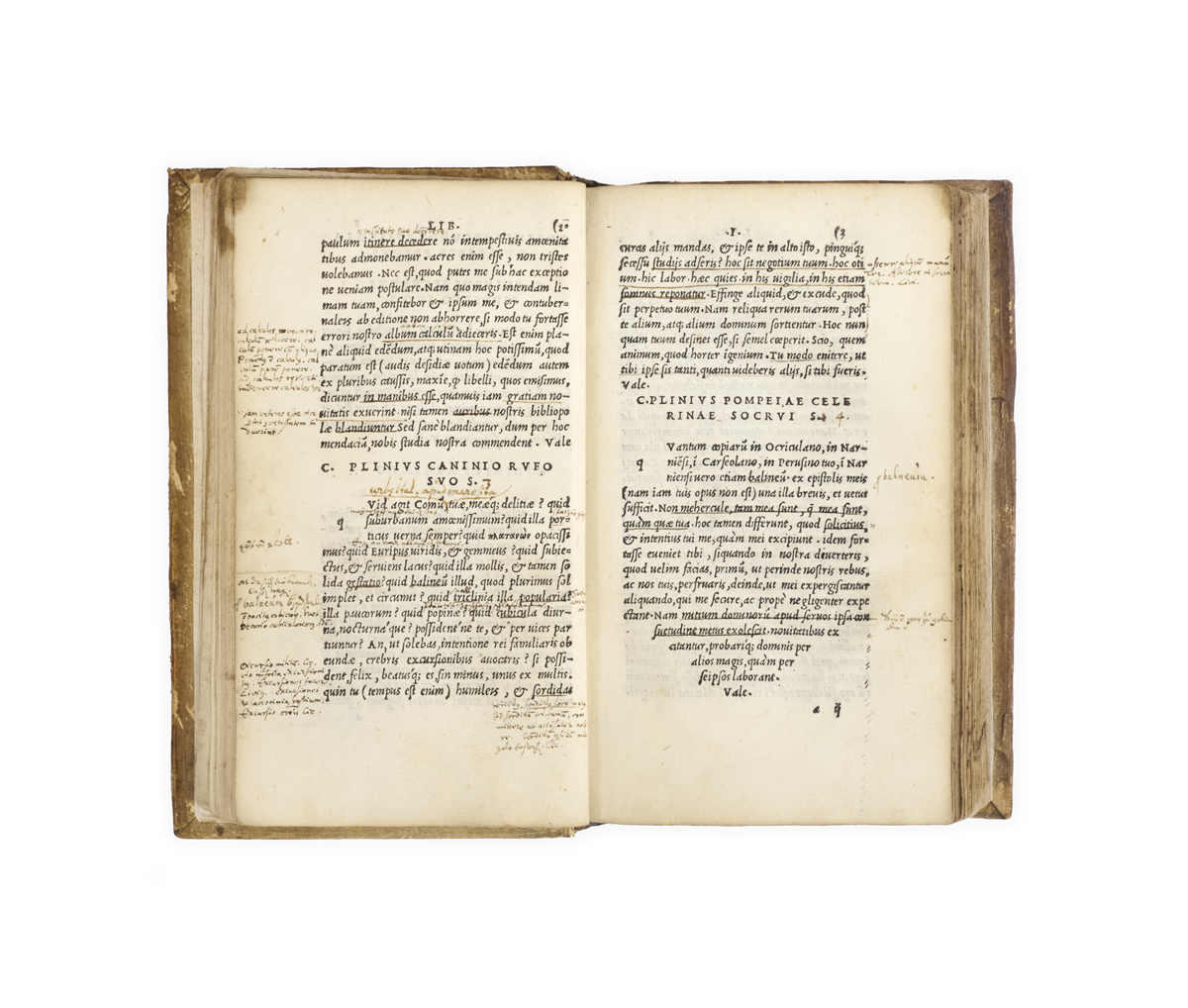
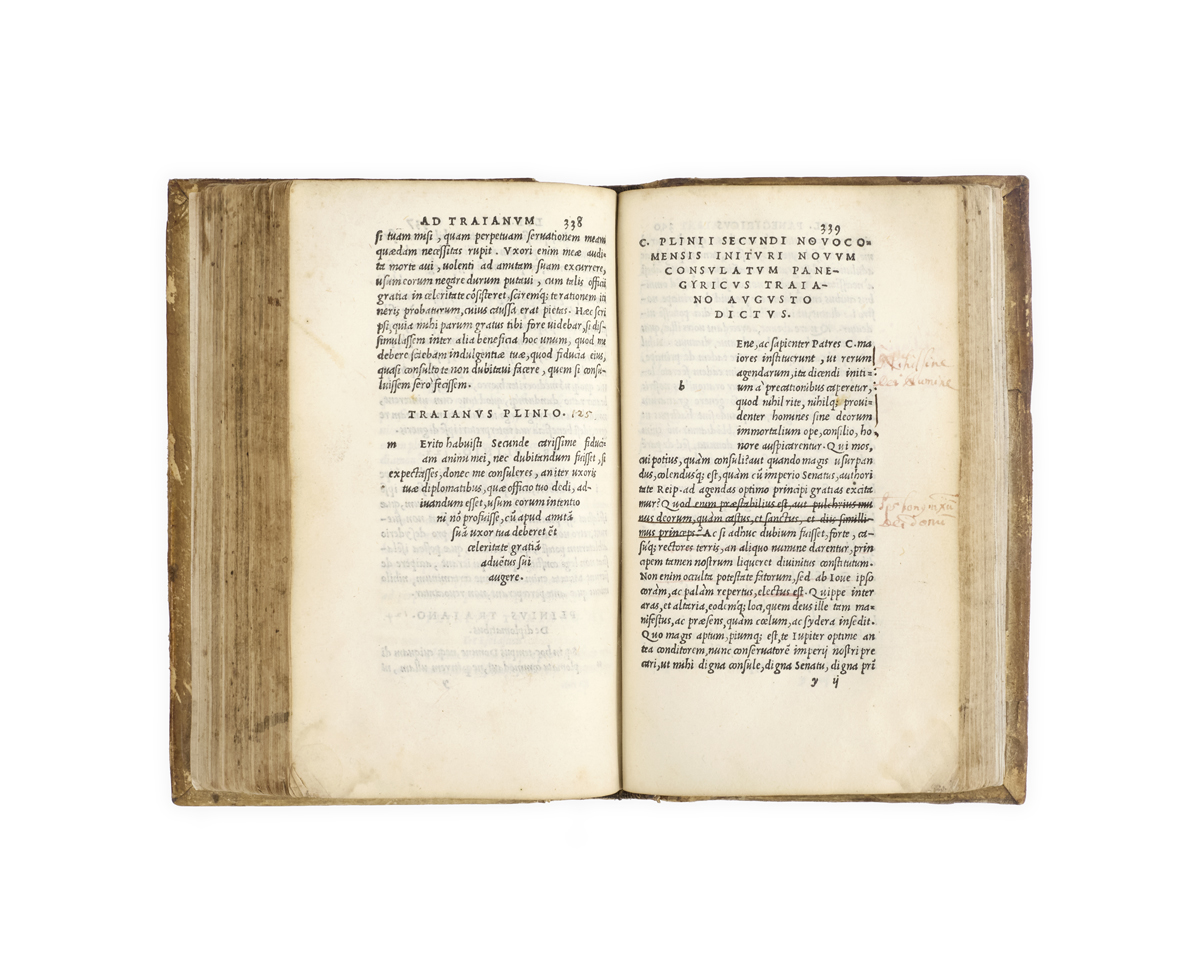
The binder, Hans Cantzler (EBDB w003993) was active in Wittenberg between 1564 and his death in 1580, and owned a substantial bindery. An almost identical binding, with the same two armorial stamps, initials and date, is found on a 1561 Latin dictionary, from the Augustinian Wengenkloster in Ulm (now in Stuttgart). The binding panels were later used by Severin Roetter of Wittenberg (EBDB w000461). The annotations are predominantly to the first three pages of Pliny’s letters, the first three pages of the Panegyric to Trajan, and three pages of the De viris illustribus (numbers 23 and 26–28). They expand on points in the text or clarify references; on a2, next to ‘Comum’, is written ‘urbs ital.’, as presumably a German reader would not necessarily be familiar with the town of Como. Unusually, the page numbers appear at the right-hand upper corner of each page, not the (opposite) outer corners, in common with the 1508 Aldine edition.
Provenance:
1. Title inscribed ‘Inservio studiis G.F.C. Gundelachii’ (in the service of the studies of G.F.C. Gundelach). ‘Many members of the Gundelach family (sometimes known as Gondelach and Gundeloch) were glassmakers in Hesse from the Middle Ages onward ... The Gundelachs were founders, owners, lessees, and workers in glass factories, although family members in and around Großalmerode also made their living from pitcher-making, trading, and other activities’ (Kunicki-Goldfinger, ‘Eiland: Georg Gundelach and the Glassworks on the Decin Estate of Count Maximilian Thun-Hohenstein’, in Journal of Glass Studies 48 (2006), p. 233). One seventeenth-century glassmaker by the name of Georg Gundelach established a crystal glassworks in Oranienbaum, Anhalt.
2. Seventeenth-century gift inscription in a German hand ‘Ein Geschenck des GC [Gundelach] von der ... Bauer’, with scattered annotations in the same hand.
3. Ownership inscription to title of [Johann] Daniel Dietrich Silchmuller, (1669–1748) born in Bad Salzungen in Thuringia and later preacher in the nearby towns of Stedtlingen and Juchsen.
4. Bookplate of Alexander Trotter of Dreghorn, Midlothian (1755–1842), secretary to Lord Melville, with the appropriate motto ‘Festina lente’.
EDIT16 CNCE 37589; USTC 849910; Adams P-1538; Ahmanson-Murphy 166; Cataldi Palau 37; Renouard 82/1.