Philosophy, Revolution, and Opera
[SERGEANT, John.]
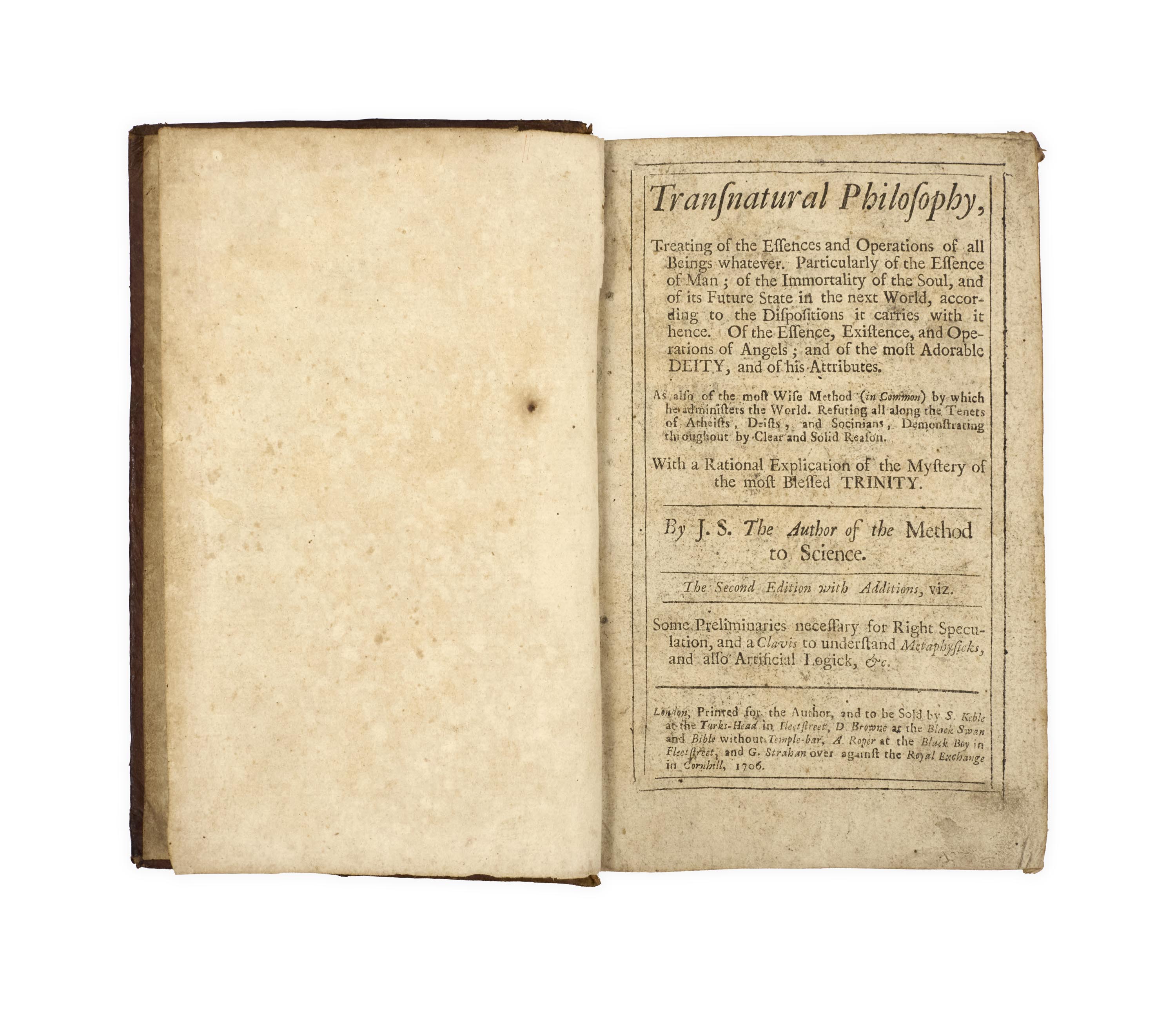
Transnatural Philosophy, treating of the Essences and Operations of all Beings whatever. Particularly of the Essence of Man … By J. S. the Author of the Method to Science. The second Edition with Additions, viz. Some preliminaries necessary for right Speculation, and a Clavis to understand Metaphysicks, and also artificial Logick, &c. London, for the Author, and to be sold by S. Keble, D. Browne, A, Roper, and G. Strahan, 1706.
[bound with:]
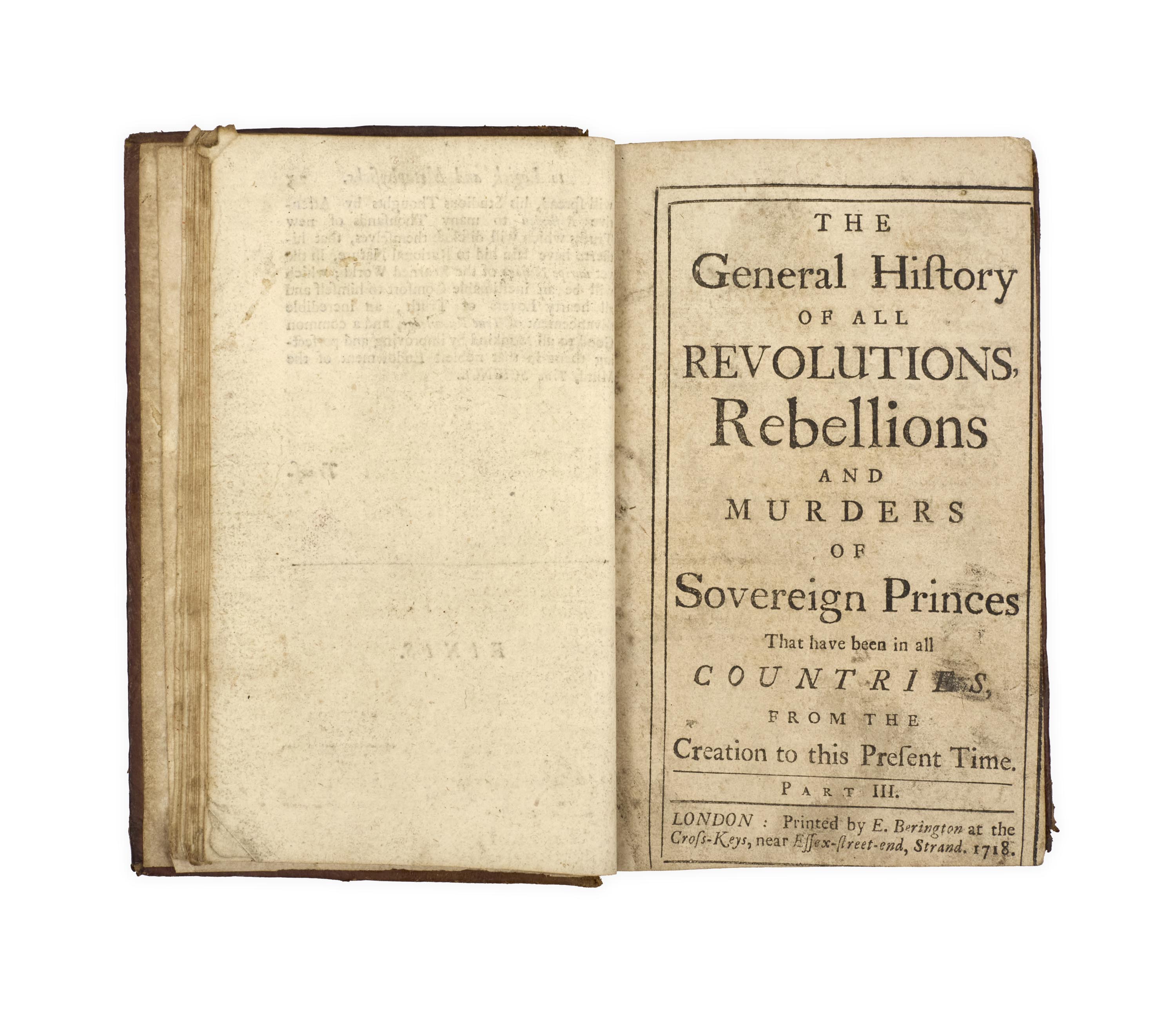
[REVOLUTION.] General History of all Revolutions, Rebellions and Murders of sovereign Princes that have been in all Counties from the Creation to the present Time. Part III. London, E. Berington, 1718.[and with:]
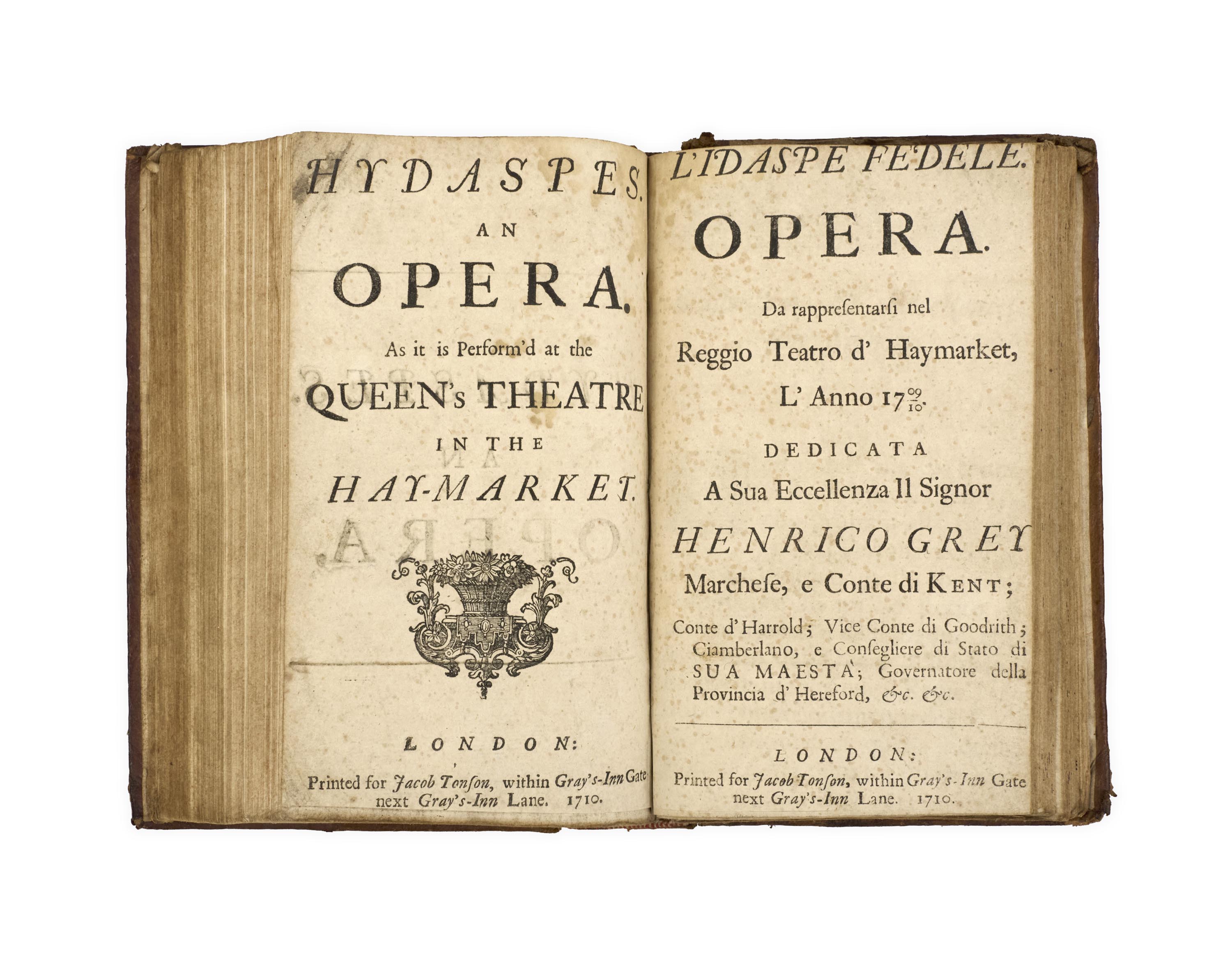
[GRIMALDI, Nicolò?] Hydaspes. An Opera. As it is perform’d at the Queen’s Theatre in the Haymarket. [Second title:] L’Idaspe Fedele. Opera … dedicata a sua eccellenza il signor Henrico Grey Marchese, e Conte di Kent … London, Jacob Tonson, 1710.[and several others.]
Three works, 8vo, Sergeant: pp. [iv], 8, 7–25, [1], i.e. title-page, dedication, and ‘Preliminaries’ (see below), with two authorial[?] manuscript corrections to p. 14, General History: pp. [iv], 191–290, Hydaspes: pp. [iv], 3, [1], 75, [1], with facing Italian and English title-pages and text throughout; woodcut head-pieces and initials; headlines and pagination mostly cropped; bound with five other works 1710–1723 (two imperfect) in contemporary Cambridge-panelled sheep; armorial bookplate of Lord Sandys, manuscript index of contents to front endpaper.
Added to your basket:
Transnatural Philosophy, treating of the Essences and Operations of all Beings whatever. Particularly of the Essence of Man … By J. S. the Author of the Method to Science. The second Edition with Additions, viz. Some preliminaries necessary for right Speculation, and a Clavis to understand Metaphysicks, and also artificial Logick, &c.
An unusual tract volume of publishing curiosities and rarities.
The philosopher John Sergeant (1623–1707) was a Catholic convert and follower of Thomas White, alias Blacklo, who had narrowly survived the 1665 plague as ‘a mere skeleton, nothing but skin and bones’. Implicated in the Popish Plot in 1678, Sergeant is best known for his Solid Philosophy asserted (1697), a reply to Locke, who heavily annotated his copy. Sergeant’s Transnatural Philosophy (1700) was a further response to Locke. In 1706 Sergeant evidently intended to reissue unsold sheets with some additional preliminaries – a new dedication to ‘his much honoured friend T. S. Gent’, and some ‘Preliminaries necessary to arrive at right Speculation, or a Clavis to understand Metaphysicks; and also artificial Logick [etc.]’. This has its own title-page (London, Printed for the author, 1706) and is essentially an independent work, comprising twenty-two sections summarising his approach to metaphysics and logic against Descartes and Locke. For whatever reason, the project seems to have stumbled, and there are only two copies in ESTC (BL, as here, and NLW, bound with the 1700 sheets).
A General History of all Revolutions was published in 1712, followed by a second edition in two parts later that year, both printed for J. Baker. The present Part III was issued six years later by a different publisher, apparently delayed because of the cost of paper, and carries on the history from the rise of Rome to the death of Gracchus, suggesting the project was left very much uncompleted. We can trace copies at Huntington and Chicago (unverified) only.
Hydaspes was the first fully Italian opera performance in England (Almahide had featured intermezzi in English) and was a great success for the castrato Nicolò Grimaldi (‘Nicolini’) in the title-role, ‘the libretto of which he either wrote or edited’ (Highfull, Burnim, and Langhans). The original libretto for its première in Naples in 1705 was by Giovanni Pietro Candi and Giulio Convò, revised by Silvio Stampiglia. The London music was arranged by Pepusch from Francesco Mancini. The scene in which Idaspe (dressed in a flesh-coloured costume to simulate nakedness) strangles a lion caused a sensation and ensured that the opera achieved a tremendous box office success, despite the unusually high price of the tickets. The lion itself received a long and amusing notice by Addison in The Spectator in 1711.
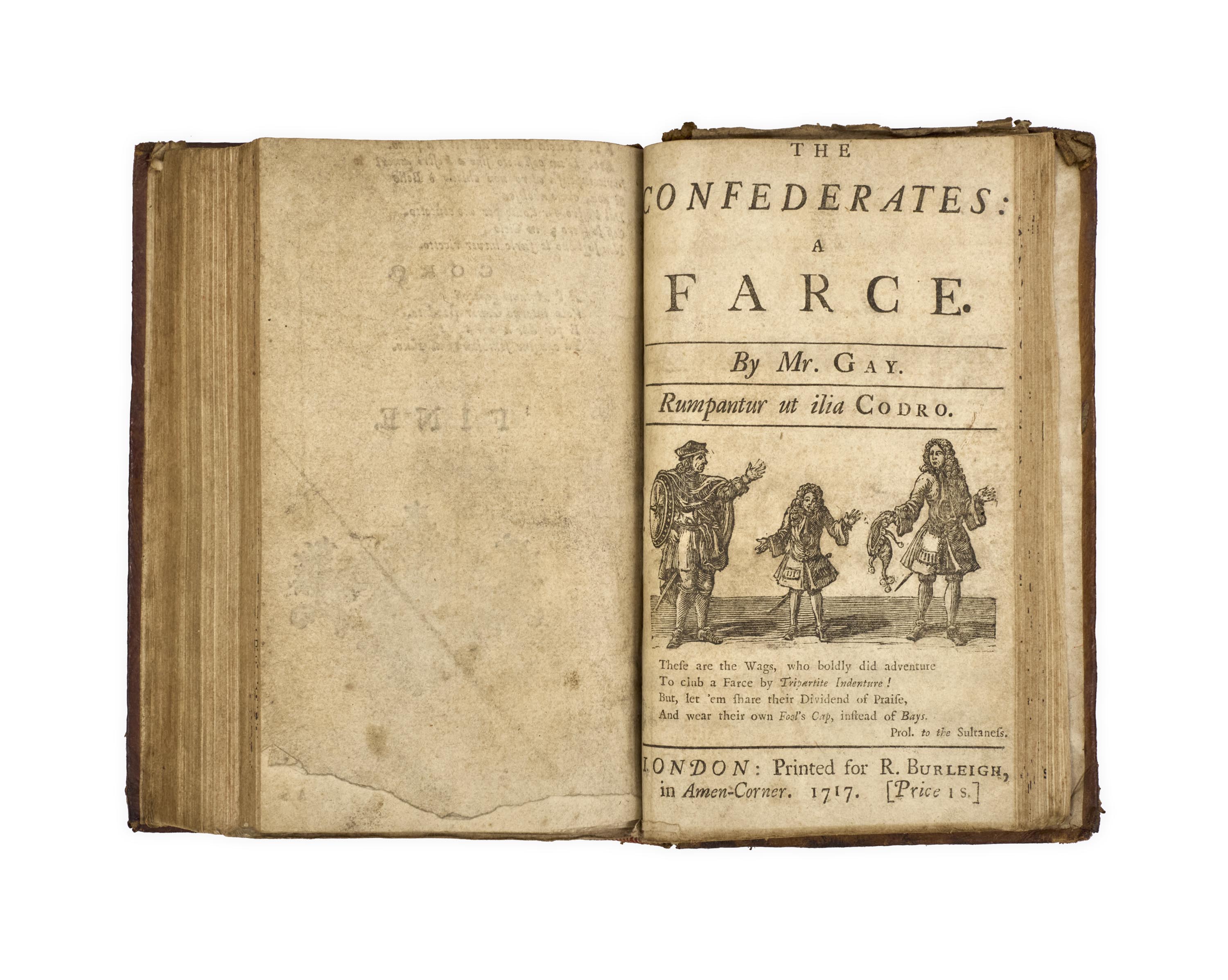
Bound with these works are copies of Ars Punica. Pars altera (London, ‘A. Moore’ [i.e. Edmund Curll], 1721) (bound with an eight-page Curll catalogue); Breval’s The Confederates, a satire on Gay, Pope, and Arbuthnot, who are characters, written for Curll, with a ribald dedication to ‘Phoebe Clinkett’; An Abstract of the Lives of Eteocles and Polynices (London, 1723), written to assist the audience of Jane Robe’s Fatal Legacy; and imperfect copies of Ned Ward, The Delights of the Bottle (1721) and Tassoni, La Secchia Rapita: the trophy Bucket (1710 or 1713).
Sergeant: ESTC T27199. General History: ESTC N30921. Hydaspes: ESTC N7663.