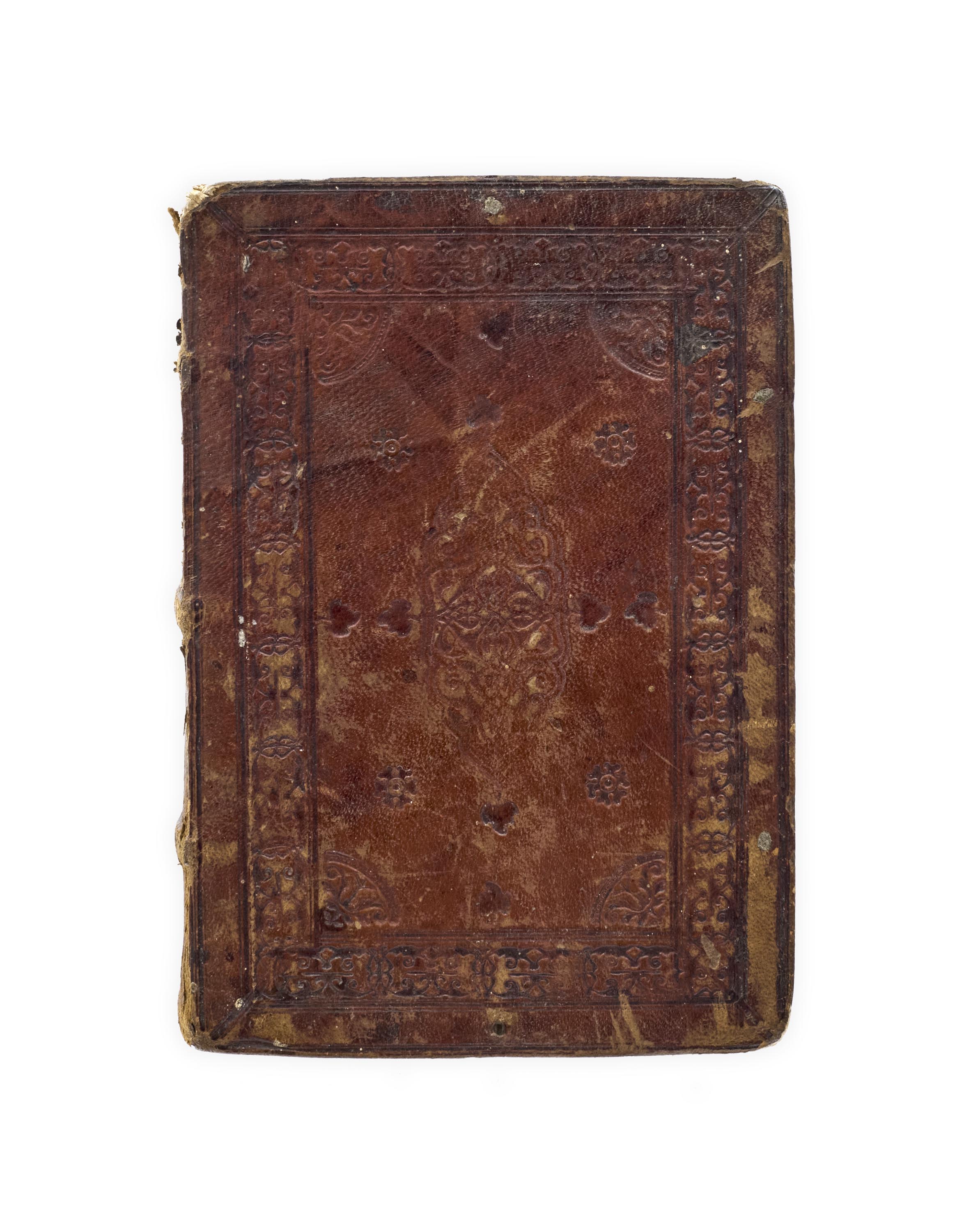
Bought and Bound in Bologna
SIBILLA, Bartolomeo.
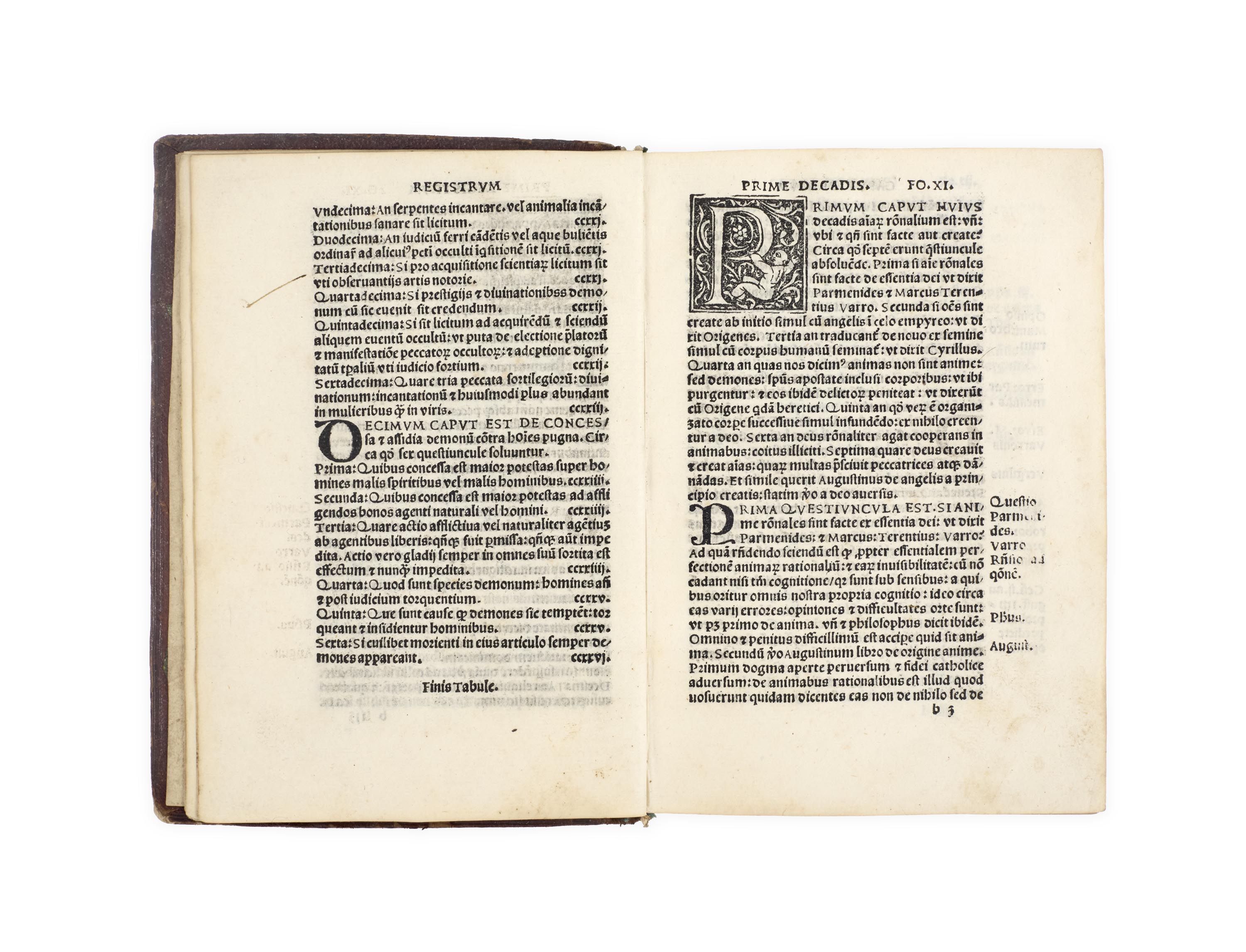
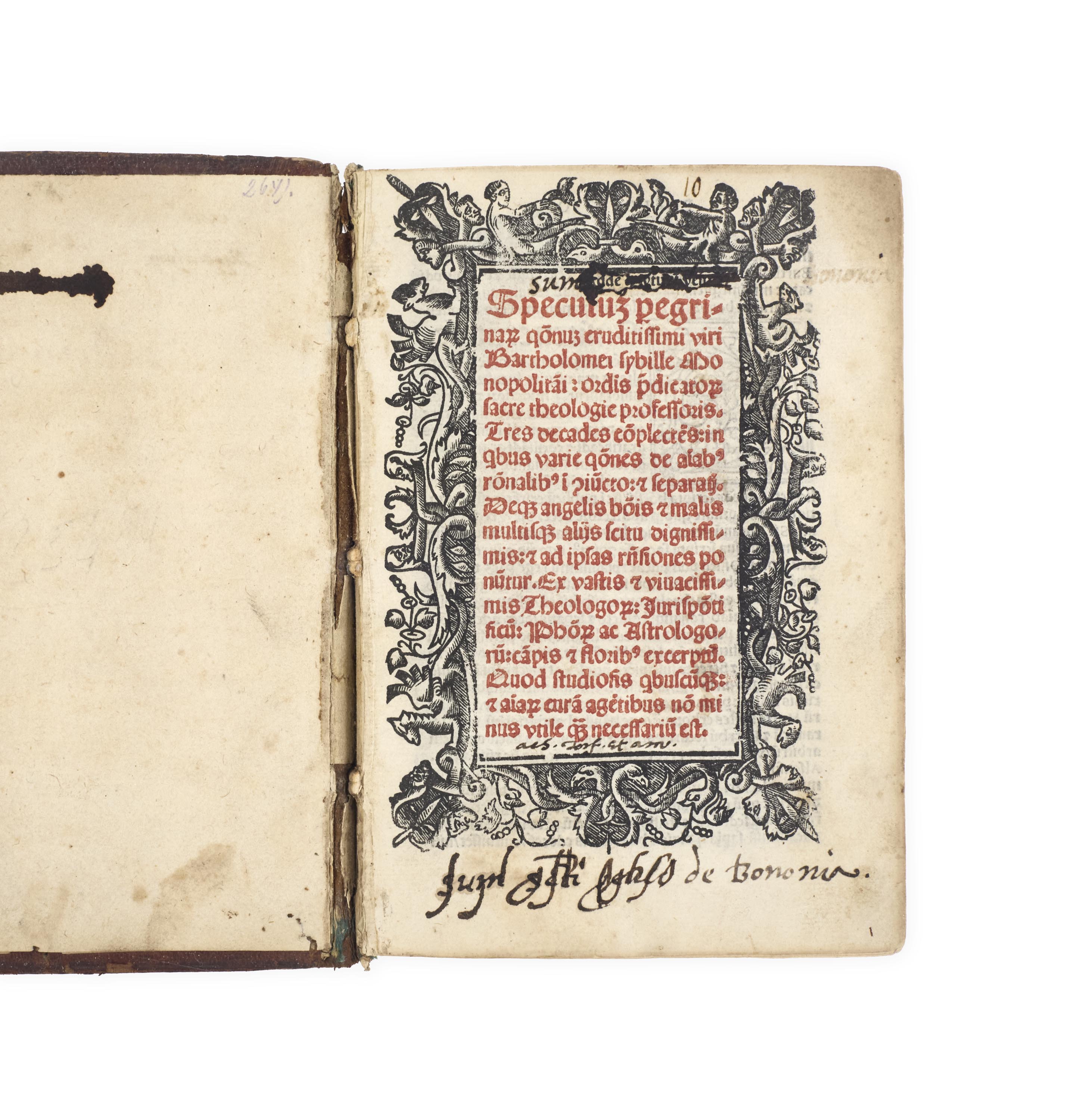
Speculum peregrinarum quaestionum … Tres decades complectens: in quibus varie quaestiones de animalibus rationalibus in conjuncto et separati. Deque angelis bonis et malis multisque aliis scitu dignissimis … [(Colophon:) Lyon, Jacques Myt, 9 August 1521.]
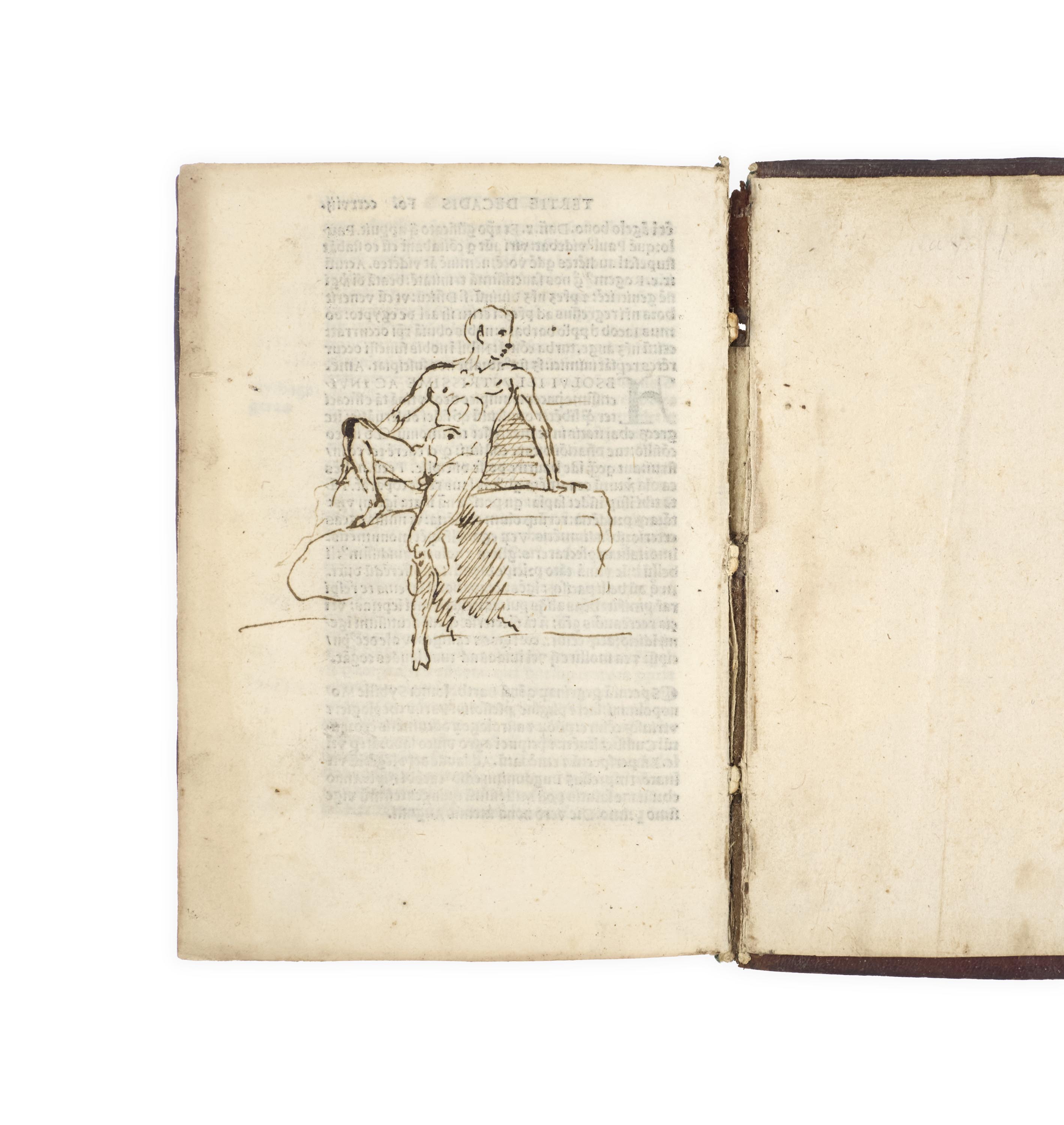
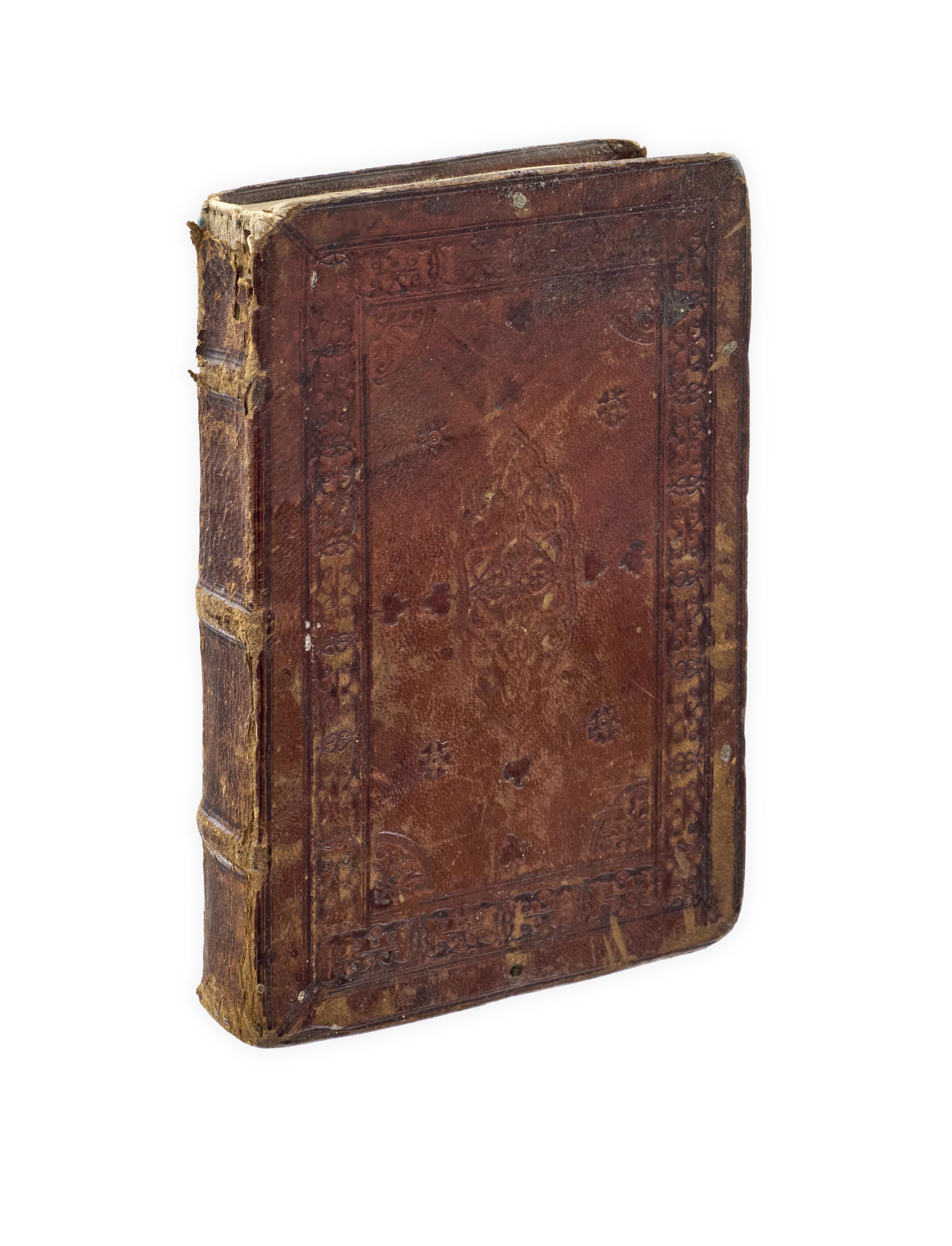
8vo, ff. ccxxviii; title printed in red within a black woodcut frame, woodcut initials; inscription at head of title-page erased with loss of paper affecting a few words on verso, otherwise a very good copy retaining a few deckle edges; bound in contemporary Bolognese sheep, blind-tooled to a panel design with a large central arabesque, plain spine and edges, stubs from four pairs of green silk ties, title in manuscript along tail-edges; binding somewhat rubbed, headcap chipped, front joint cracked and hinge broken, a few small wormholes visible in pastedowns; late sixteenth-century inscription ‘ach[ille] Torf[anini] et am[icorum]’ to title, early seventeenth-century inscription (partly obscured) to foot of title-page from the monastery of San Procolo in Bologna, the date 1576 written on front free endpaper, purchase note on rear flyleaf from Bologna for two libri, with a late sixteenth-century sketch in ink of a nude to final verso.
Added to your basket:
Speculum peregrinarum quaestionum … Tres decades complectens: in quibus varie quaestiones de animalibus rationalibus in conjuncto et separati. Deque angelis bonis et malis multisque aliis scitu dignissimis …
Second Lyon edition of Sibilla’s popular and extensive encyclopaedia on the nature of the soul, the possibility of ghosts, and good and bad angels, in a contemporary Bolognese binding.
Bartolomeo Sibilla (c. 1440s–c. 1493), a Dominican from Monopoli in Calabria, became prior of the Dominican convent of San Domenico Maggiore in Naples in 1486. He delivered the funeral sermon for Alfonso of Aragon’s wife, Ippolita Sforza, in 1488 in his native Monopoli, in which he declared that death was the beginning of immortality.
Originally published in 1493 with a dedication to Alfonso of Aragon, this is the second Myt edition of Sibilla’s wide-ranging encyclopaedia on the nature of the soul. It is divided into three ‘decades’, addressing the immortality and incorruptibility of the soul, angels and demons, but also the possibility of ghosts of the dead and the interpretation of dreams. ‘Sibilla’s work is noteworthy for its discussions of divination, ecstasy, raptures, and the prophecies of sibyls, sorcerers and seers – all topics that must have been very much on the minds of the authors of the legends of the “living saints”, and that certainly were hotly debated at the end of the fifteenth century and remained of topical interest long thereafter’ (Zarri, p. 281). His attitude to female prophetical writers, however, was unsurprisingly negative, looking askance at mystics such as St Catherine of Siena and St Brigit.
Similar tools were used by various Bolognese workshops of the early sixteenth century, though we have not been able to find another example of the repeated tool used to form the border.
Provenance:
1. Achille Torfanini, from a notable Bolognese family, was known to Ulisse Aldrovandi, who wrote him a letter in 1582. Torfanini also owned an astronomical incunable now in the Biblioteca Marciana, with an identical inscription.
2. The Benedictine monastery of San Procolo was one of the locations connected with the early history of Bologna university, before it obtained a permanent home in the city in the mid-sixteenth century.
USTC 145468; von Gültlingen II: Myt 79; Adams S1056; Caillet 10496. See Zarri, ‘Living saints: a typology of female sanctity’ in Women and Religion in Medieval and Renaissance Italy (1996), pp. 219–303.