A Plea for Medici Patronage (And How to Choose a Husband)
SIMEONI, Gabriele.
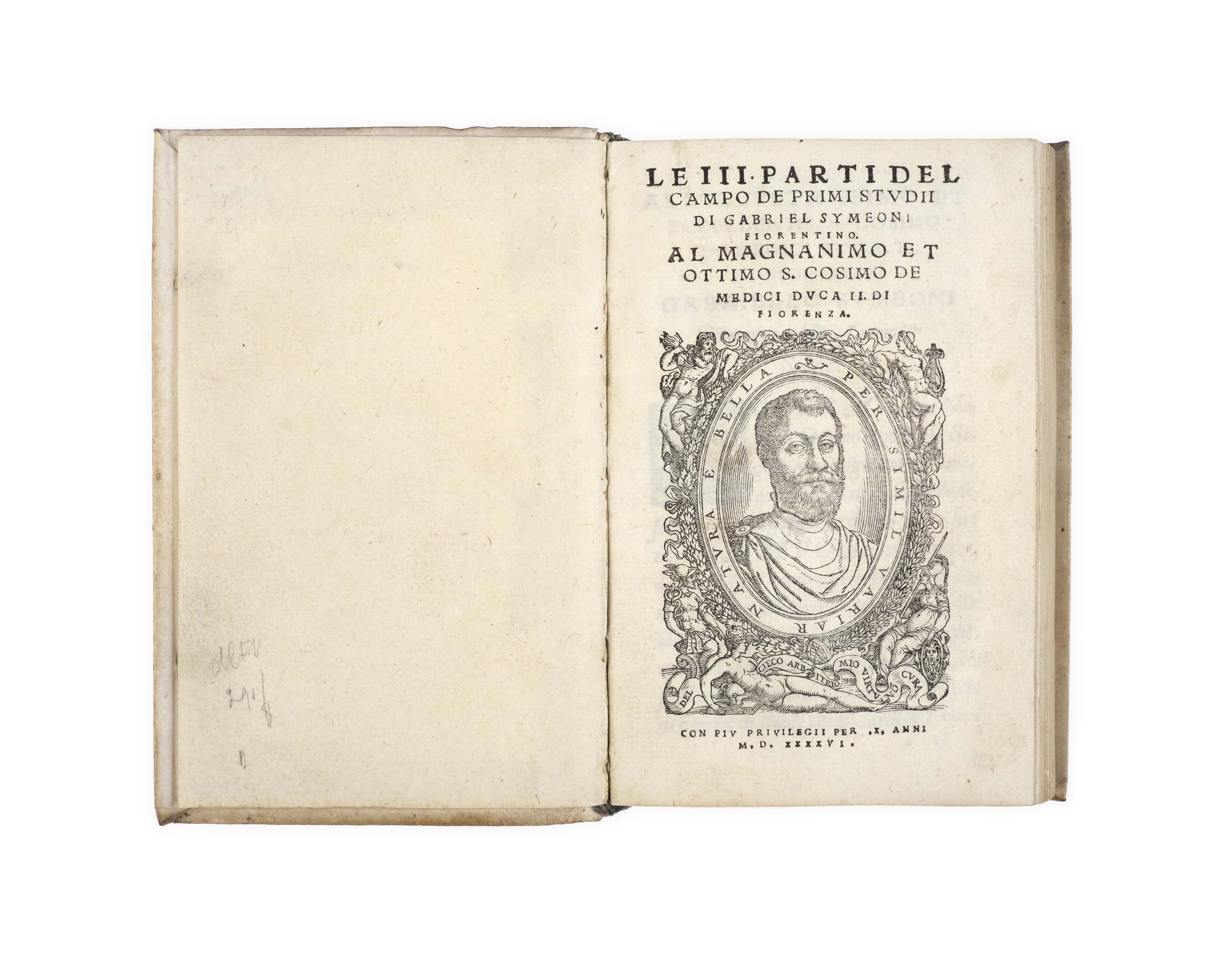
Le III parti del campo de primi studii di Gabriel Symeoni Fiorentino. [(Colophon:) Venice, Comin da Trino], 1546.
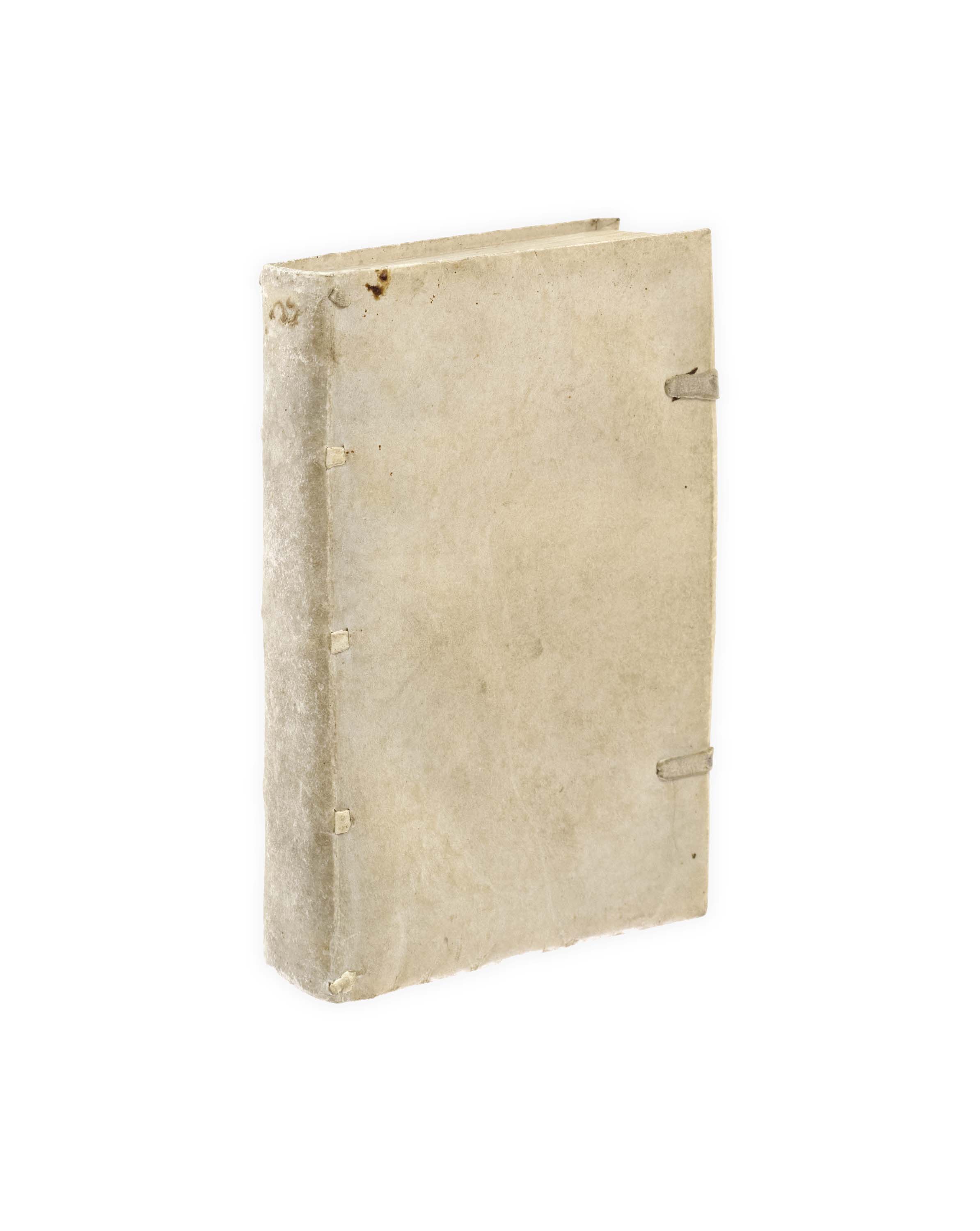
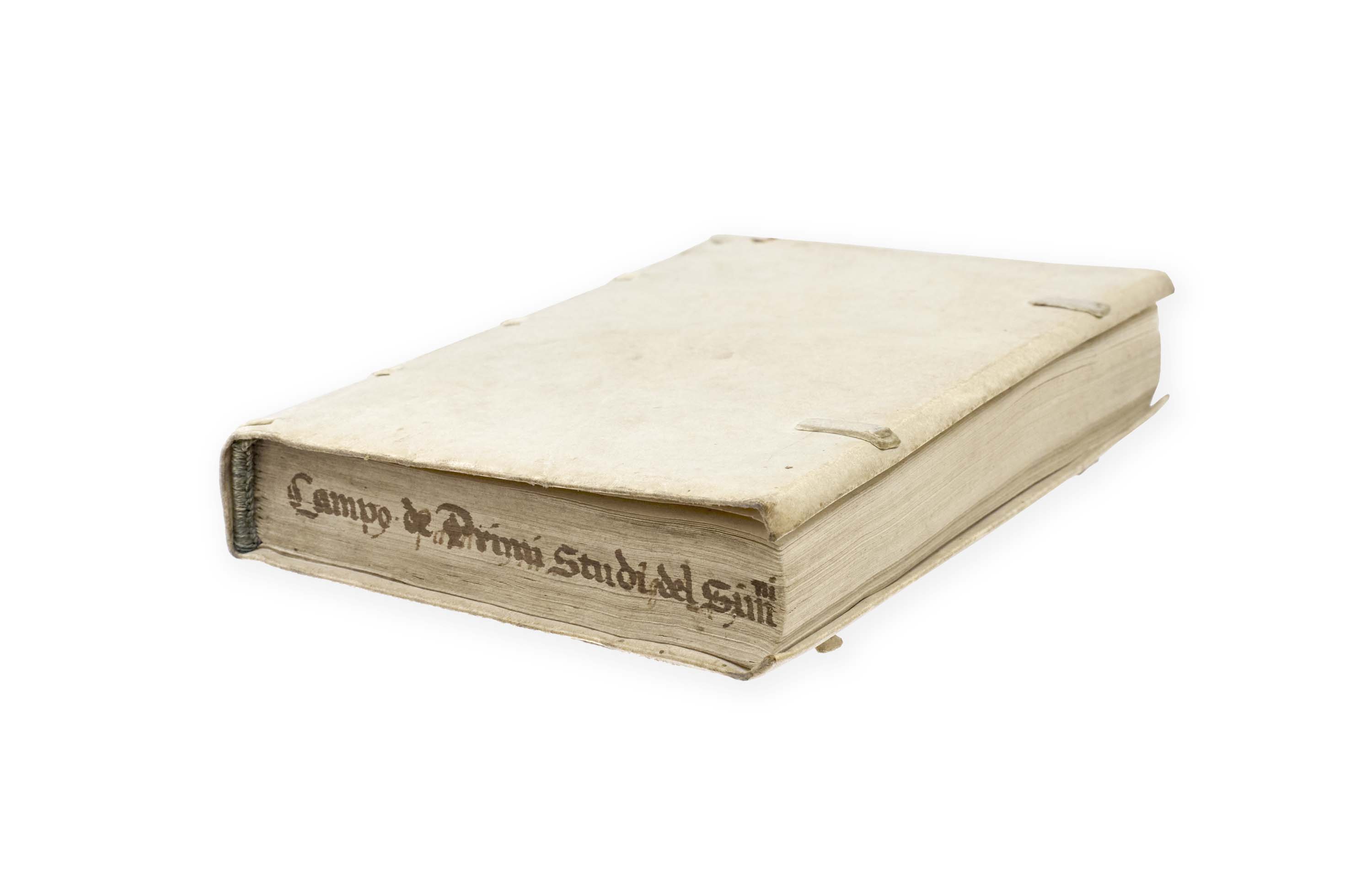
8vo, ff. [viii], 149, [1], [2, blank]; woodcut portrait of the author to title, woodcut initials, woodcut illustrations; very minor wormtrack to lower margin of quire M, otherwise an almost pristine copy; bound in contemporary vellum, yapp fore-edges with remains of two pairs of alum-tawed ties to fore-edge, manuscript lettering to tail-edges in an early hand, sewn on 3 tawed thongs laced in.
Added to your basket:
Le III parti del campo de primi studii di Gabriel Symeoni Fiorentino.
First edition of this early work by Simeoni, a wide-ranging compilation of juvenile poetry and prose dedicated to Cosimo de’ Medici, Duke of Florence.
Gabriele Simeoni (1509–?1576), a Florentine humanist and poet, travelled widely in his youth, in search of employment and patronage; the contents of this work were designed to flatter the house of Medici, though his dedication to Cosimo went unrewarded. He eventually settled in Lyons in 1547, where he produced numerous works on emblems and antiquities, as well as translations for the printers of Lyons. He had spent time in his youth at the French court, which enabled him to write fluently in both French and Italian; following a visit to the tomb of Dante in Ravenna, he wrote of the parallels between his own ‘exile’ from Florence and Dante’s (f. 86).
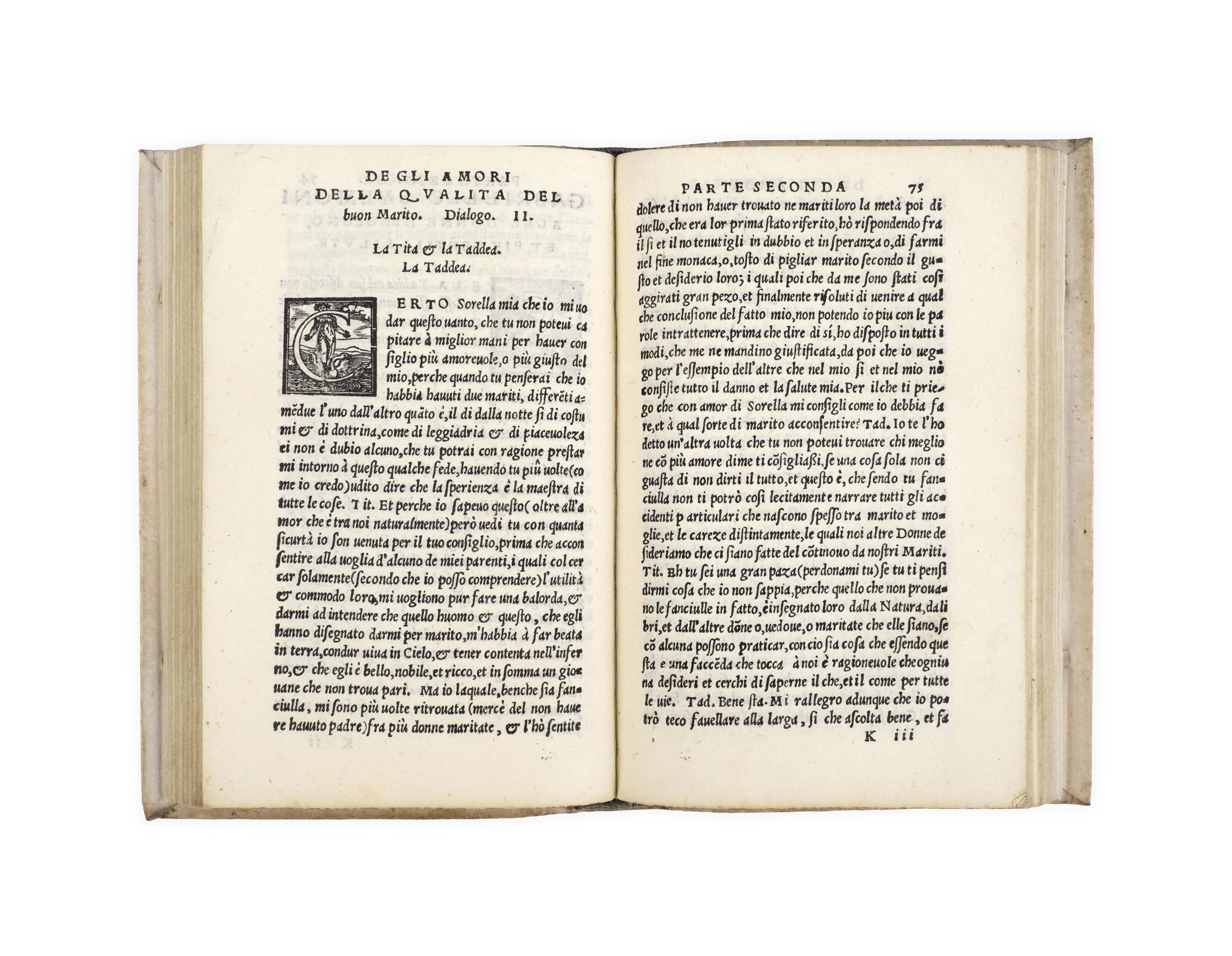
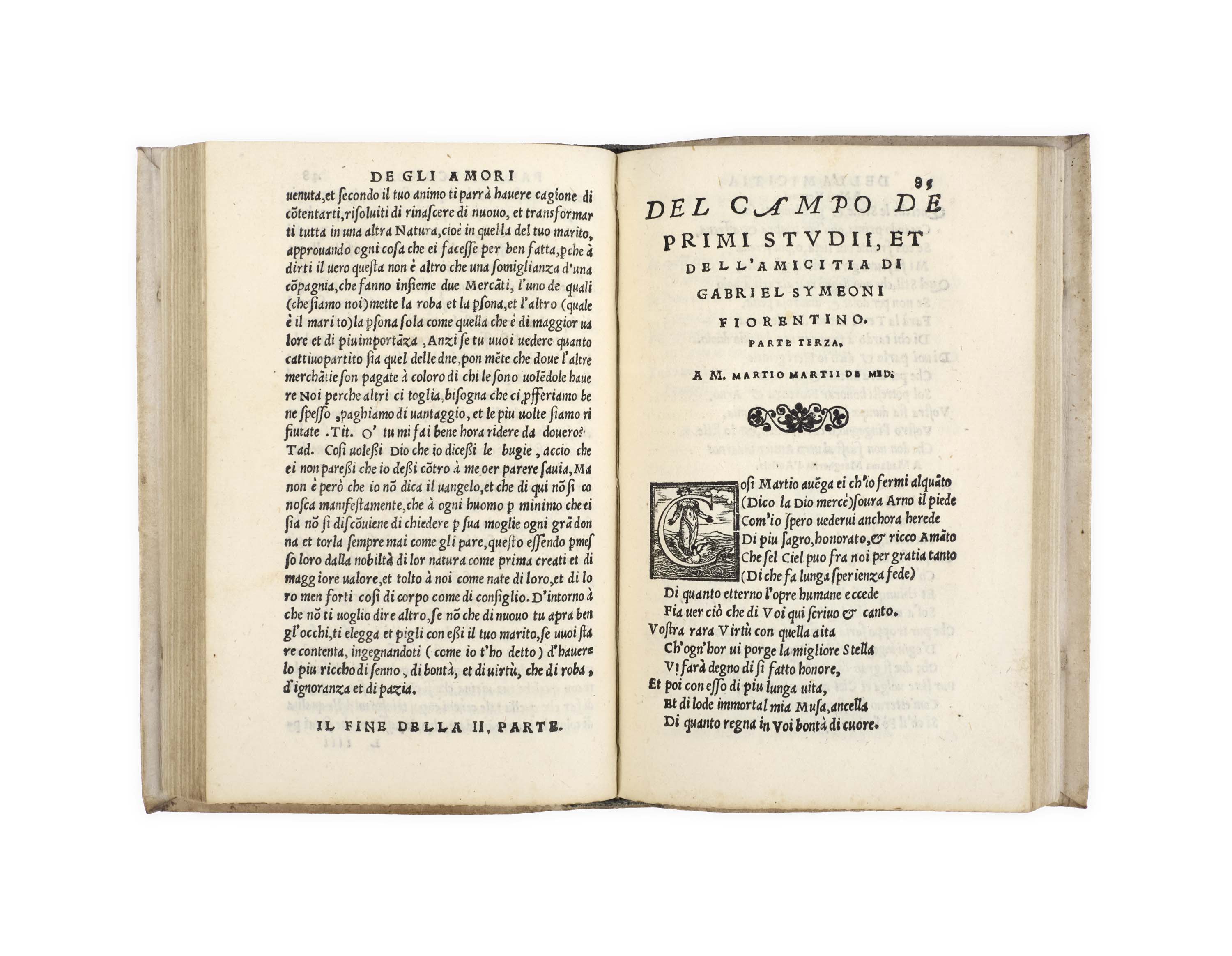
The first part of this work, on duty (‘De gli offitii’), comprises praise of the Medici family in verse, as well as a prose dialogue on the occult symbolism of the Medici arms of the six palle (balls); the second part is about love, including a dialogue by two sisters on the ideal husband, and the final part on friendship, dedicated to bishop Marzio Marzi, a close ally of the Medici. Much of the Petrarchan poetry is in terza rima or ottava rima and there are clear links with the conduct books of Castiglione, Sperone Speroni, and Pietro Bembo (not to mention Pietro Aretino’s dialogues between two women).
Politics in early sixteenth-century Florence swung from anti-Medici to pro-Medici regularly, only settling down somewhat after the accession of the seventeen-year-old Cosimo as Duke in 1537. Simeoni had been in trouble for his negative views about Cosimo’s mother, Maria Salviati, for which he was briefly imprisoned in 1540. He was in Rome in 1542–1543, at a time when a group of disaffected Florentine exiles were being monitored by the Florentine ambassador, but on his arrival in Venice in 1546, where this and another work (on the history of four northern Italian cities) were printed in the same year, he seemingly distanced himself from any political trouble. Although he dedicated this work to Cosimo himself, the contents mention characters not at all in line with the Medici regime, and even some suspect heretics such as Erasmus.
EDIT16 CNCE 53876; USTC 856447.