Careful with That Piss-Pot!
[VAN VEEN, Otto]; EPICTETUS; CEBES.
Theatro moral de la vida humana, en cien emblemas; con el enchiridion de Epicteto, y la tabla de Cebes, philosofo platonico. Antwerp, widow of Hendrick Verdussen [Anna Margaretha Blanckaert], 1733.
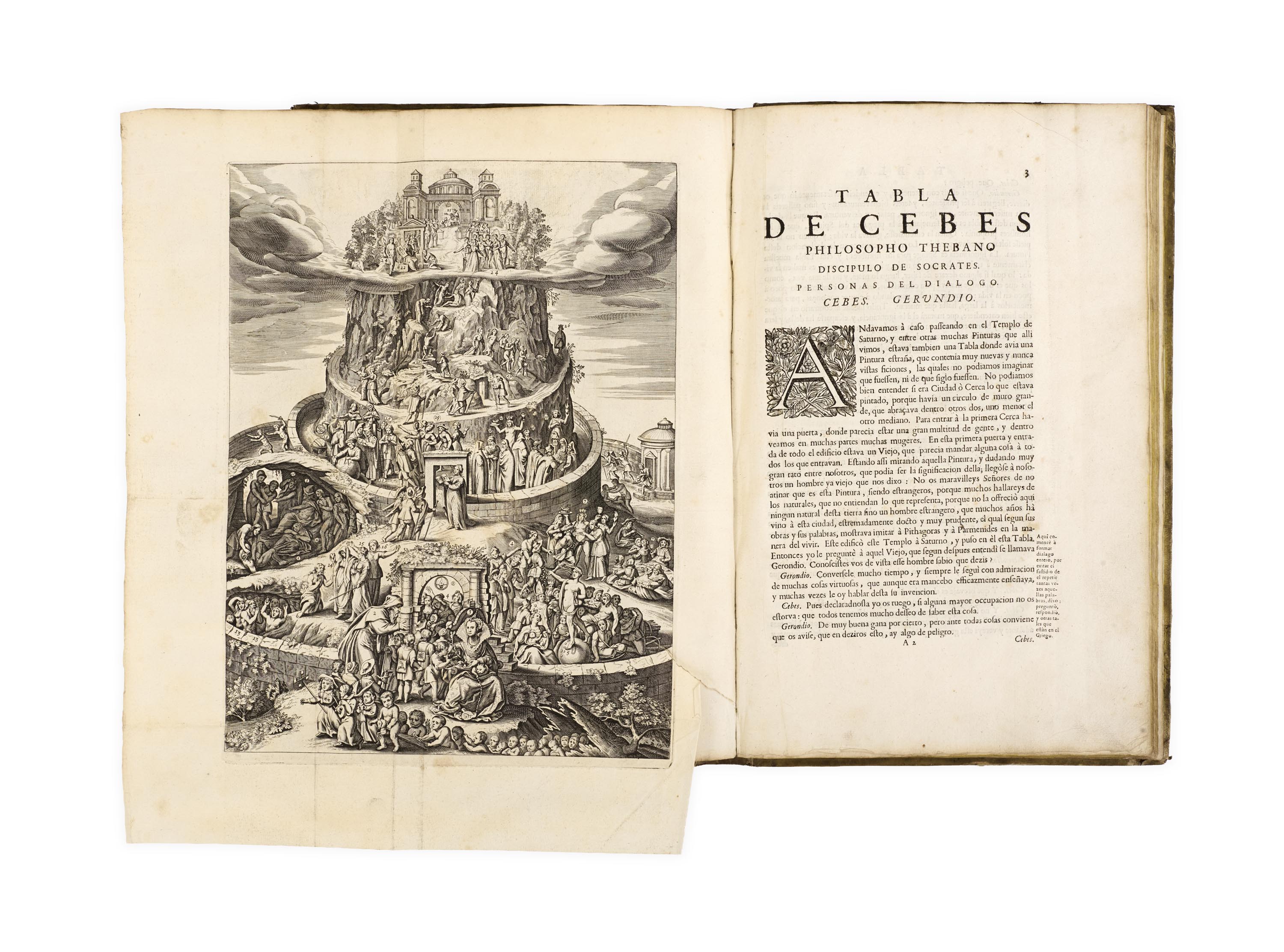
Three parts in one vol., folio, Theatro: pp. [xx], 207, [1], Epictetus: pp. 27, [1, blank], Cebes: pp. [viii], 50, [2], with large folding engraved plate; with 103 engraved illustrations printed in-text, full-page engraved portrait by Paulus Pontius after Gertrudis van Veen printed to **4v, title-page printed in red and black with large engraved device, Epictetus part-title with woodcut printer’s device, woodcut initials and tailpieces; closed paper-flaw to lower margin of A2, short tear to folding plate, very occasional scattered spots, nonetheless a very good, wide-margined copy; bound in contemporary vellum over boards, later manuscript lettering to spine, fabric ties to fore-edge (one lost); a little dust-stained, corners slightly bumped.
Added to your basket:
Theatro moral de la vida humana, en cien emblemas; con el enchiridion de Epicteto, y la tabla de Cebes, philosofo platonico.
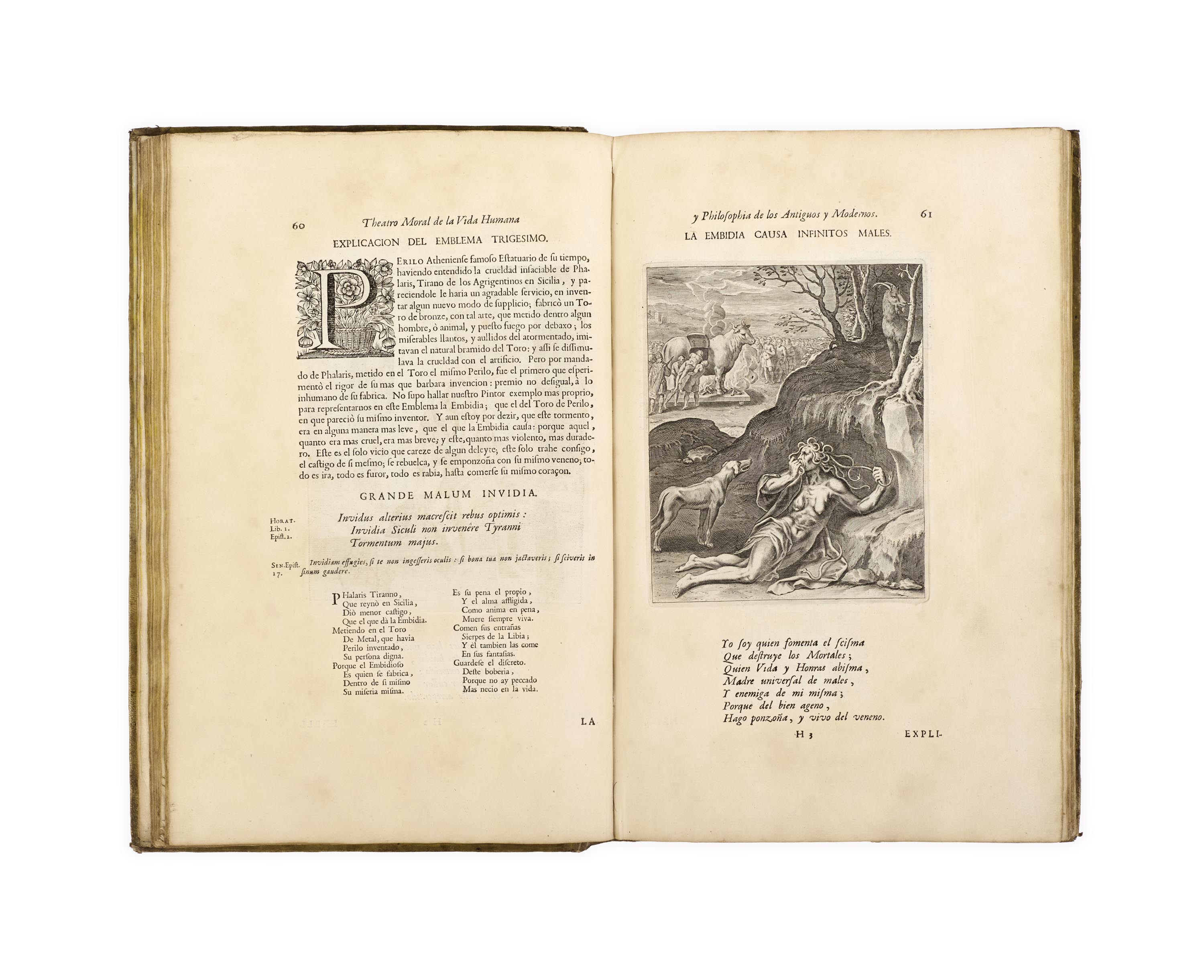
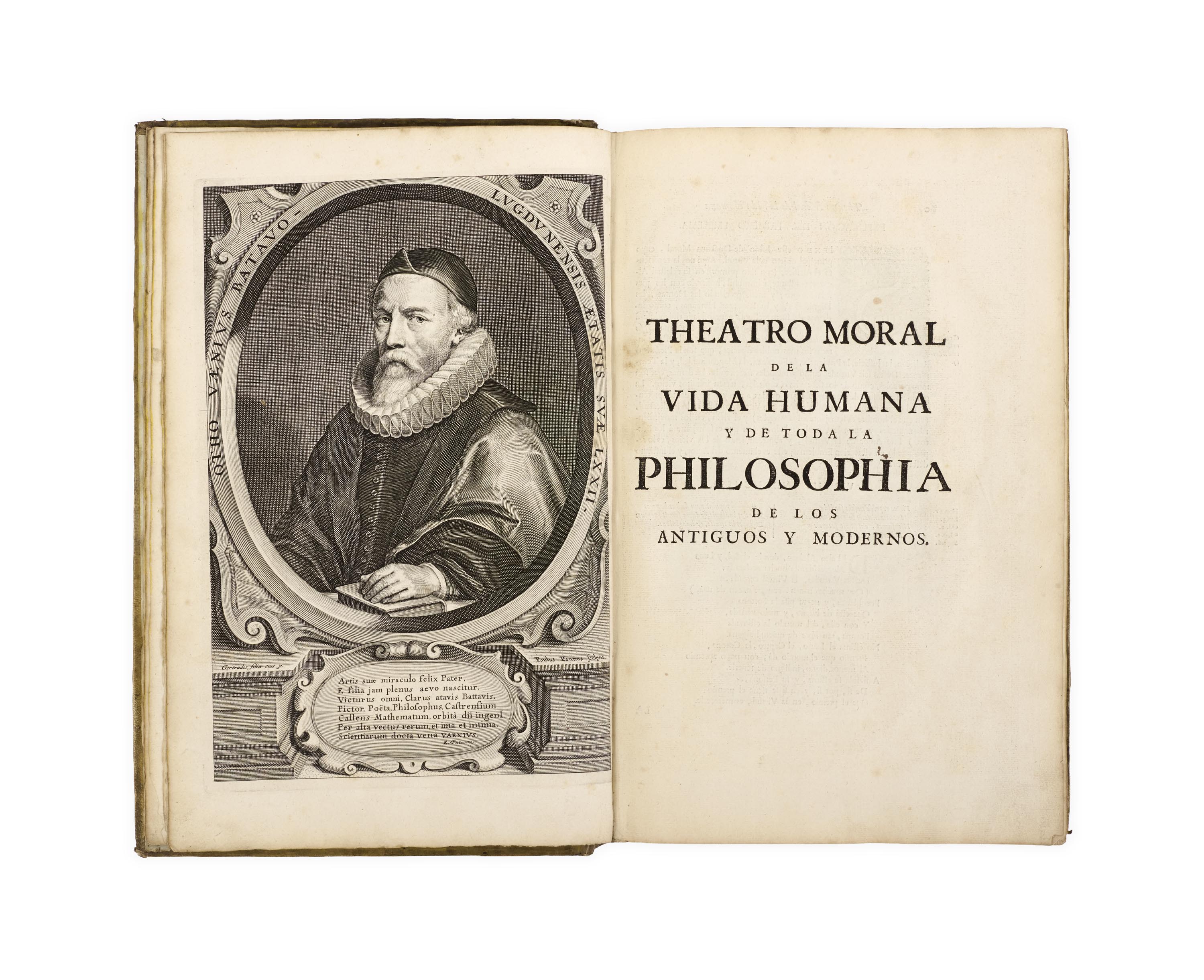
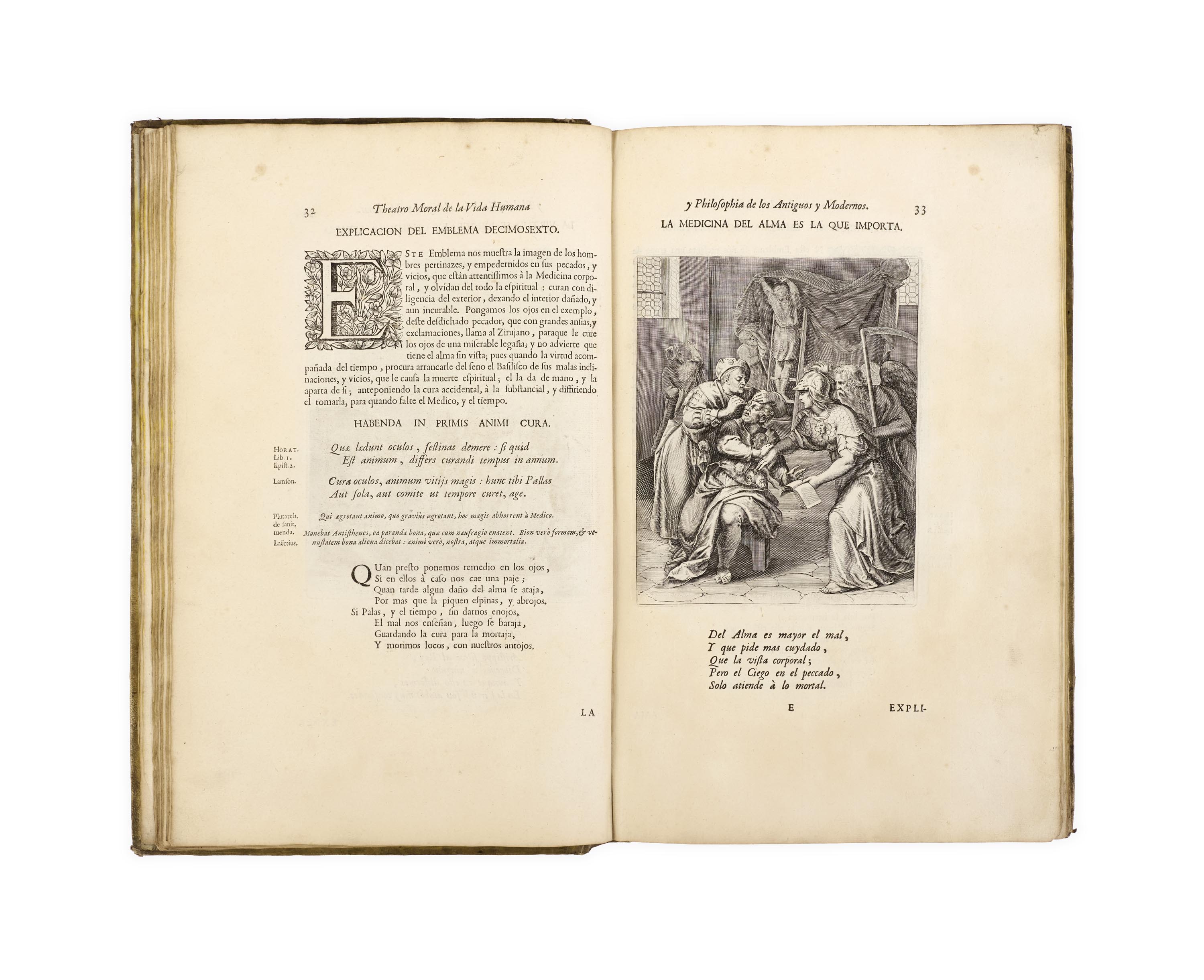
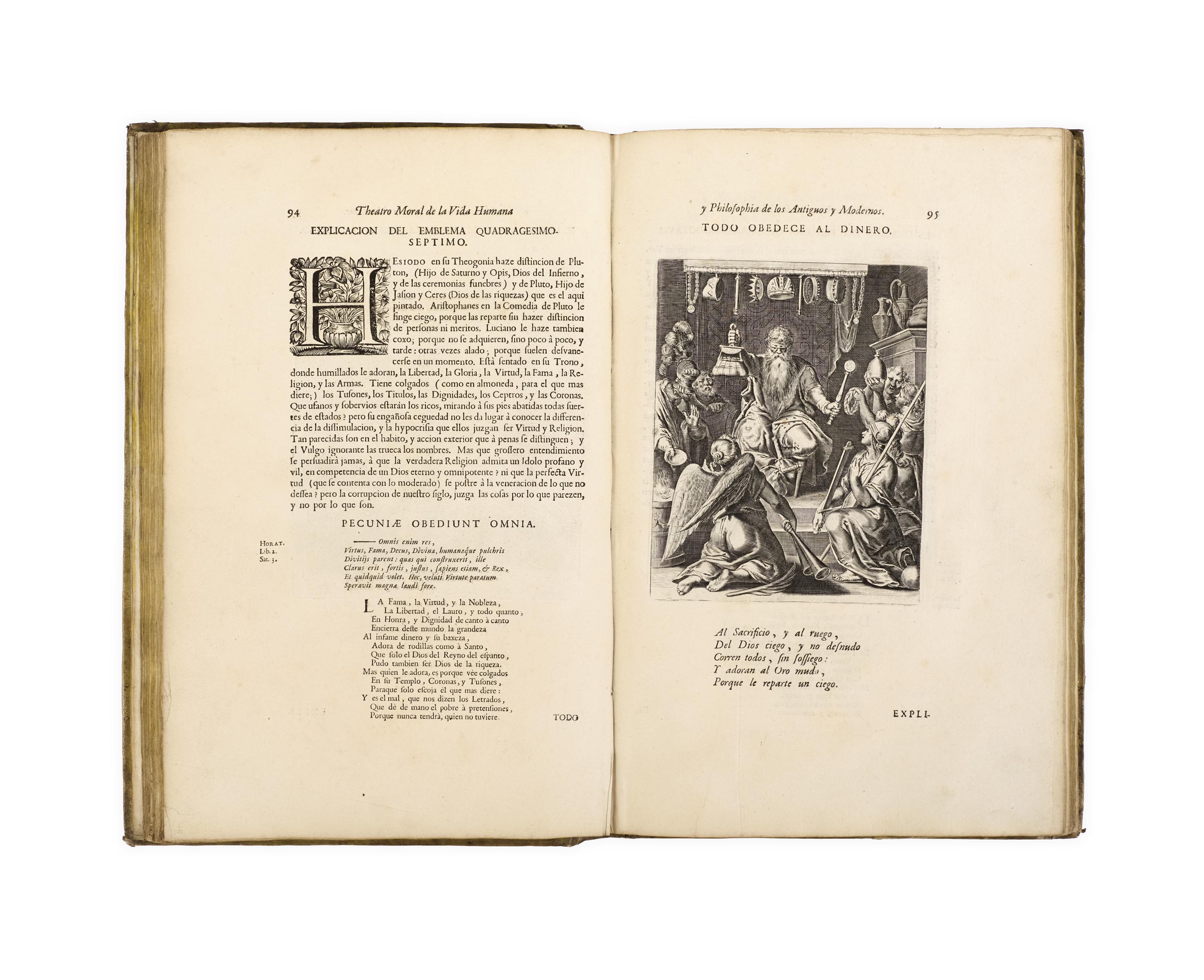
A Spanish edition of the Theatro moral, loosely based on van Veen’s emblematic interpretation of Horace, printed in Antwerp by the widowed Anna Margaretha Blanckaert with a portrait of van Veen by his daughter Gertrudis and van Veen’s own fine engravings.
Van Veen’s collection of moral emblems loosely based on Horace, Emblemata Horatiana, was originally printed in Latin in 1607, containing the portrait of him by his daughter Gertrudis and one hundred emblems of his own devising. The first Spanish edition with the title Theatro moral de la vida humana was printed in 1669, by way of the French translation by Marin le Roy, sieur de Gomberville, La Doctrine des moeurs (1646). It was printed by Cornelis and Hendrick Verdussen, who had acquired van Veen’s original plates ‘at no small cost’ (preface, trans.), in 1701, and revived by Hendrick’s widow Anna Margaretha Blanckaert in 1733.
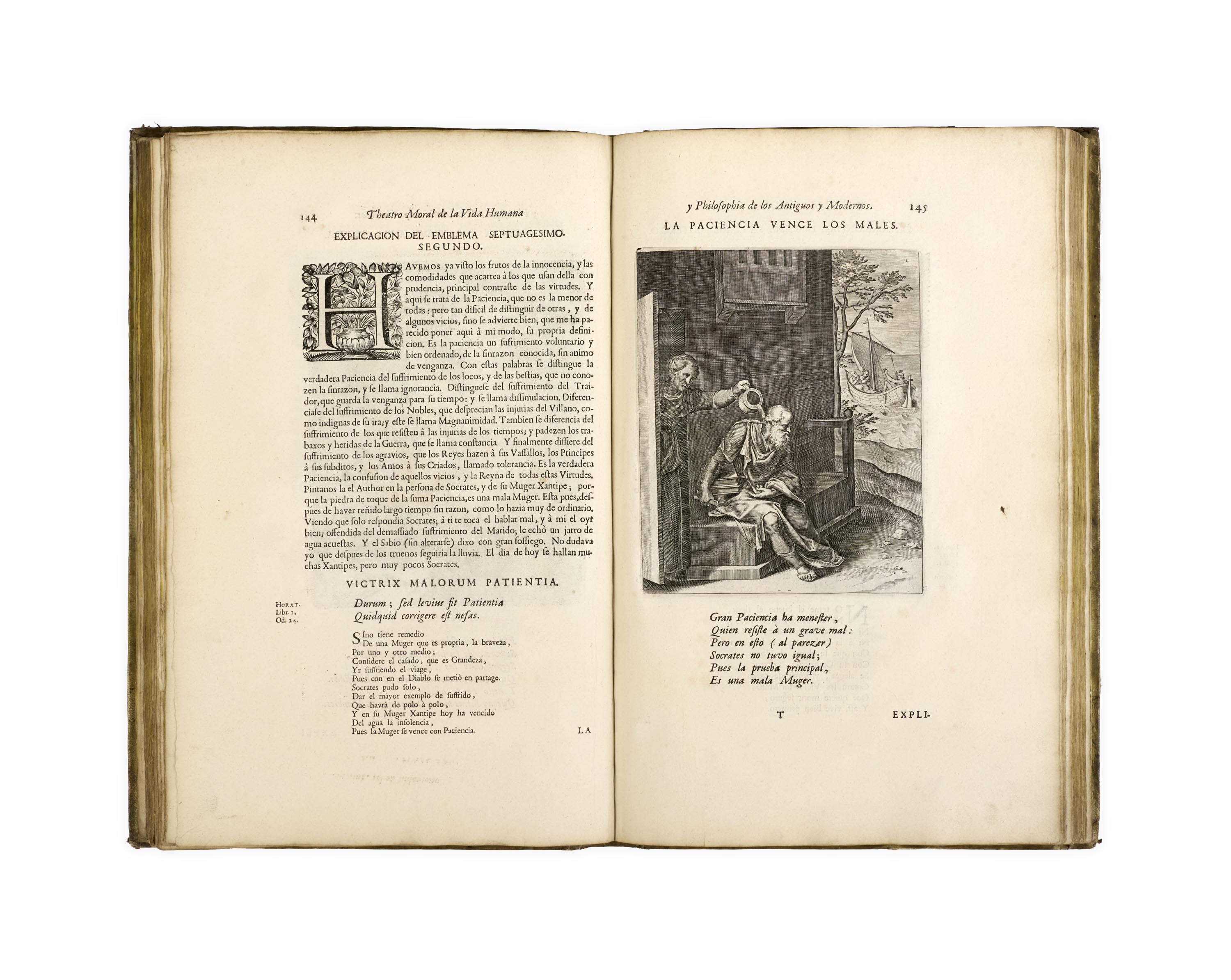
Van Veen’s illustrations are rich and detailed, and while much of the subject matter is pessimistic and fatalistic, there are moments of fun, which no doubt Horace would have enjoyed; the engraving on p. 145, for ‘La paciencia vence los males’ (Patience conquers evil), shows Xanthippe pouring a chamber pot over the head of Socrates. The final plate, depicting a ‘Neo-Stoic heaven … successfully reconciles a classical iconography with an imputed Christian heaven … The tomb is in the form of a winning-post, and before it are laid symbols of all aspects of human life: toil, study, the insignia of various offices and duties. In death these are all left behind, and what is exalted, after the earthly race has been run and won, are virtuous achievements: “sola Virtus manet”’ (Manning, p. 310).
STCV 7097569; Landwehr, Romanic 739; Palau 358578; Peeters-Fontainas 1275. See Manning, The Emblem (2002).