Season’s Greetings From Wittgenstein’s Friends and Family
[WITTGENSTEIN, Ludwig.] Ludwig HÄNSEL.
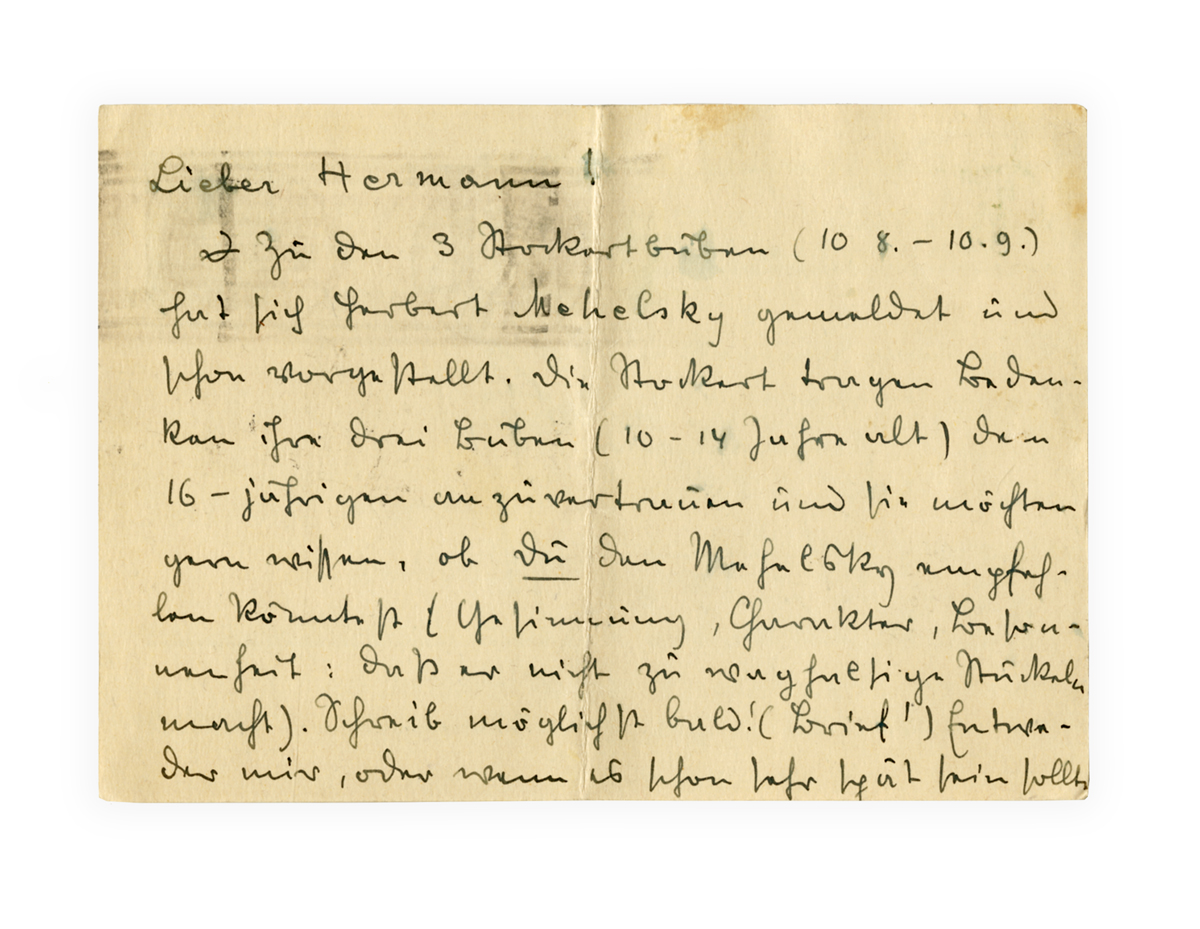
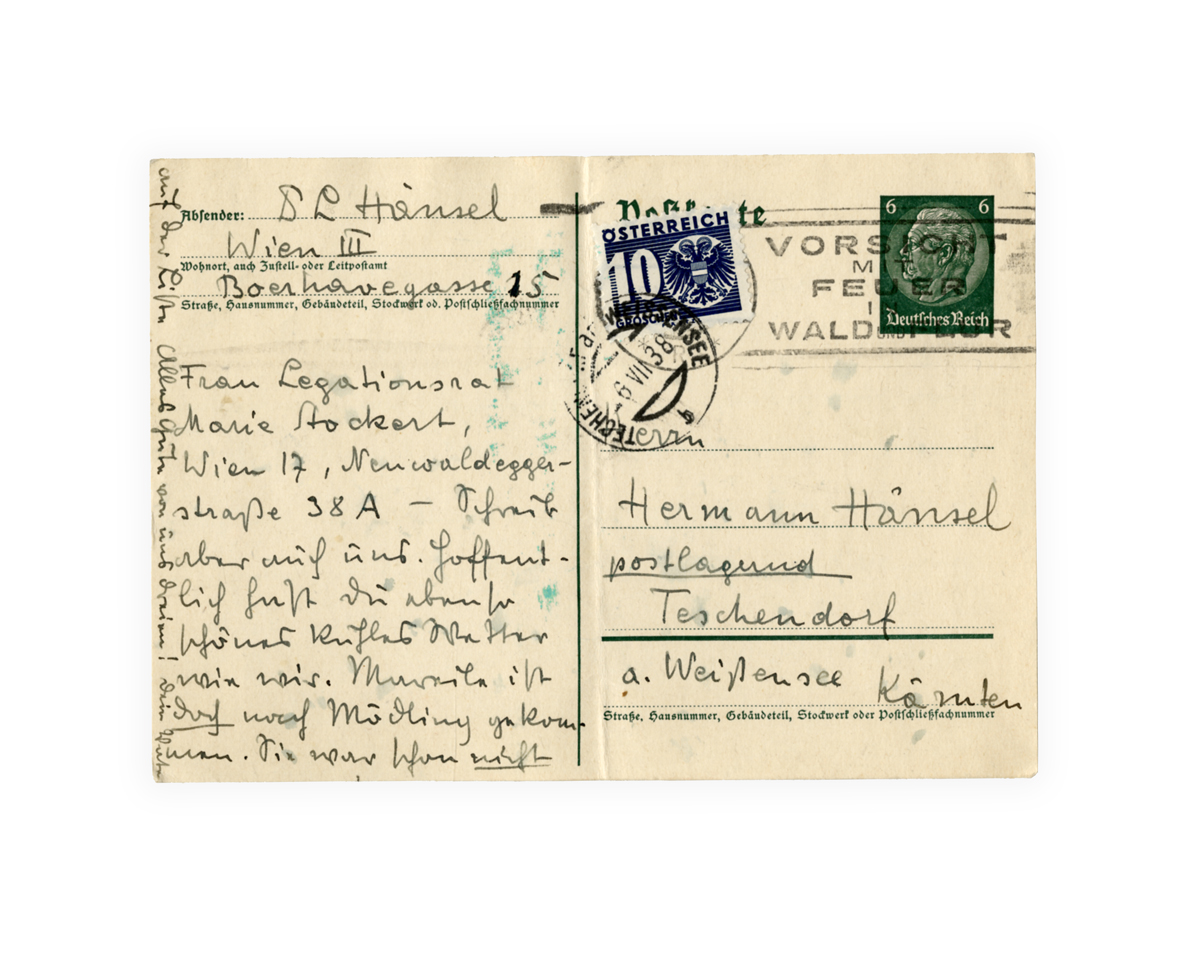
Two autograph postcards to Hermann Hänsel. Vienna, 31 December 1933 and July 1938.
[with:]
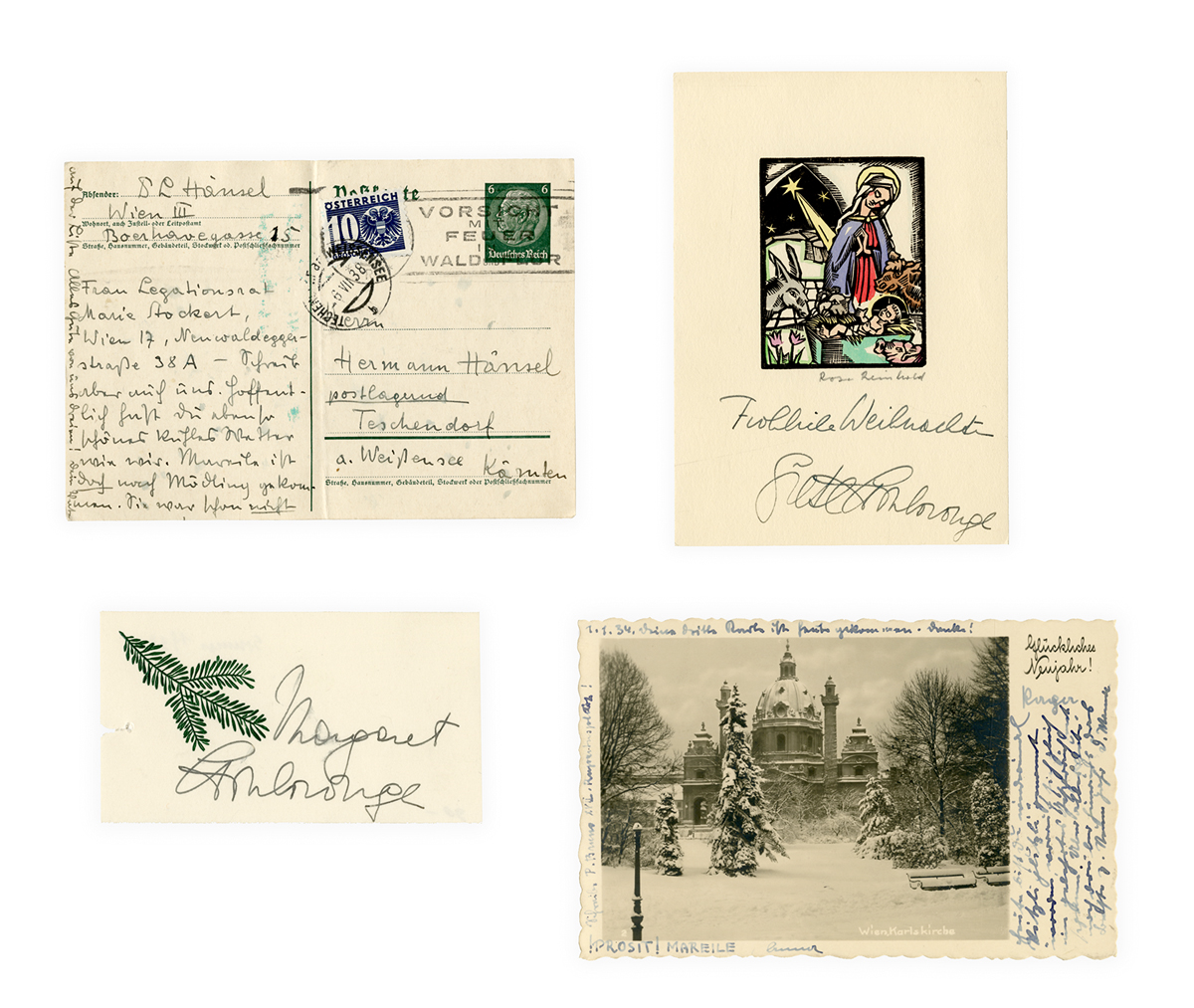
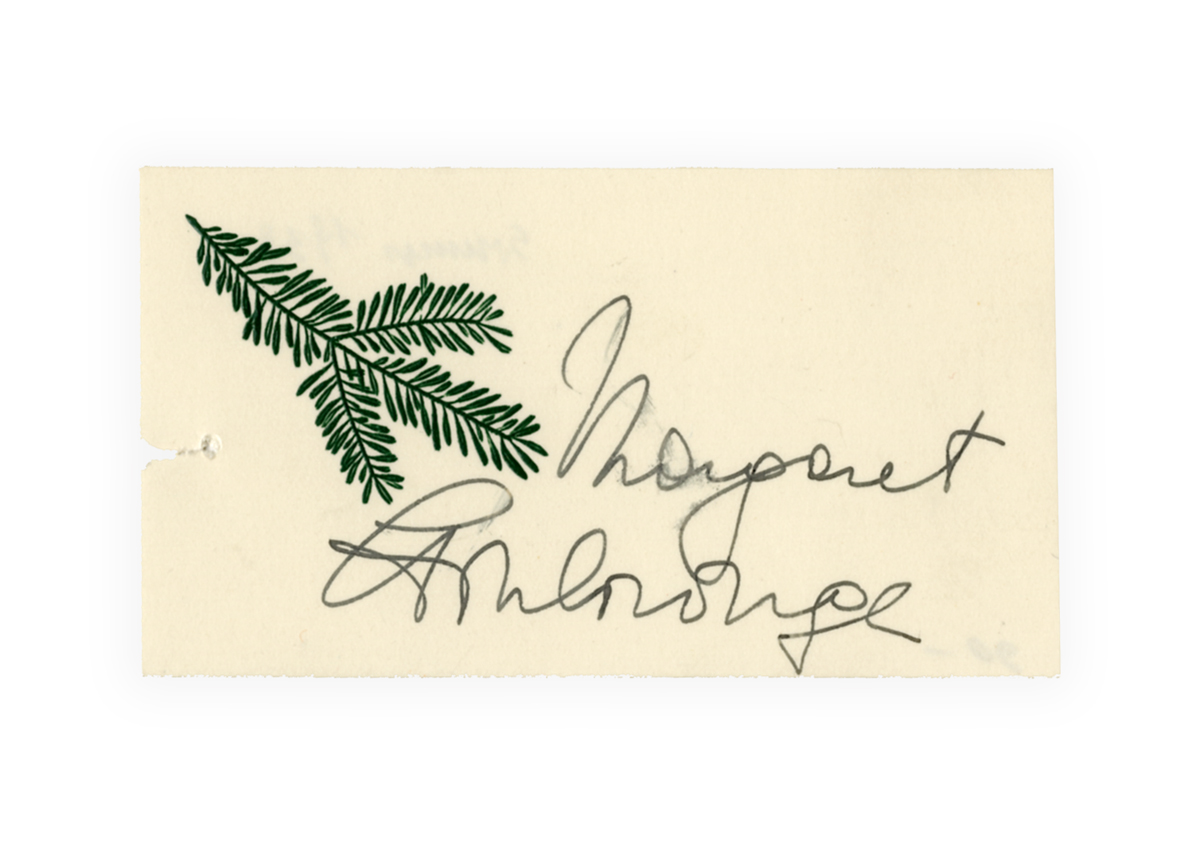
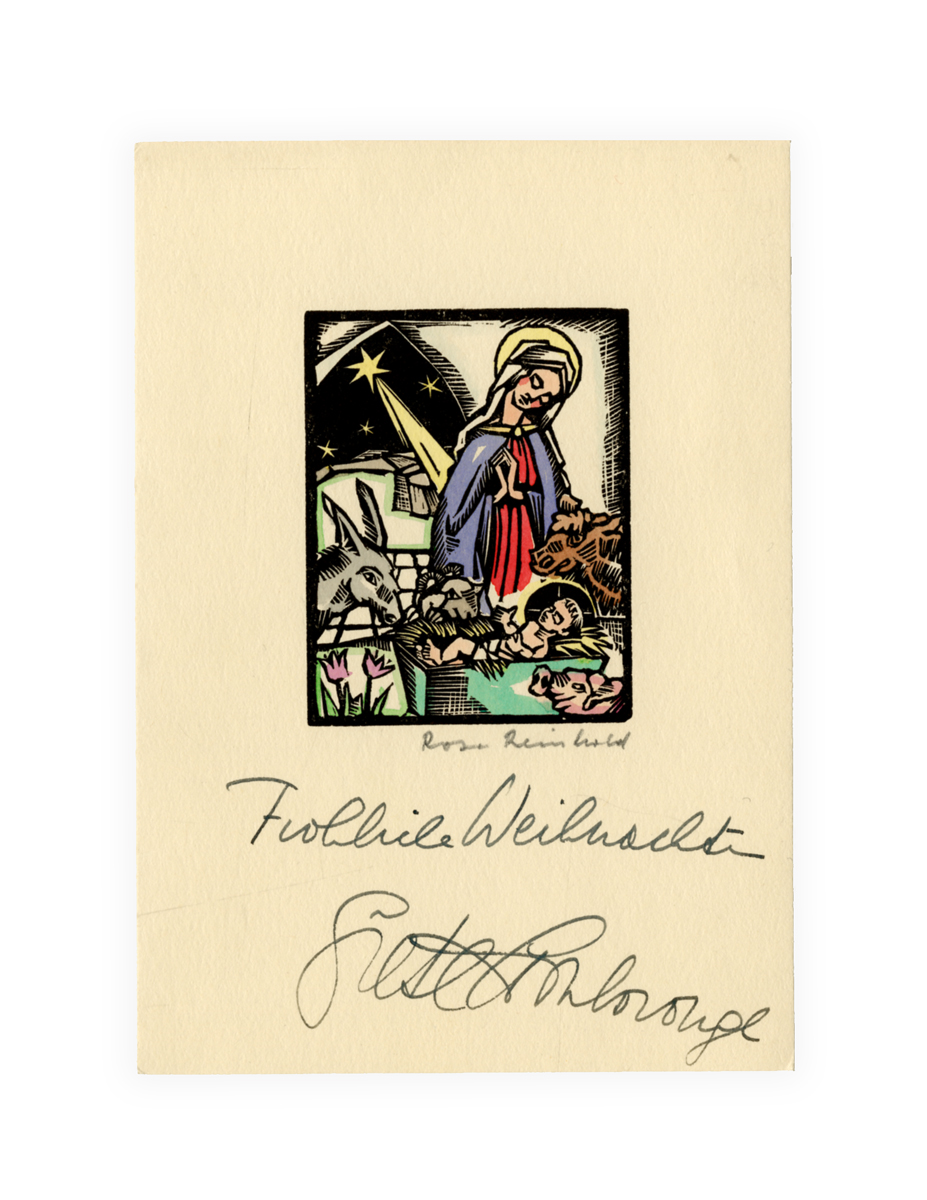
STONBOROUGH, Margaret. Christmas card and gift tag, inscribed ‘Frohliche Weihnacht. Gretl Stonborough’ and ‘Margaret Stonborough’, respectively. [Vienna, 1930s.]
Two autograph postcards from Ludwig Wittgenstein’s close friend, the educator Ludwig Hänsel (1886–1959) to his son, Hermann Hänsel, with a Christmas card from Wittgenstein’s sister, Margaret Stonborough-Wittgenstein, testament to the intimate and long-lasting connection between the two families.
Hänsel was born in Hallein and studied German, French, and philosophy at Graz before becoming a teacher in 1913. In 1919, Wittgenstein and Hänsel (three years Wittgenstein’s senior) met at a POW camp at Monte Cassino, where they regularly discussed philosophy, reading Kant and Augustine together, Hänsel likely influencing Wittgenstein’s own decision to go into teaching upon his release. Hänsel was one of Wittgenstein’s closest friends after the First World War, providing encouragement and support to Wittgenstein the trainee teacher and acting as a mediator between Wittgenstein and his family, from whom he had then distanced himself. They saw each other often, discussing educational matters as well as philosophy. ‘As a learned Hofrat Direktor, Hänsel maintained a keen interest in the subject, and in his lifetime published some twenty articles on philosophical subjects (mostly ethics)’ (Monk, p. 189). When Wittgenstein took up his first teaching post, Hänsel continued his role as support and sounding board; he visited Wittgenstein regularly and supplied him with reading books for his pupils. Hänsel was allowed to read the Abhandlung (later published as the Tractatus) before its first appearance in print, and it was Hänsel who encouraged Wittgenstein to publish his Wörterbuch für Volksschulen (1926), the only other book aside from the Tractatus to appear in his lifetime.
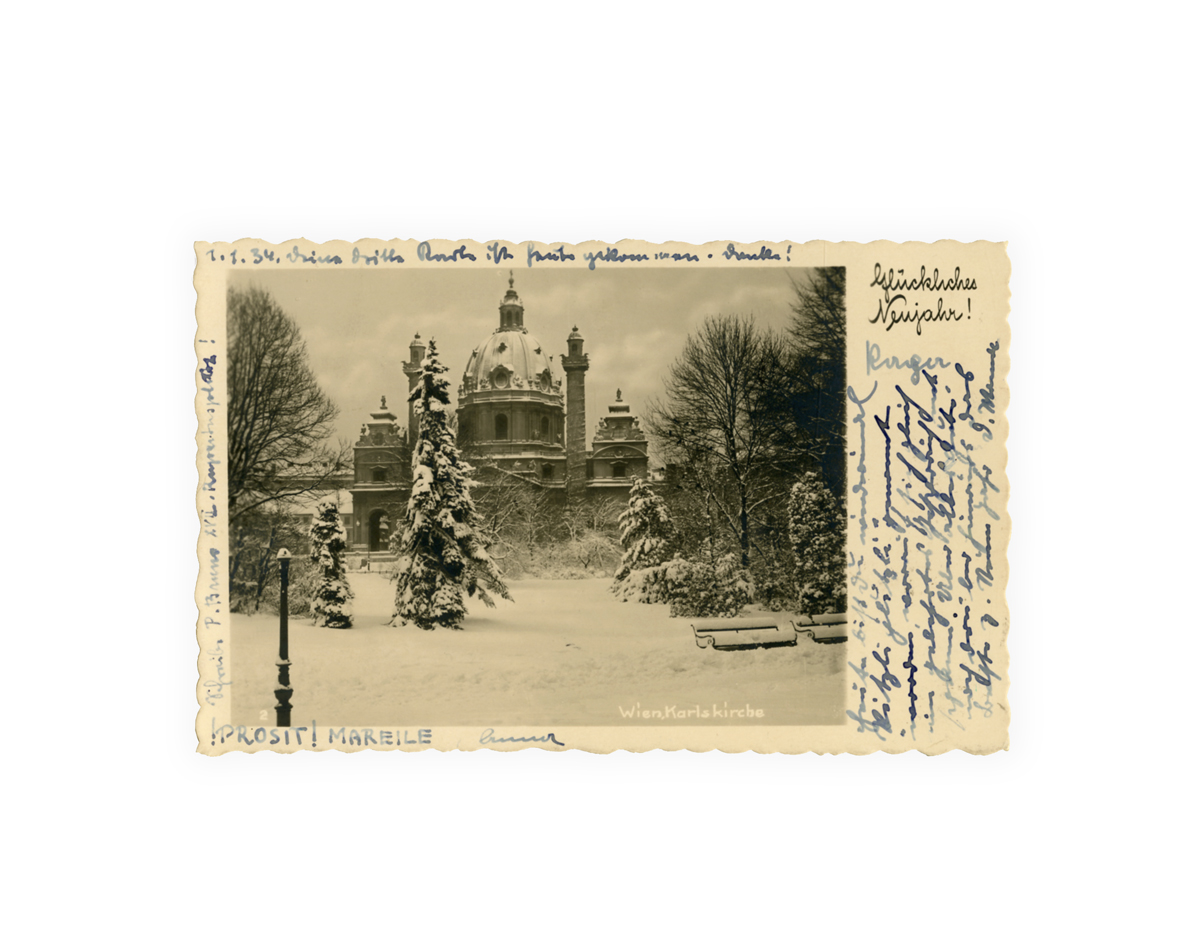
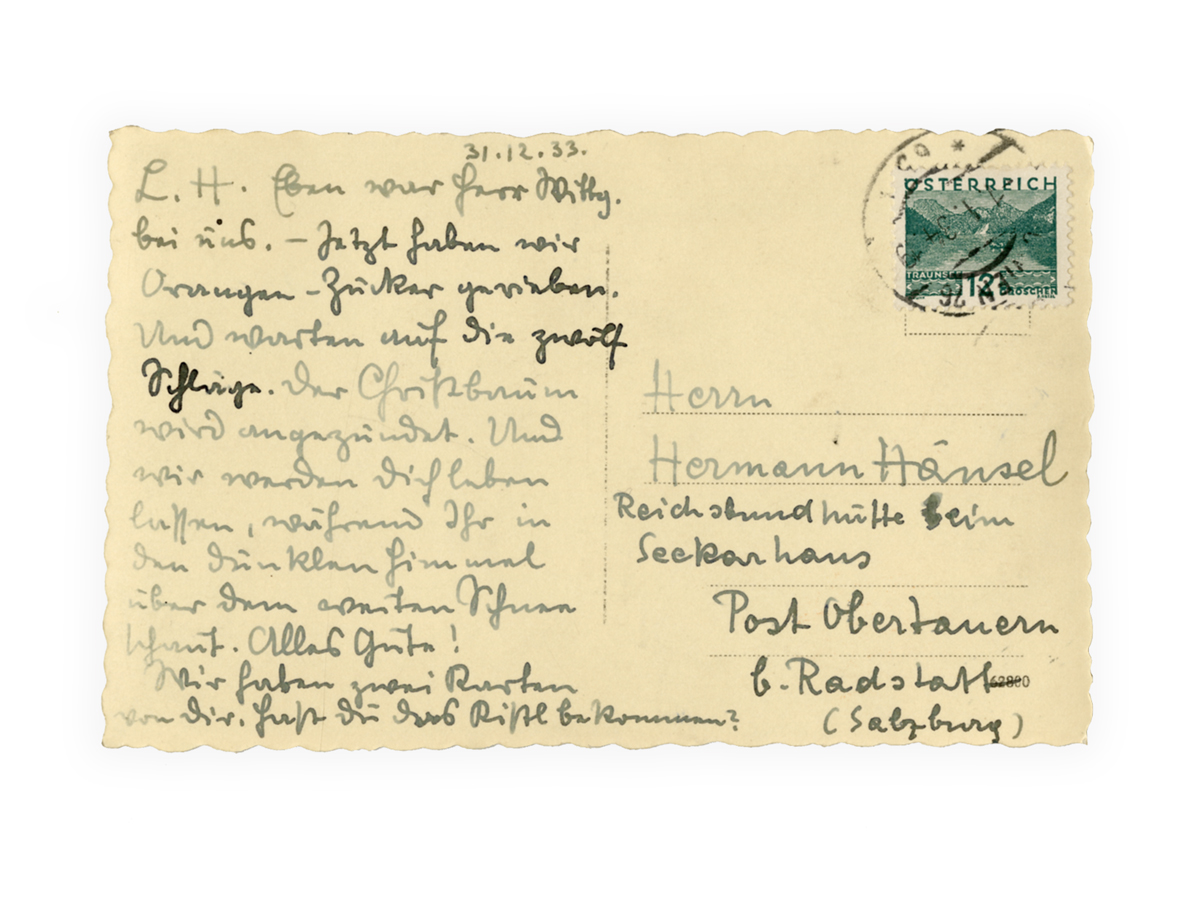
The Wittgensteins and Hänsels remained particularly close: Hermann (1918–2005), a teenager at the time his father sent him these postcards, would later visit Wittgenstein both in Cambridge and in Norway, and his sister Mareile (who adds to her father’s New Year’s greeting card the celebratory note ‘!PROSIT!’) had received several books as Christmas presents from Wittgenstein and learned to draw from Hermine Wittgenstein, the eldest of the philosopher’s sisters; she continued her studies under the sculptor Michael Drobil, a friend of Wittgenstein and Hänsel from their internment in Cassino. Both postcards were evidently sent to Hermann during his holidays in the mountains, likely with friends: the 1938 New Year’s postcard, sent care of the postal depot in Teschendorf, on Weissensee, describes the Christmas tree beautifully lit up at home, and the 1933 postcard repeatedly urges Hermann to write at once to Marie Stockert, Wittgenstein’s niece, providing her address in Vienna.
The Christmas card and gift tag (likely preserved from a Christmas present given to Hermann) are inscribed by Margaret ‘Gretl’ Stonborough (1882–1958); she worked as a psychotherapy adviser in juvenile prisons, during which time she met Freud (who would become her psychoanalyst and long-term correspondent); commissioned, with Ludwig Wittgenstein’s design assistance, the famous Modernist Haus Wittgenstein in Vienna; and was the subject of a 1905 wedding portrait by Klimt (now at the Neue Pinakothek in Munich). Of three-quarter Jewish descent, Stonborough immigrated to the United States in 1940 and returned to Vienna after the Second World War.
Contents:
1. Autograph postcard from Ludwig Hänsel to L.H. (i.e. ‘Lieber Hermann), addressed to Hermann Hänsel c/o the Seekarhaus in Obertauern and dated 31 December 1933. Scalloped edges, photograph of the Karlskirche in Vienna to recto; manuscript additions to recto in multiple hands in blue ink; green 12-Groschen Austrian stamp.
2. Autograph postcard from Ludwig Hänsel to ‘Lieber Hermann!’, postmarked July 1938 and addressed to Hermann Hänsel c/o the postal depot in Teschendorf; 10-Groschen blue Austrian stamp and printed 6-Pfennig Deutsches Reich stamp.
3. Christmas card with hand-coloured Nativity scene, signed in pencil by the artist; ink stamp to verso ‘Handbemalter Holzschnitt von Rose Reinhold’; inscribed ‘Frohliche Weihnachten. Gretl Stonborough’.
4. Small card gift tag with green pine sprig decoration; inscribed ‘Margaret Stonborough’.
See Klagge and Nordmann eds, ‘Ludwig Hänsel–Ludwig Wittgenstein: A Friendship, 1929–1940’, in Ludwig Wittgenstein: public and private Occasions (2003), pp. 257–330; Monk, Ludwig Wittgenstein: The Duty of Genius (1990); Somavilla ed., Begegnungen mit Wittgenstein. Ludwig Hänsels Tagebücher 1918/1919 und 1921/1922 (2013).