The Lost Aztec Homeland
ALEXANDER, [Charles] A[rmistead].
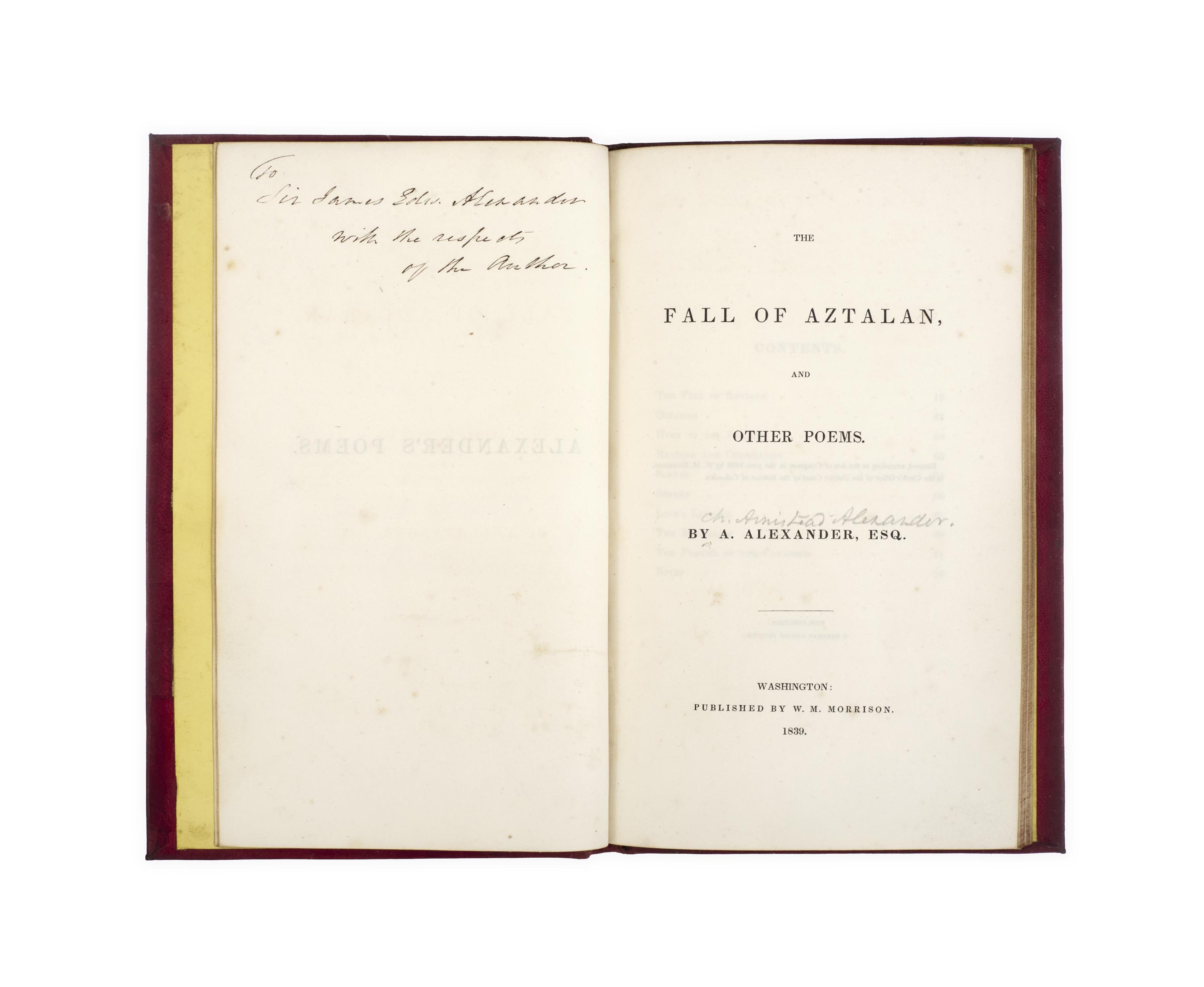
The Fall of Aztalan, and other Poems … Washington, W. M. Morrison, 1839.
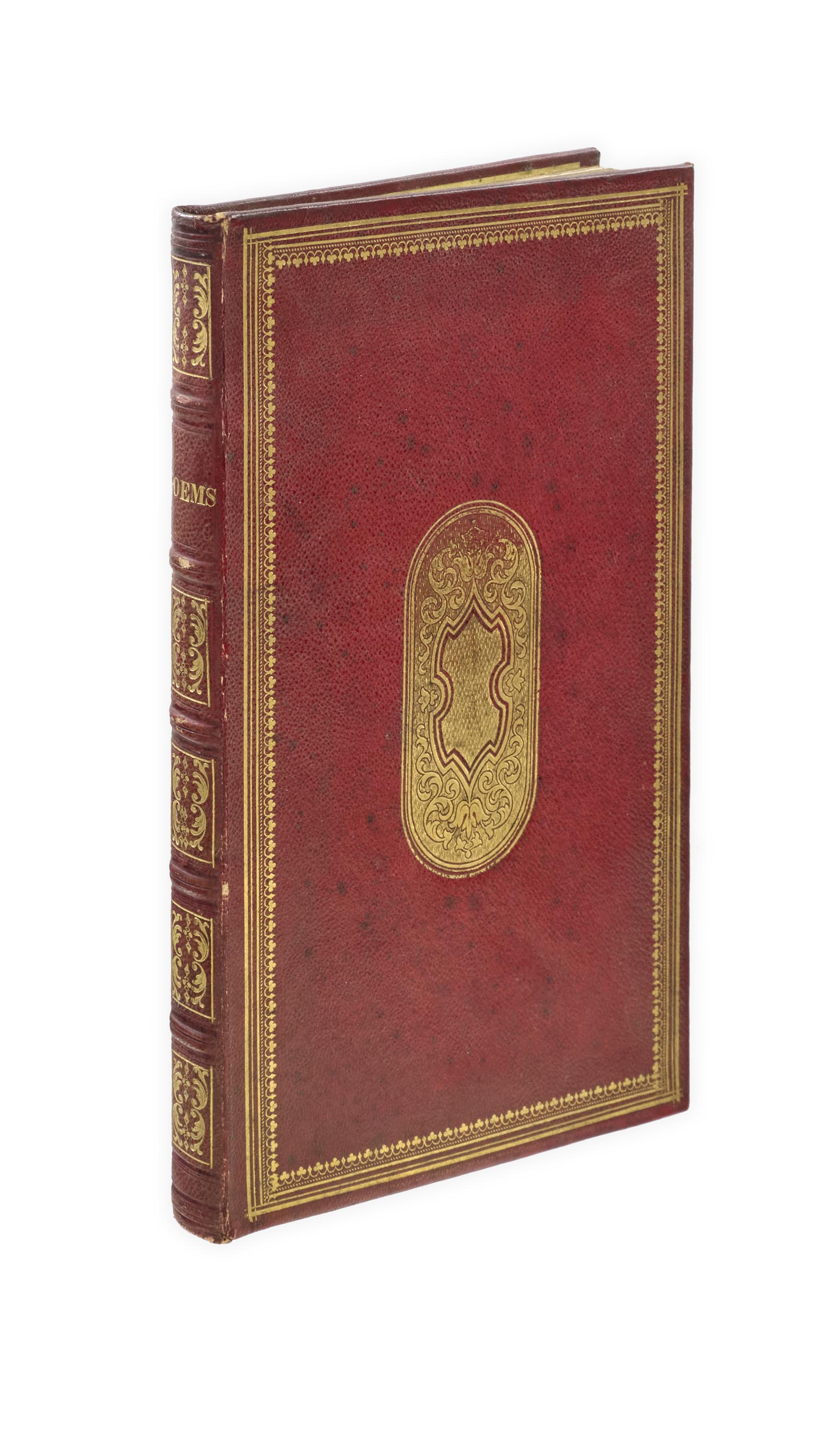
8vo, pp. 79, [1], with a half-title; with one (autograph?) correction on p. 65; a very good copy in a presentation binding of red hard-grain morocco, covers gilt with a roll-tool border, central gilt lozenge, spine gilt in compartments, lettered directly; presentation inscription ‘To Sir James Edward Alexander with the respects of the author’ to title-verso, pencil notes by the recipient to rear free endpaper.
First edition, a presentation copy, of an uncommon epic poem about Aztlán, the legendary North American ancestral homeland of the Aztec peoples before their migration to central Mexico in the eleventh century.
Depicted sometimes as a paradise and sometime as a real location, Aztlán is mentioned in a number of colonial sources, who reported a later attempt by Moctezuma I to locate the city. As Alexander explains, since then ‘the classical name of Aztalan or Aztlan, has been transferred at will from the vicinity of the Gulfs of California and Mexico to the shores of the northern lakes’. In his poem on its loss Alexander evokes the myths of Atlantis, and posits a dramatic event that leaves only two survivors, Prince Admah and his Inda, to continue their race. Full of praise for the wonders of this lost civilization, Alexander nevertheless denigrates the ‘savage of the present day’ as an ‘ignorant and incurious nomad’.
Alexander (d. 1869/70), of Alexandria, Virginia (named after an ancestor of his), lectured at the Alexandria Lyceum in the 1840s and made translations of scientific papers and of ‘the eulogies of eminent men’ for the Smithsonian Institution (of which he was secretary) in the 1850s and 60s. This copy was presented by him to his very distant relative, the Scottish soldier, writer, and explorer James Edward Alexander, whose note on the endpaper praises the work’s ‘energy’: ‘There is something noble & dignified in it. The man that possesses such a trait of character must be respected, when his energy is employed in a good & worthy cause; & when his hands rest from their labours, & the busy mind sinks in its leaden sleep, science shall weep over departed glory, & society mourn an irreparable loss.’
Sabin 724.