Flavoured ‘Medicinal’ Aqua Vitae
CARLUCCI, Luca.
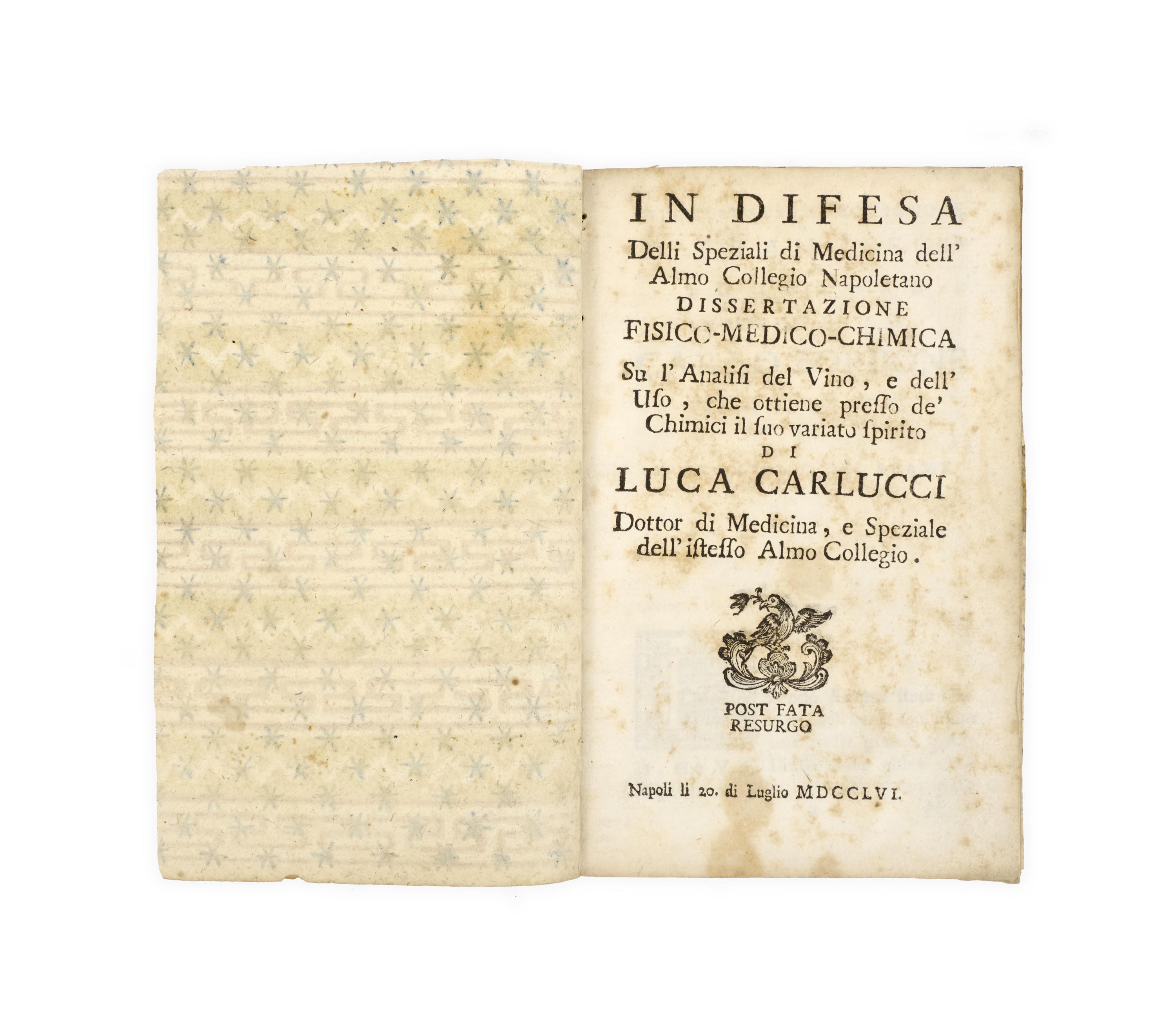
In difesa delli speziali di medicina dell’Almo Collegio Napoletano dissertazione fisico-medico-chimica su l’analisi del vino, e dell’uso, che ottiene presso de’ chimici il suo variato spirito … Naples, 20 July 1756.
Small 8vo, pp. [vii], [1, blank], 38, [2, blank]; woodcut ornament to title, woodcut initials, large woodcut tailpiece; slight foxing to first and last leaves, otherwise a very good copy; in recent wrappers reusing late eighteenth-century printed patterned paper.
Added to your basket:
In difesa delli speziali di medicina dell’Almo Collegio Napoletano dissertazione fisico-medico-chimica su l’analisi del vino, e dell’uso, che ottiene presso de’ chimici il suo variato spirito …
First edition, seemingly unrecorded, of this study published in defence of the apothecaries of the Almo Collegio of Naples following a government decree that limited their freedom to distil spirits (aqua vitae).
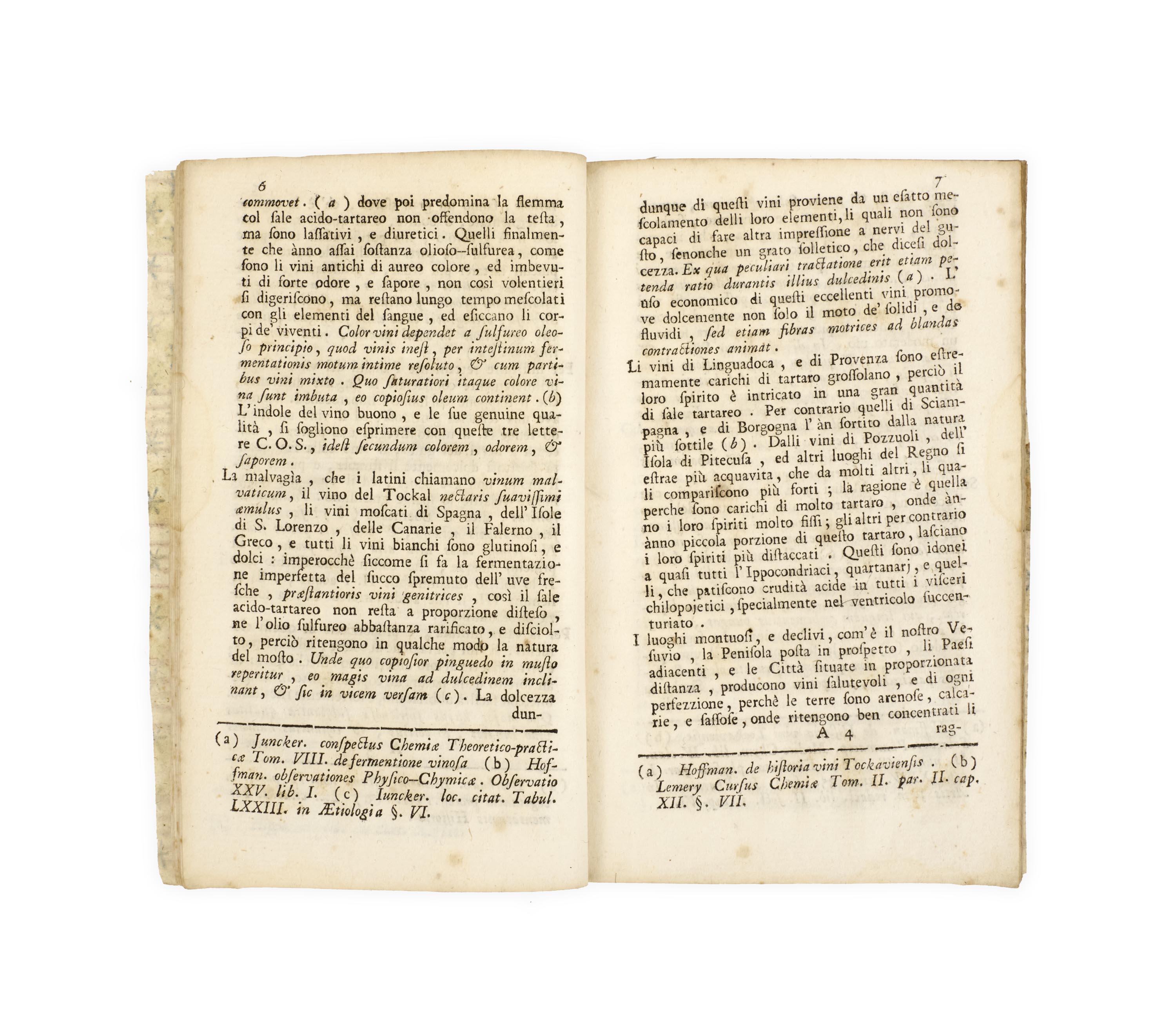
Published in response to a decree by the Arrendatore, the collector of taxes on aqua vitae, prohibiting apothecaries from distilling and selling flavoured spirits except those distilled from fortified wines and flavoured with anise only, the Dissertazione aims to demonstrate the practical medical necessity of spirits distilled from a variety of wines and flavoured with various infusions. Carlucci, himself a physician and apothecary of the Collegio, illustrates fermentation techniques; discusses types of Italian and foreign wines (Malvasia, Tokaji, Canary wine, Falerno, Greco, wines from Languedoc and Provence, Burgundies, Champagne), including those produced on the slopes of Vesuvius (with a chemical analysis of the soil); examines infusions with roots, herbs, fruits, and spices (nutmeg, cinnamon, cloves, mint, fennel, coriander, anise, cumin, rose, cardamom, lemon) to add flavouring, and their different medicinal benefits; and considers mixtures with resins to obtain tinctures and syrups. His argument is supported throughout by frequent references to esteemed chemists of the time.
Although never directly addressed in the work, the underlying issue seems to be the suspicion from the tax authorities that the apothecaries were in fact exploiting a legal loophole by producing and selling flavoured spirits for recreational rather than pharmaceutical purposes, therefore avoiding the appropriate tax; evidently the problem persisted, as a second, much expanded edition, also extremely rare (only three copies recorded, all in Italy), was published in Naples twenty years later (‘nella stamperia Raimondiana’, 1776).
Not in ICCU or OCLC.