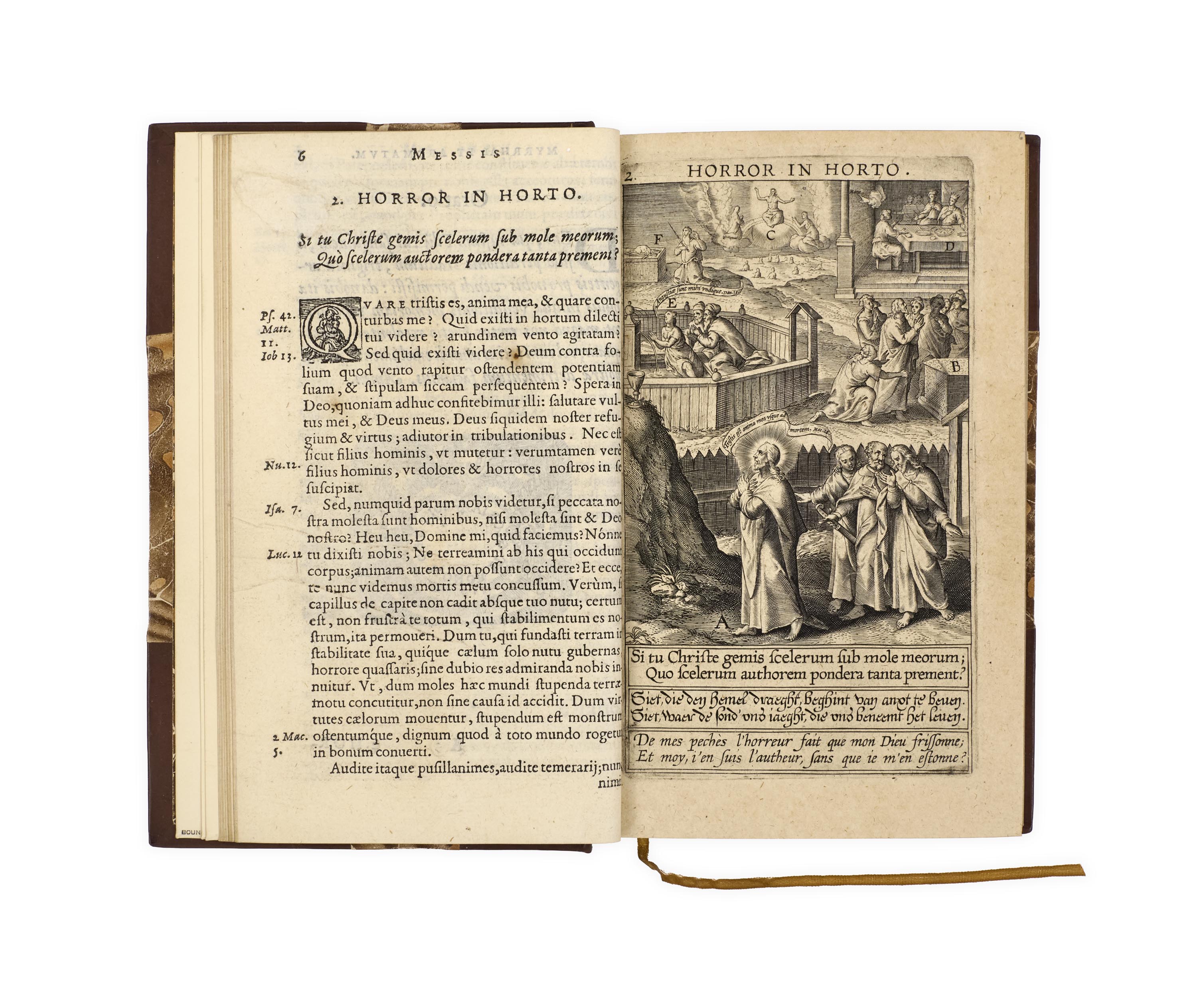
‘Horror in Horto’
DAVID, Jan.
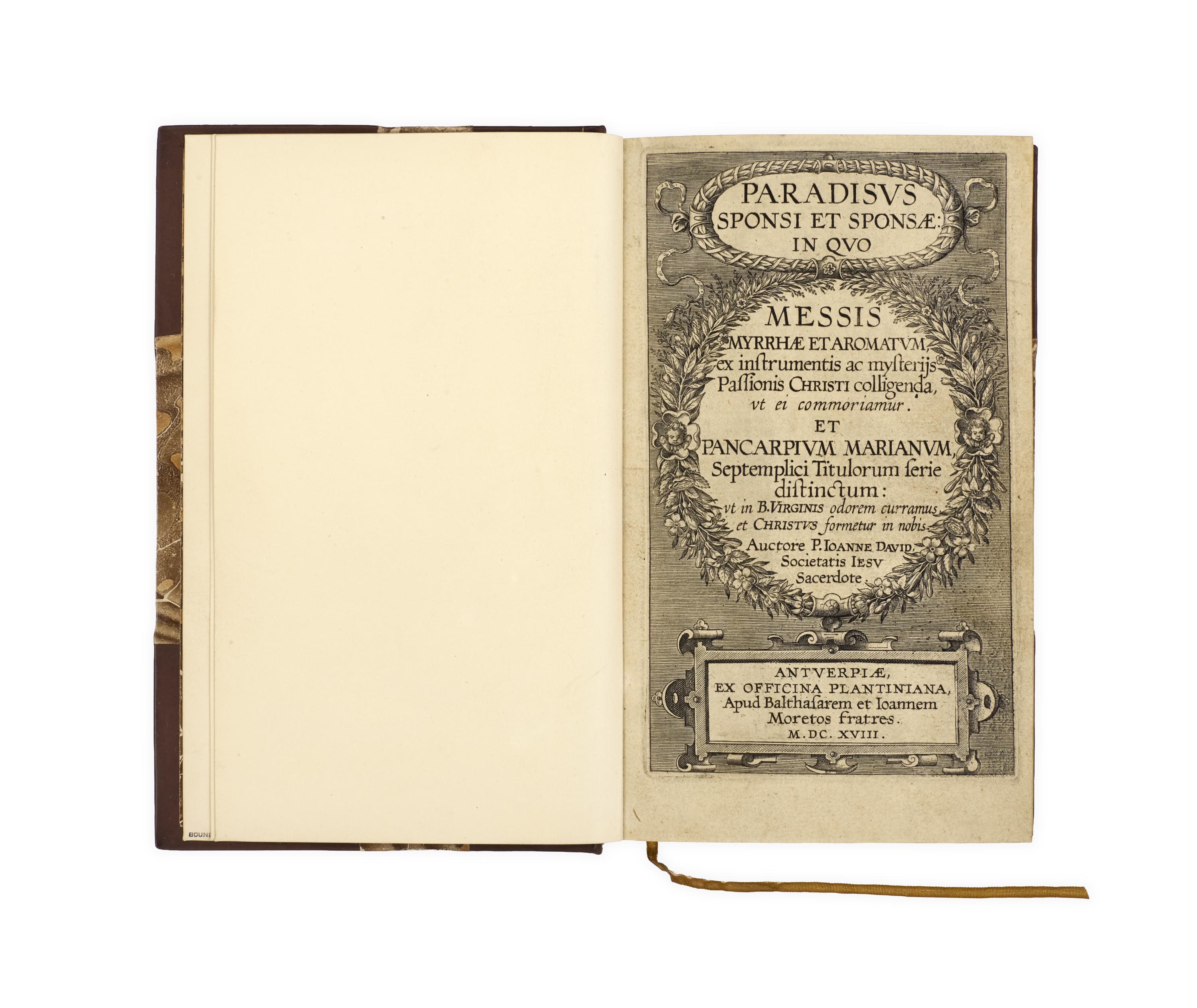
Paradisus sponsi et sponsae, in quo messis myrrhae et aromatum, ex instrumentis ac mysteriis Passionis Christi colligenda, ut ei commoriamur … Antwerp, Balthasar and Jan Moretus ‘ex officina Plantiniana’, 1618 [(colophon:) 1617].
Part one only (of two), 8vo, pp. [xvi], 212, [4], with 50 engraved plates by Theodoor Galle; title-page copper-engraved, woodcut initials and ornaments; small repairs to B3 (with loss of a few words) and C3 (touching a few characters), nonetheless a very good copy; bound in twentieth-century half calf by Zaehnsdorf (front free endpaper verso signed in black) with marbled sides, spine gilt in compartments with gilt black lettering-pieces, edges gilt, ribbon place-marker; bookplate of Allan Heywood Bright to front pastedown.
Added to your basket:
Paradisus sponsi et sponsae, in quo messis myrrhae et aromatum, ex instrumentis ac mysteriis Passionis Christi colligenda, ut ei commoriamur …
Second edition (first 1607) of an early Jesuit collection of emblems designed as spiritual and devotional exercises.
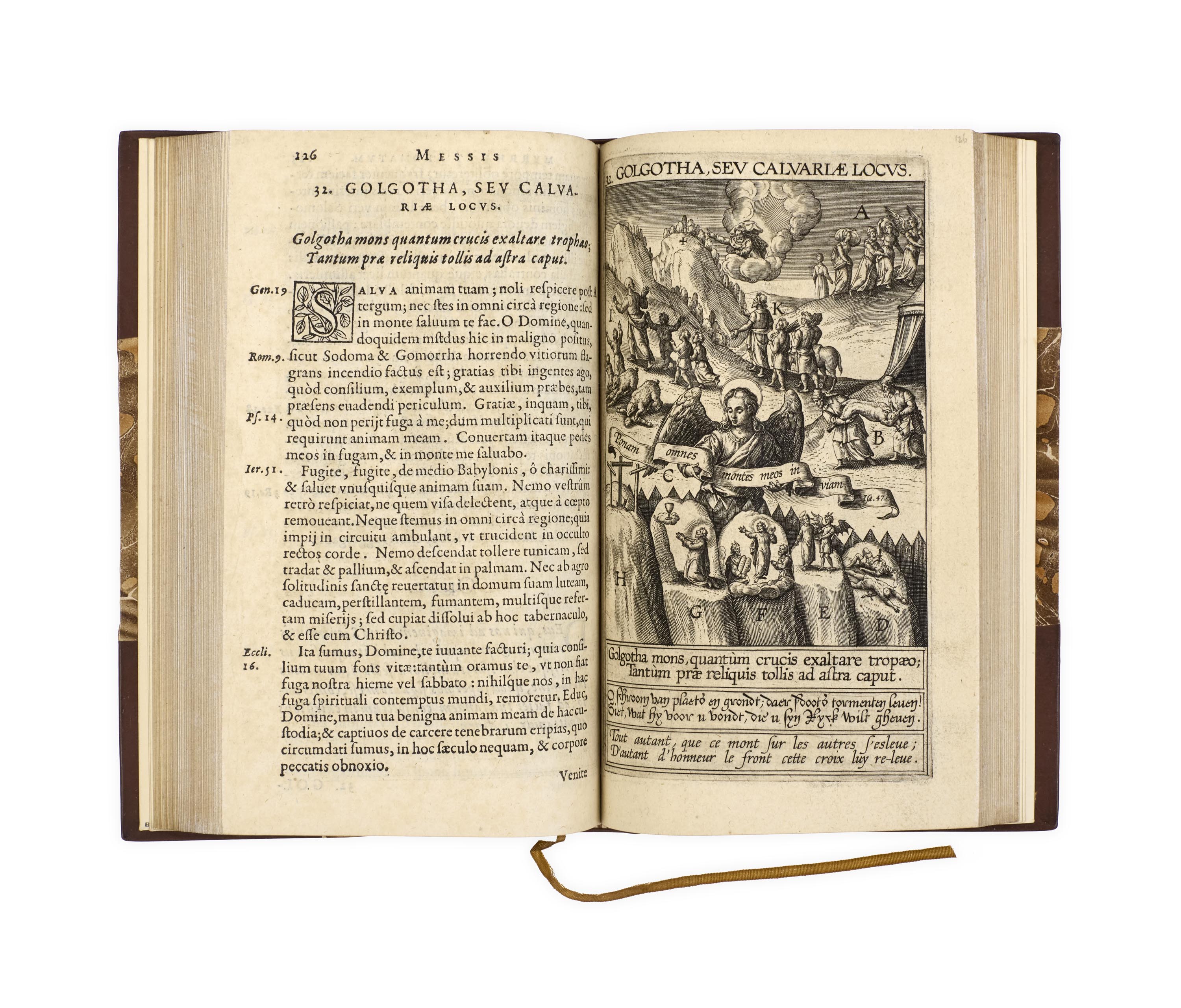
The Jesuit Jan David (1545–1613) composed four innovative emblem books on religious themes between 1601 and 1610, all of which were published by the Plantin press with engravings from the Galle workshop. This work, with an allegorical sub-title Harvest of myrrh and spices from the instruments and mysteries of Christ’s Passion, ‘is made up of sequential, interlocking spiritual exercises … focusing on the Passion of Christ, visualised as a garden planted with episodes from and instruments of the Passion. Anima (Soul) enters this verdant enclosure where she savours the fifty floral specimens comprised by the fifty chapters of the Messis’ (Melion, p. 247).
‘What David offered his reader was a series of exercises that were as much spiritual as exegetical, deeply contemplative and yet anchored to orthodox readings of Scripture. Both kinds of exercise were devised above all for David’s primary dedicatees, the Archdukes Albert and Isabella, and secondarily for students at the Jesuit Colleges, and, in particular, Jesuit scholastics’ (ibid., p. 249).
The second part contained another series of fifty devotional exercises entitled Pancarpium Marianum.
Provenance:
Allan Heywood Bright (1862–1941), Liberal politician and bibliophile.
STCV 6693385; USTC 1004456; Adams, Rawles & Saunders F.210; Sommervogel II, 1847 no. 10. See Melion, ‘Emblemata solitariae Passionis: Jan David and the solitary Passion of Christ’ in Solitudo: Spaces, places, and times of solitude in late medieval and early modern cultures (2018), pp. 242–289.