The Christian Cicero Strikes Back
LACTANTIUS, Lucius Caelius Firmianus, et alii.
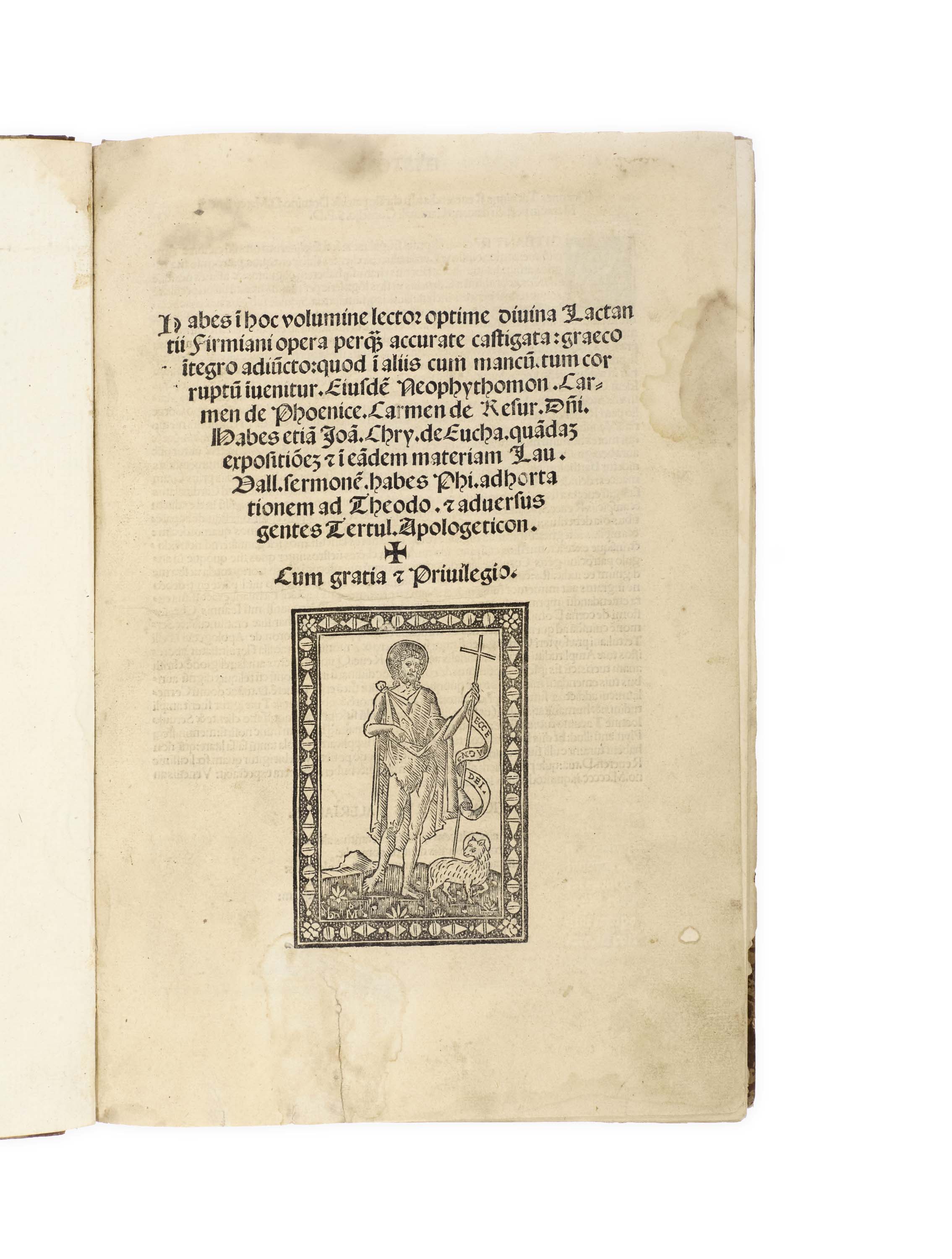
Opera perquam accurate castigata: Graeco integro adiuncto: quod in aliis cum mancum tum corruptum invenitur. Eiusdem Neophythomon. Carmen de Phoenice. Carmen de Resur. D[omi]ni … [(Colophons:) Venice, Giovanni Tacuino da Tridino, 3 January; 9 January 1502.]
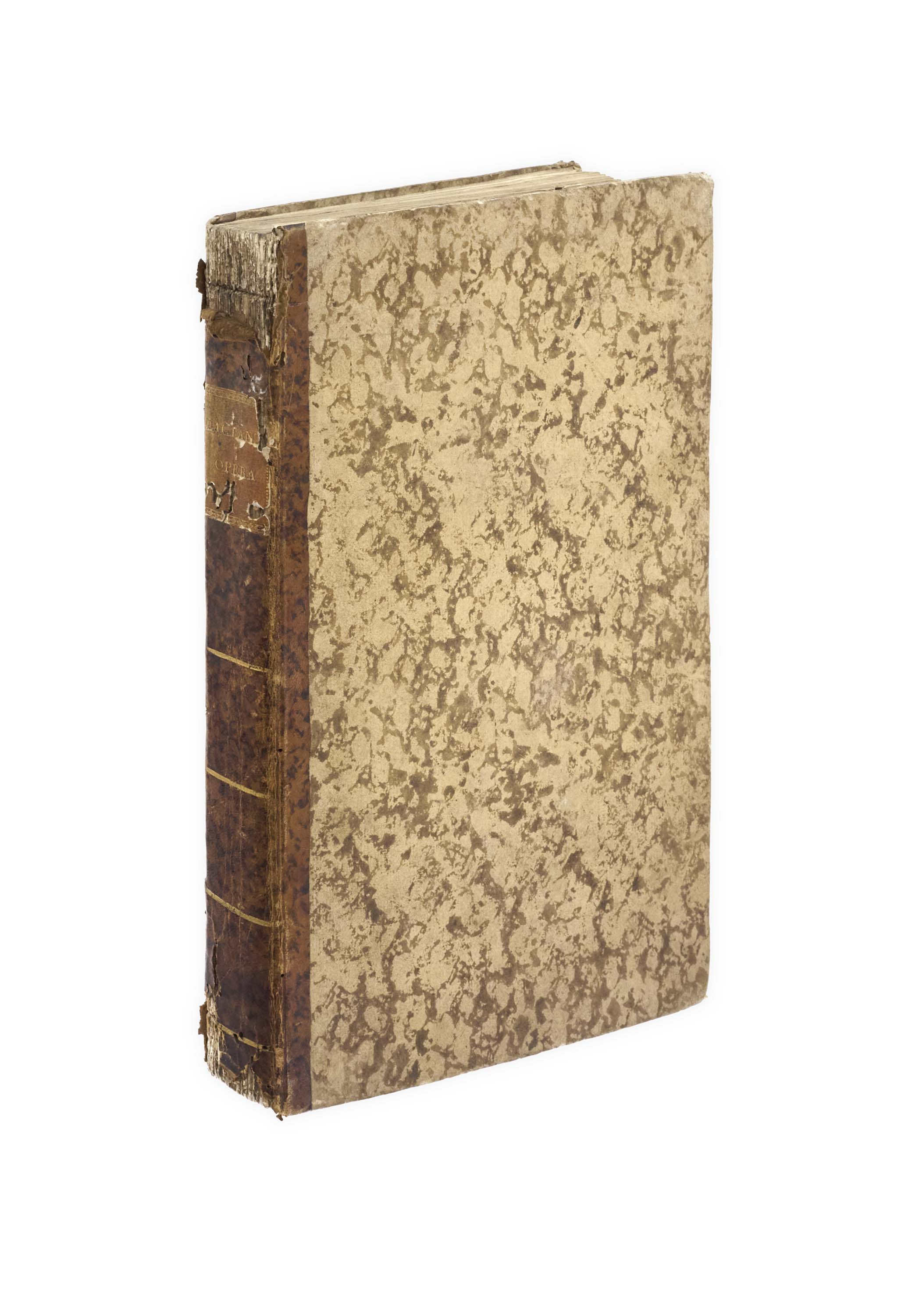
Two parts in one vol., folio, ff. VIII, 2I–CLX, 3I–XXII; roman type with some phrases in Greek, woodcut printer’s device to title-page (signed ‘B M’), white-on-black woodcut initials, A1 with large woodcut initial and headings printed in red; title-page somewhat soiled with marginal repair at foot, occasional light marginal staining, bifolium A4.5 detached with a few chips to edges, small rust-holes in inner margin of last few leaves, otherwise a very good, fresh copy; bound in late eighteenth-century Italian mottled calf-backed boards with mottled paper sides, spine ruled in gilt with gilt red morocco lettering-piece, front endleaf with watermark of three crescent moons, rear endleaf with watermark of a W surmounted by a hand holding a sabre (late eighteenth–early nineteenth century), sewn on 3 sunken cords; a little rubbed, spine chipped and defective at head and foot with a few small wormholes, sewing defective; late sixteenth- and seventeenth-century annotations to c. 85 pp. (sometimes shaved); inscription ‘Joh. Franc. Presbyt. Bauchieri [–] Theol. Dr.’ to front flyleaf.
Added to your basket:
Opera perquam accurate castigata: Graeco integro adiuncto: quod in aliis cum mancum tum corruptum invenitur. Eiusdem Neophythomon. Carmen de Phoenice. Carmen de Resur. D[omi]ni …
A closely read copy of Lactantius’s encyclopaedia of Christian apologetics, defending and explaining the Christian faith.
Lactantius (c. 250–c. 325), from north Africa, taught rhetoric at the imperial court in Nicomedia, where he witnessed the Christian persecutions of Diocletian. According to Jackson Bryce’s online bibliography of Lactantius editions, this is probably the eighteenth printing of the works of Lactantius, following the first edition of 1465 (the first surviving book to be printed in Italy). This edition, however, contains more texts, including Lactantius’s neo-Latin poem De ave phoenice about resurrection, John Chrysostom’s De Coena Domini and Lorenzo Valla’s sermon De mysterio Eucharistiae; the volume closes with Tertullian’s Apologeticus adversus gentes which has separate foliation and its own colophon. The text was edited by Pierio Valeriano from Belluno (1477–1558), the nephew of the Greek scholar Urbano Bolzanio, through whom he became acquainted with Aldus Manutius. He studied in Padua and became increasingly interested in Egyptian hieroglyphics, and indeed the text of Lactantius includes much information about ancient Egypt.
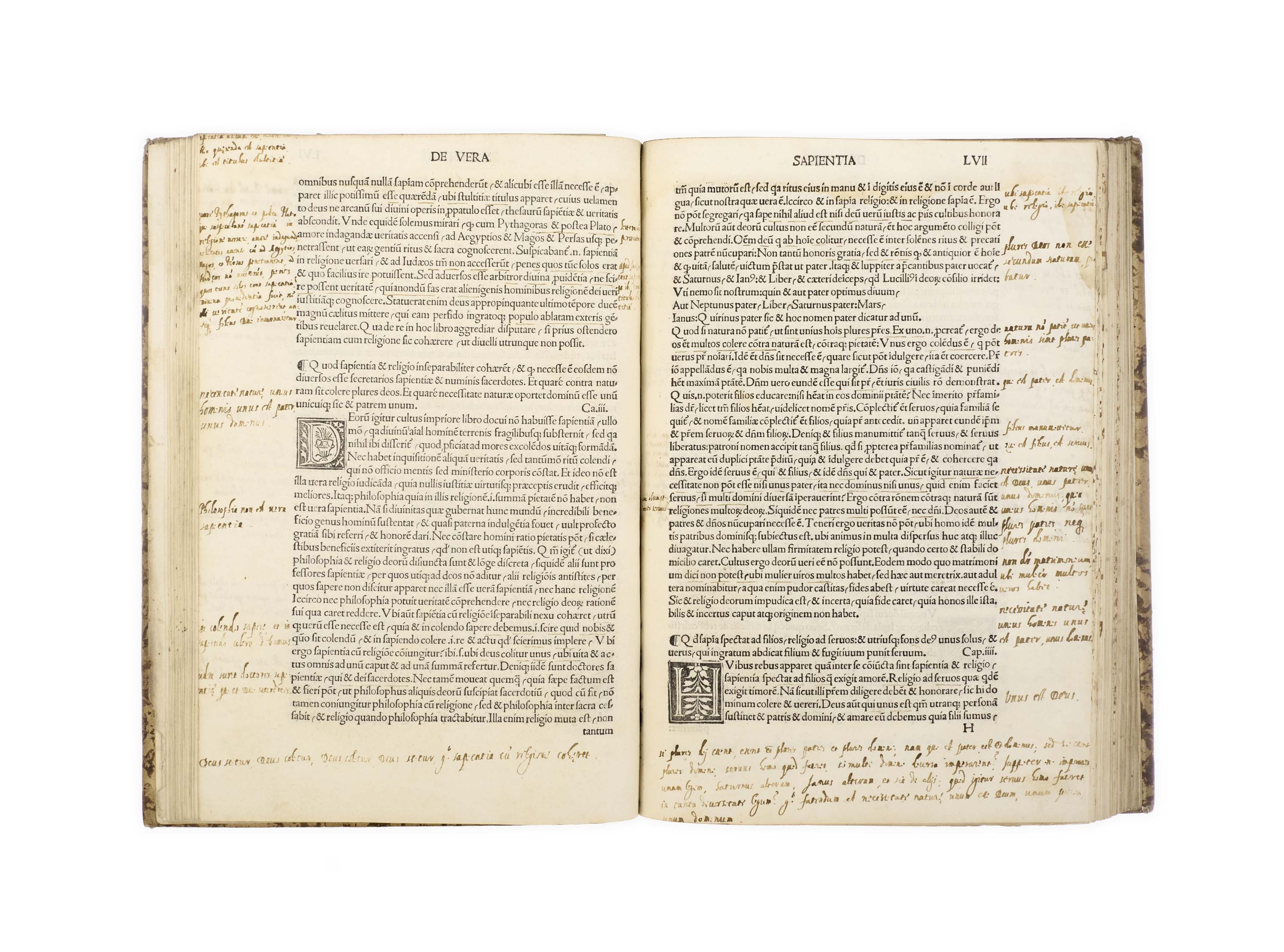
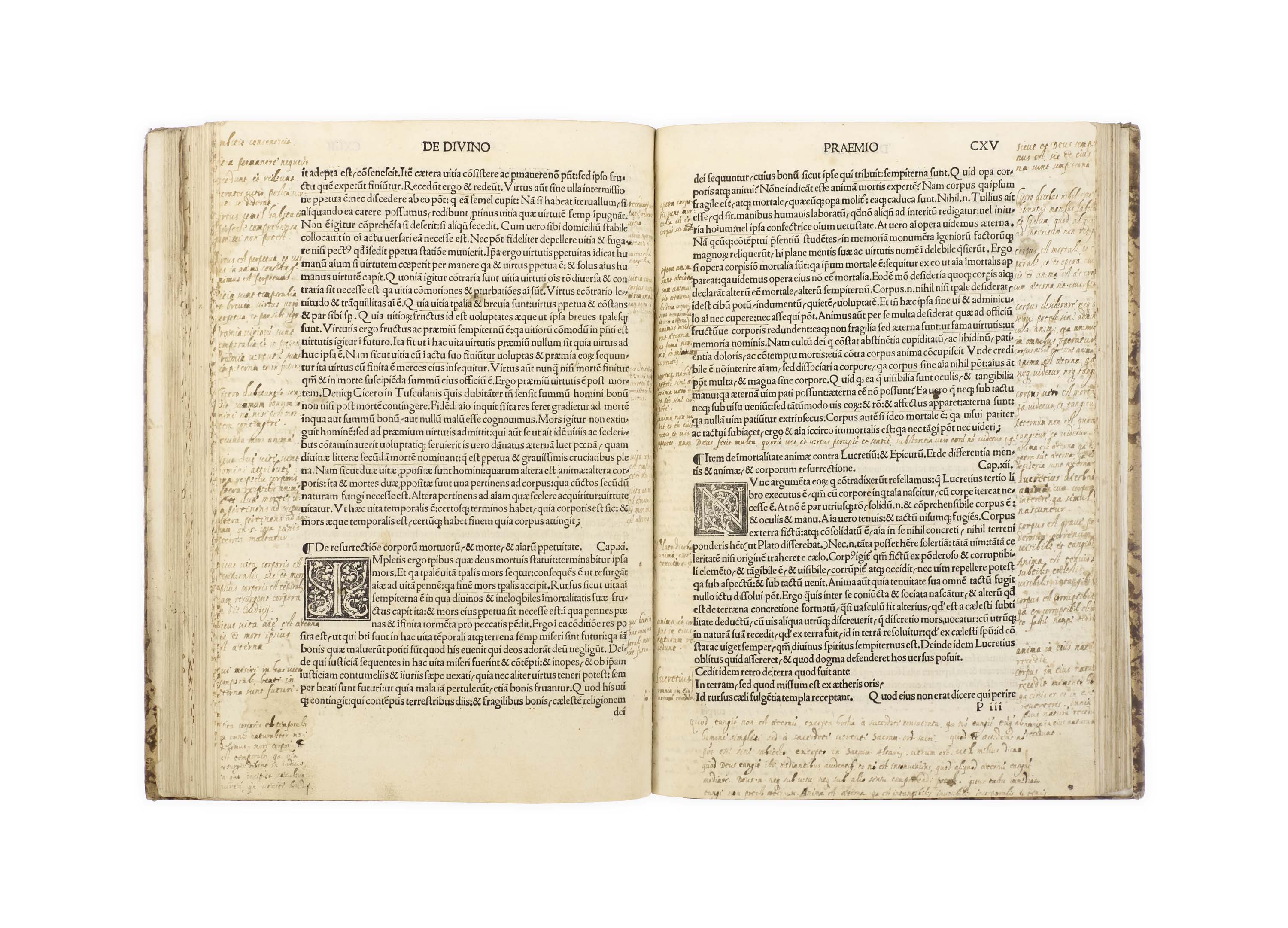
The annotations are concentrated on the sections of the Divine Institutes entitled ‘De vera sapientia’, ‘De divino praemio’ (elsewhere entitled ‘De vita beata’), and chapter IX of ‘De origine erroris’. Elsewhere there are a few marginal hash marks and single words, and some underlining of words and phrases. The annotator shows close engagement and understanding of the text, as well as giving his opinion; on D3v–D4r he states that Lactantius has proved that materia prima was created by God, not the other way round. In the chapters on true wisdom (in which Lactantius states that philosophy is not wisdom) they cite many pagan authors, such as Pythagoras and Plato, Hermes Trismegistus and Cicero, whom Lactantius aimed to discredit (his aim was to demonstrate that before the recent history of polytheism, which began in Egypt, only one God was worshipped in the Mediterranean, which the annotator notes has been proved). The annotator also provides the sources of some of Lactantius’s text, where not acknowledged by Lactantius himself; for example, on Q2v, he correctly identifies a reference to the first book of Ovid and some lines from Virgil’s fourth Eclogue, and on Q3v mentions Aristippus.
Along with Cyprian, Lactantius also believed that the end of the world was at hand; in ‘De divino praemio’ chapter XXV, the annotator has noted ‘completo sexto millesimo anno, tunc erit finis mundi’ (at the end of the sixth millennium, then it will be the end of the world), a common notion within the prolific genre of Apocalypse commentaries, frequently repeated with variants in the form. The annotator is writing a thousand years after that, thus revealing a predilection for the consciously metaphorical exegesis of millenialist statements. The annotator also complements Lactantius’s notes on the Antichrist by referring to one of the numerous circulating interpretations of Daniel and Isaiah regarding his Syrian origins (Q3r).
EDIT16 CNCE 34364; USTC 762283; Sander 3758.