German Mathematics in Padua
LUNESCHLOS, Joannes de.
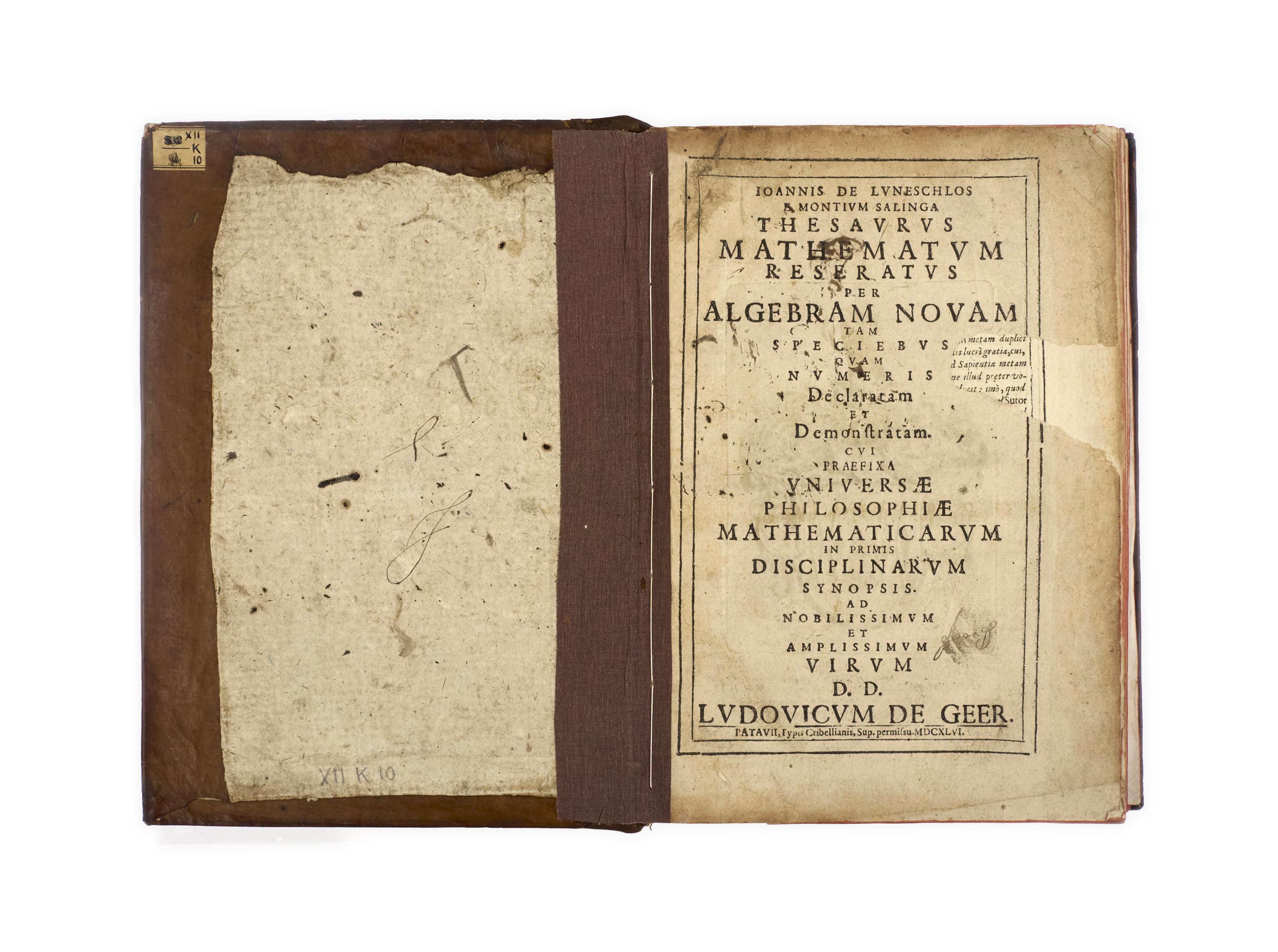
Thesaurus mathematum reseratus per algebram novam tam speciebus quam numeris declaratam et demonstratam. Cui praefixa universae philosophiae mathematicarum in primis disciplinarum synopsis. Padua, Giulio Crivellari, 1646.
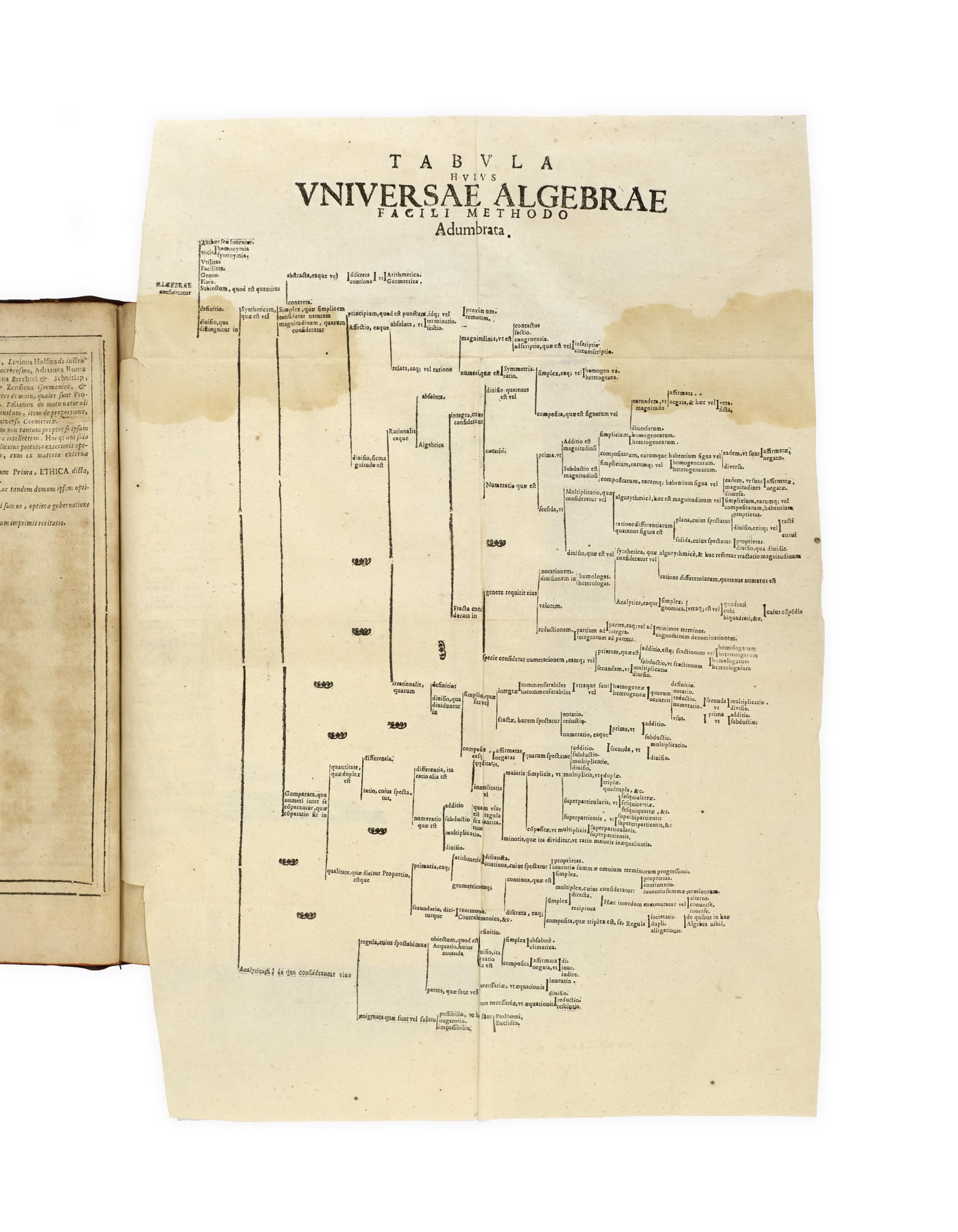
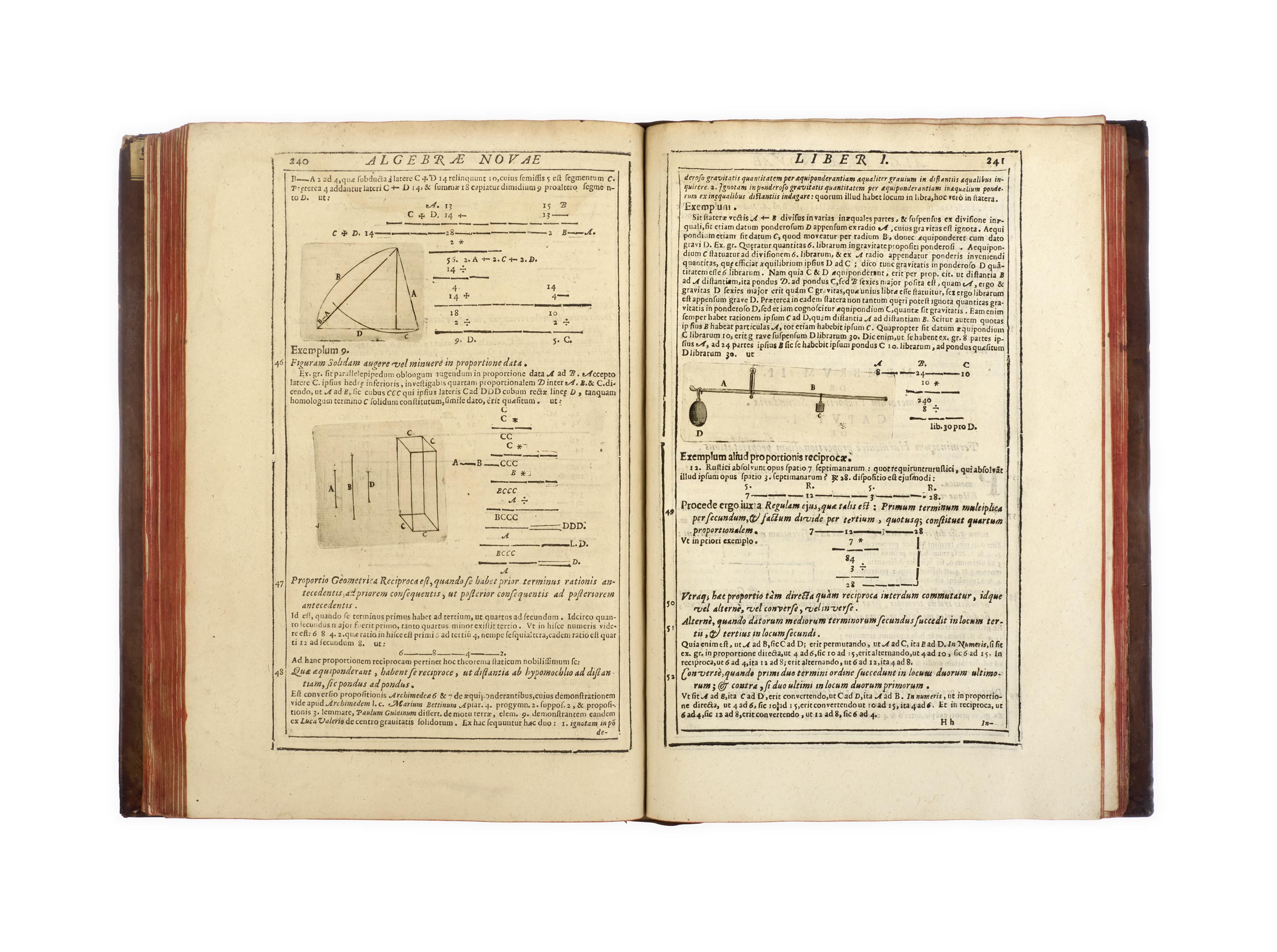
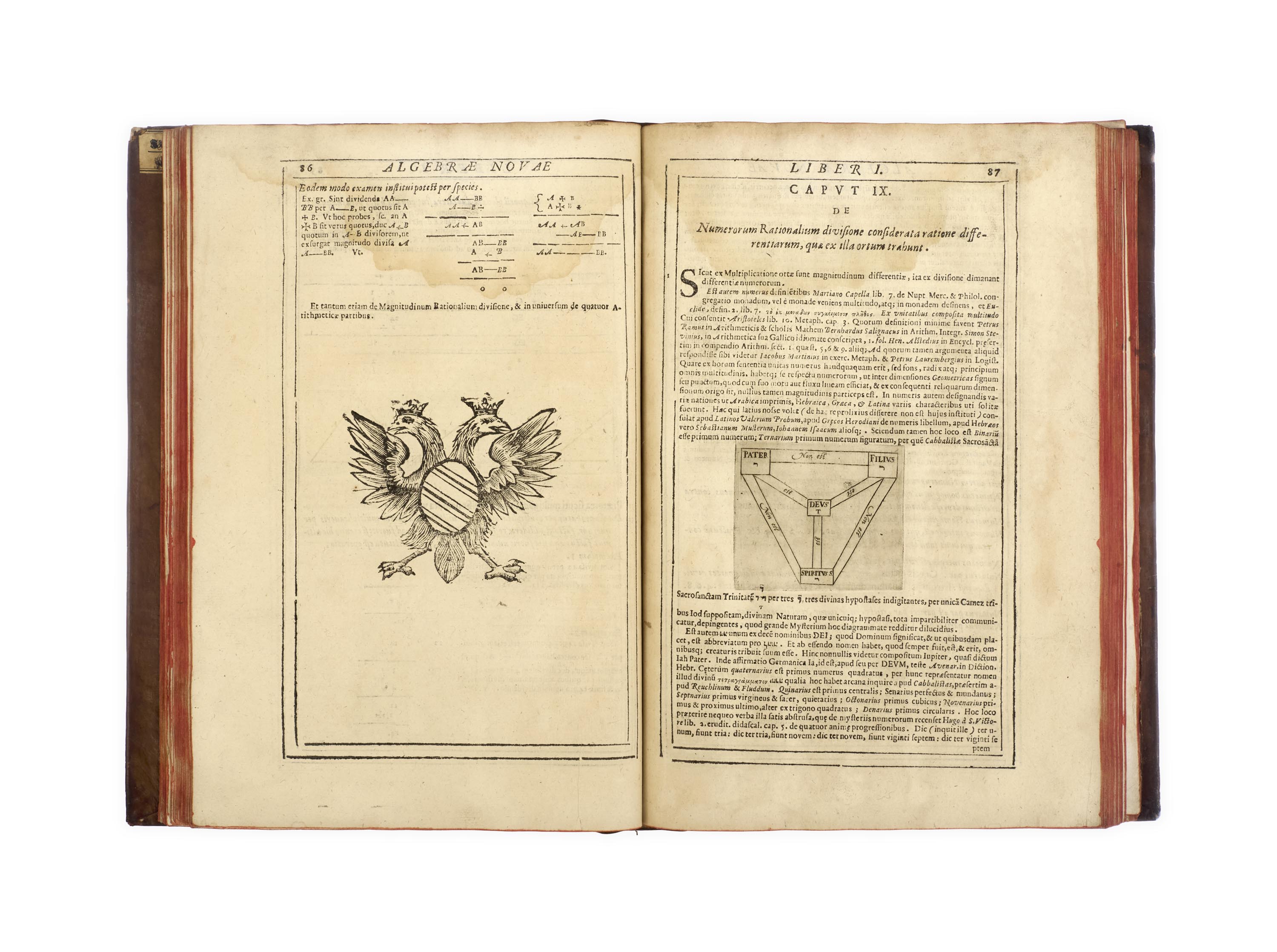
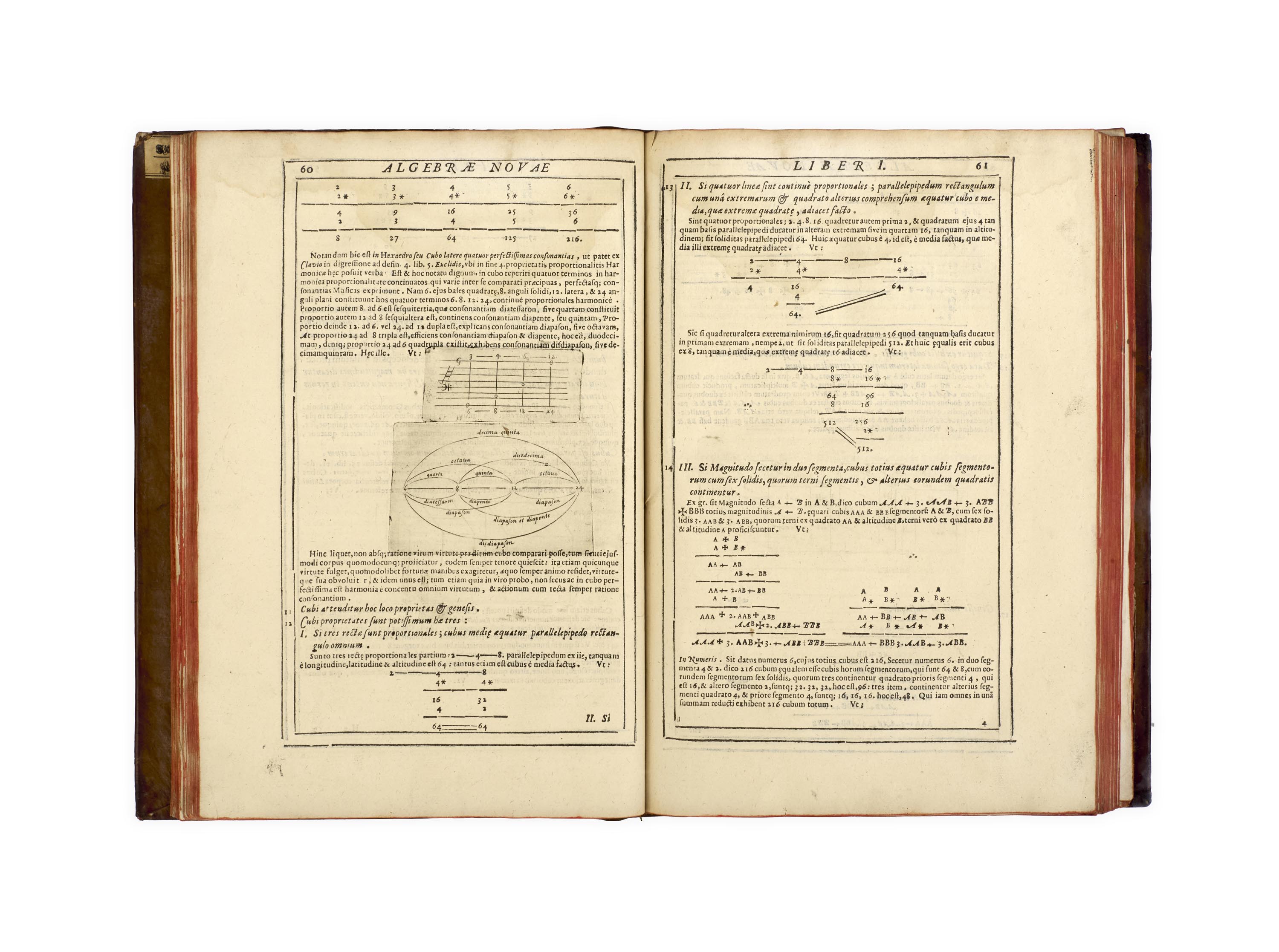
Folio, pp. [40], 311, [21]; lacking half-title and additional engraved title-page; each page within a printed double border, with occasional marginalia printed vertically within the frame, large engraved armorial of the dedicatee to title-page verso with a small ink drawing above, woodcut initials and tailpieces, 4 folding letterpress tables, woodcut and engraved diagrams; title-page soiled and with section of paper torn away (not affecting text but with loss of blank section of engraving on verso), lower corner of B4 torn (just touching text), occasional marginal soiling, final leaf soiled, though a good copy; bound in near-contemporary English calf over pasteboard, double blind fillet border, red edges; rebacked in leather (by Metcalf of Stonyhurst, with their ticket), binding a little rubbed, lacking front flyleaves, rear flyleaf defective, upper hinge repaired with a strip of buckram, paper shelf-label pasted to inside front cover.
Added to your basket:
Thesaurus mathematum reseratus per algebram novam tam speciebus quam numeris declaratam et demonstratam. Cui praefixa universae philosophiae mathematicarum in primis disciplinarum synopsis.
An uncommon mathematical text, written by a German scholar at the University of Padua; this copy arrived in England shortly after publication.
Joannes de Luneschlos (or Leuneschlos, 1620–1699, from Solingen) studied in the Netherlands and at the University of Padua, publishing his survey of mathematics in the year that he matriculated (he was awarded his doctorate in 1648). He dedicated it to the industrialist Lodewijk de Geer, for whom he later worked in Sweden, and he composed a separate preface addressed to students in all faculties from the substantial German Nation at Padua. After travelling around Europe, he became professor of mathematics and physics in 1651 at the newly re-founded University of Heidelberg, a post he retained for forty years. He is known to have discussed Cartesian philosophy with Princess Elizabeth of the Palatinate during her time at Heidelberg in the 1650s; he was instrumental in the dissemination of Cartesianism in Heidelberg.
His work soon became known to English scholars; Robert Payne (1595–1651), a friend of Hobbes and chaplain to the Earl of Newcastle, made notes from Luneschlos (now in the Hobbes manuscripts at Chatsworth), though John Pell was somewhat uncomplimentary, opining that much of the text was taken from other sources, and that some of the propositions that weren’t were incorrectly stated.
Uncommon: we have located four copies in the UK (British Library, Bodleian, UCL and Royal College of Physicians), one in the US (Michigan), and the only copy in Germany is in Göttingen. Only the Macclesfield and Honeyman copies have appeared at auction in recent years.