Unrecorded Tokyo Imprint
MITFORD, Algernon Bertram, translator.
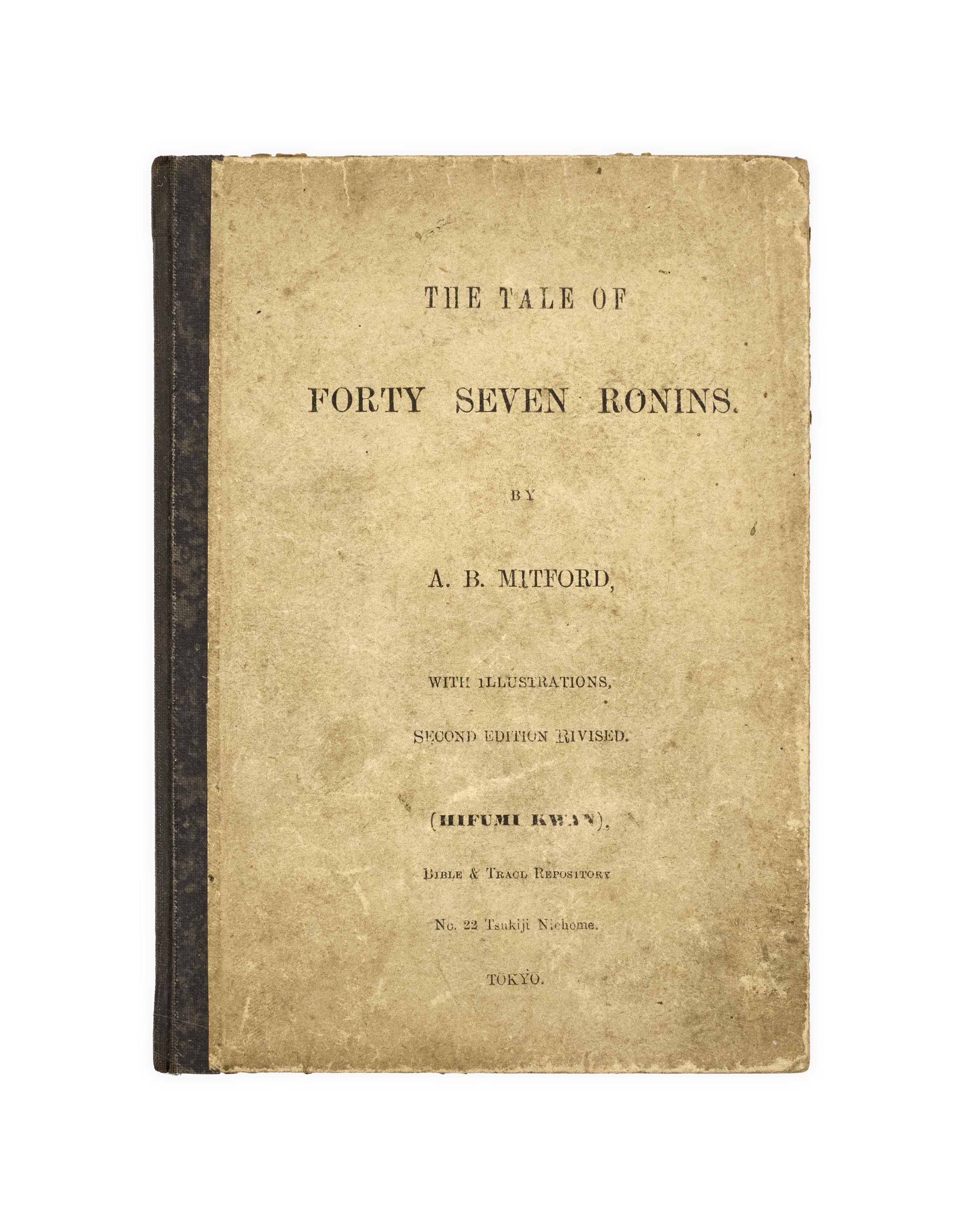
The Tale of forty seven Ronins … Tokyo, Bible & Tract Repository [and (colophon:) Chōshichi Kurimoto], Meiji 25 [1892].
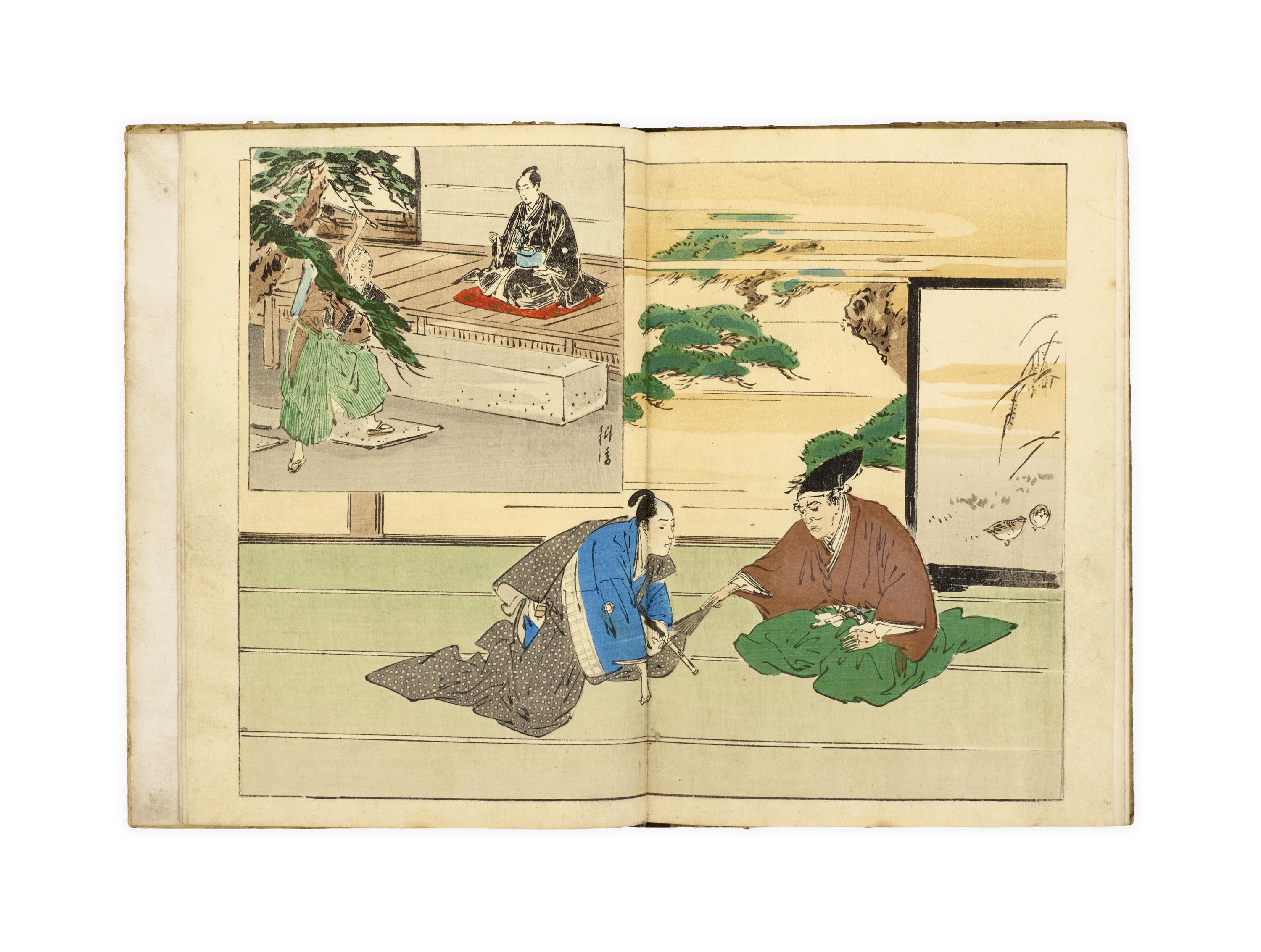
8vo, pp. [ii], 24, [1], [1, blank], with a two-leaf colour woodblock print tipped in; a few minor smudges, but withal a very good copy in the original cloth-backed boards with paper sides, front board printed with title; boards a little soiled and slightly worn at edges.
A seemingly unrecorded Tokyo edition of this famous tale of samurai vengeance, translated into English.
The translator, Algernon Bertram Mitford (1837–1916) – later Freeman-Mitford, 1st Baron Redesdale, and grandfather of the Mitford sisters – was posted in 1866 as an attaché to the British mission to Japan, then in the throes of civil war. There, having mastered the language, he collected and translated some two dozen Japanese stories in a celebrated anthology, Tales of Old Japan (1871, expanded thereafter). Originally published in Tales of Old Japan, the present translation recounts the much-told story of the forty-seven rōnin (lordless samurai) who avenged the death of their daimyō (lord) in 1703 after the latter offended a court official. The rōnin’s vendetta was received with such popular admiration that the shōgun spared them execution, allowing them the honour of dying by seppuku instead, and they were celebrated in innumerable poems and plays in the following centuries. Mitford ends his translation with an anecdote that took place in 1868 ‘at about two hundred yards’ distance from my house’ in Tokyo, in which a latter-day rōnin, having been refused from the service of the Chōshū clan, committed seppuku at the graves of the forty-seven: ‘when I saw the spot an hour or two later, the ground was all bespattered with blood, and disturbed by the death-struggles of the Man’.
We find no other copies of the present edition. OCLC records a handful produced at Tokyo by Jūjiya in 1889–92, most of them held in only one or two copies, but none published by the Bible & Tract Repository of 22 Tsukiji 2-Chome in Chuo, Tokyo, which we have been unable to identify further, though from the composition of the type (e.g. ‘Second edition Rivised [sic]’) it would seem to have employed local Japanese printers.