Contemporary Purple Velvet – a Binding Fit for a King
[OXFORD UNIVERSITY.]
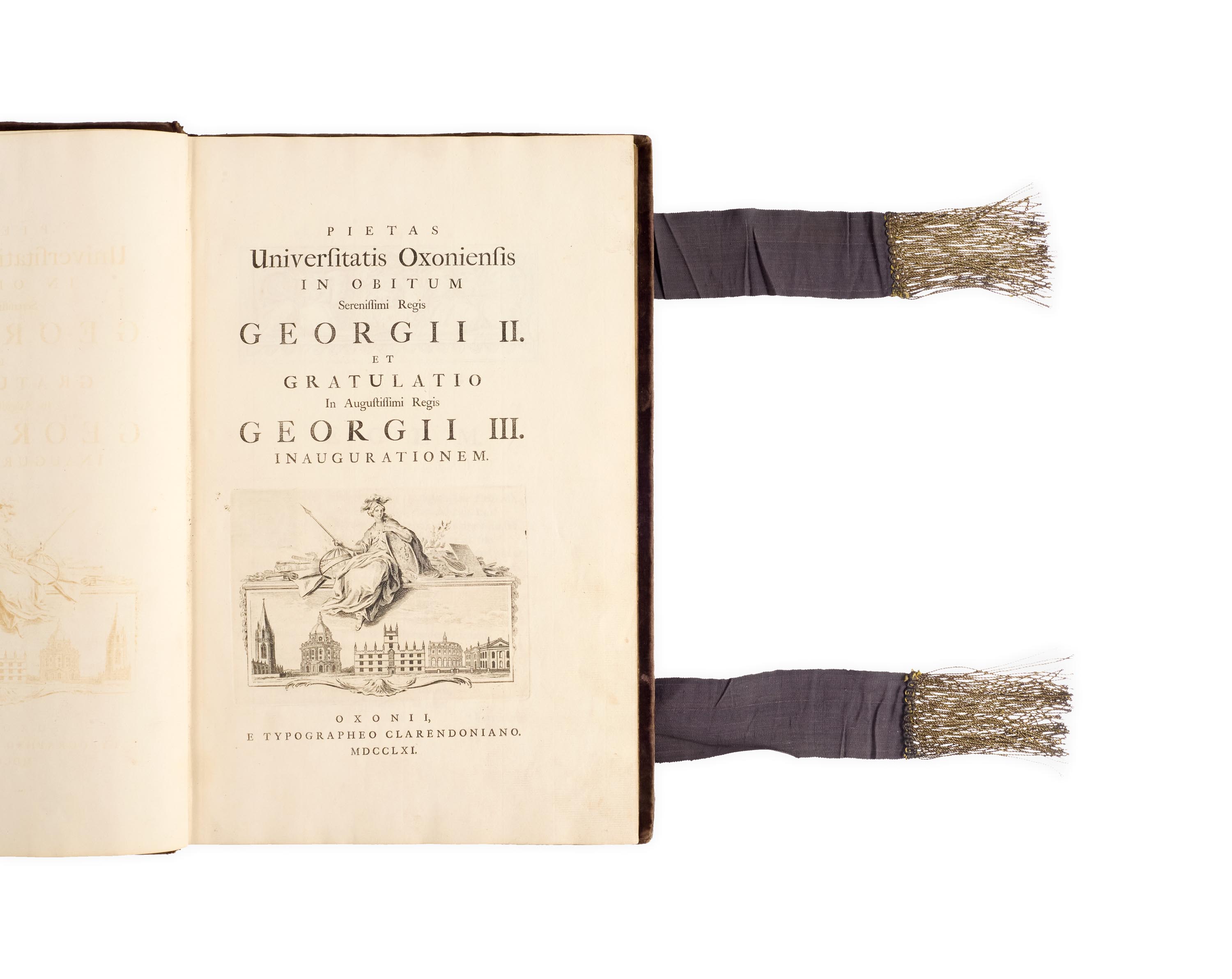
Pietas Universitatis Oxoniensis in obitum serenissimi Regis Georgii II. et gratulatio in augustissimi Regis Georgii III. inaugurationem. Oxford, Clarendon Press, 1761.
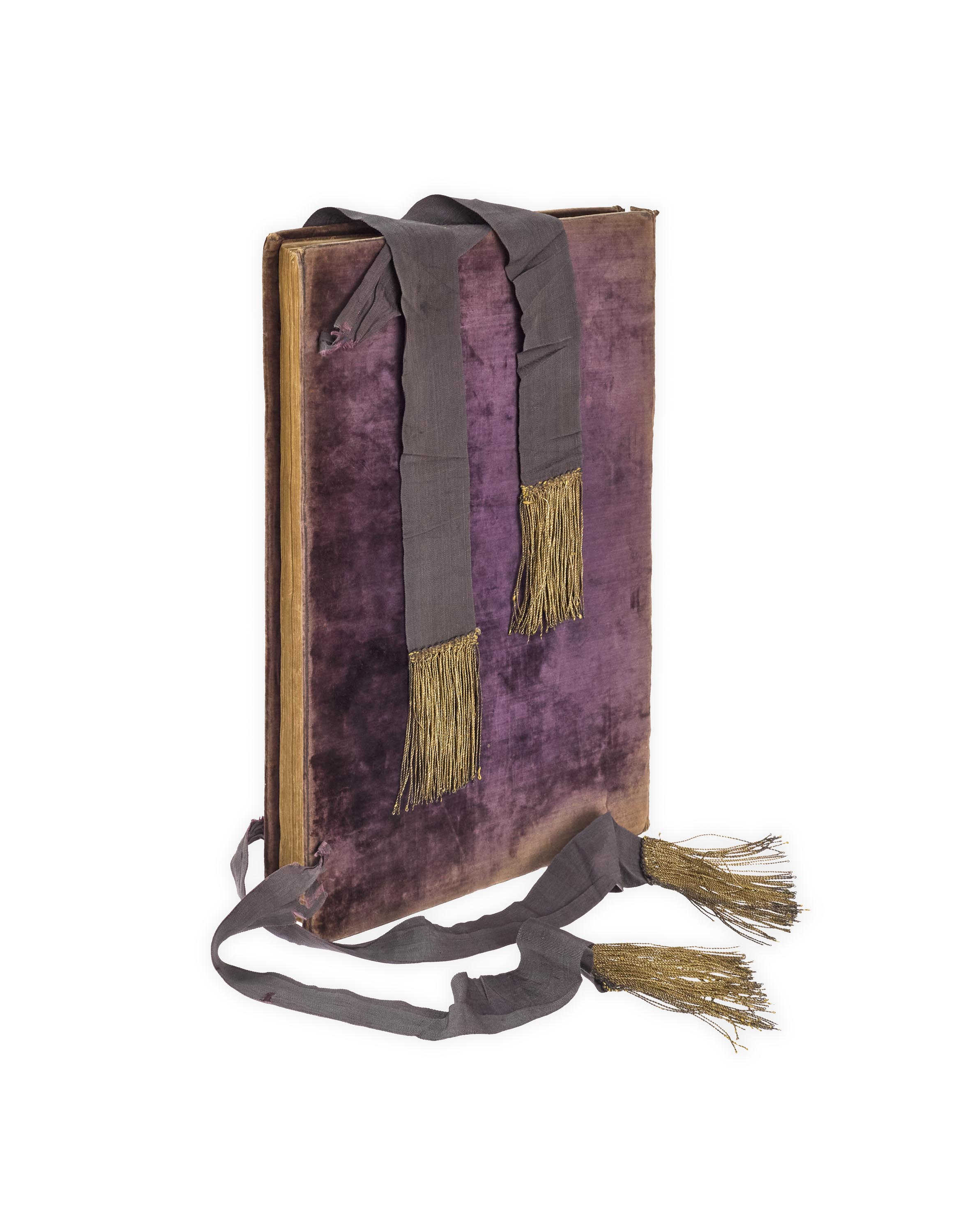
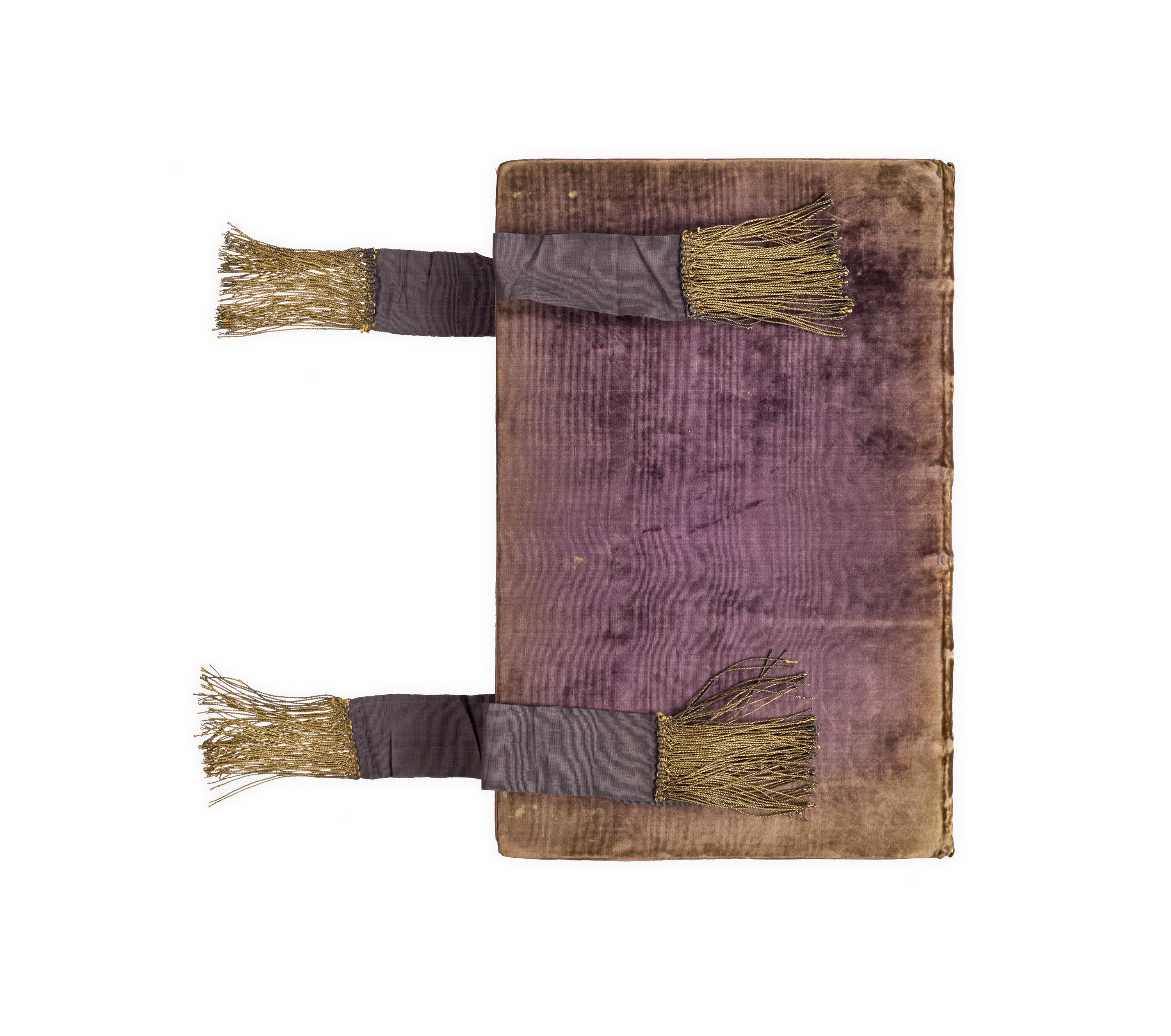
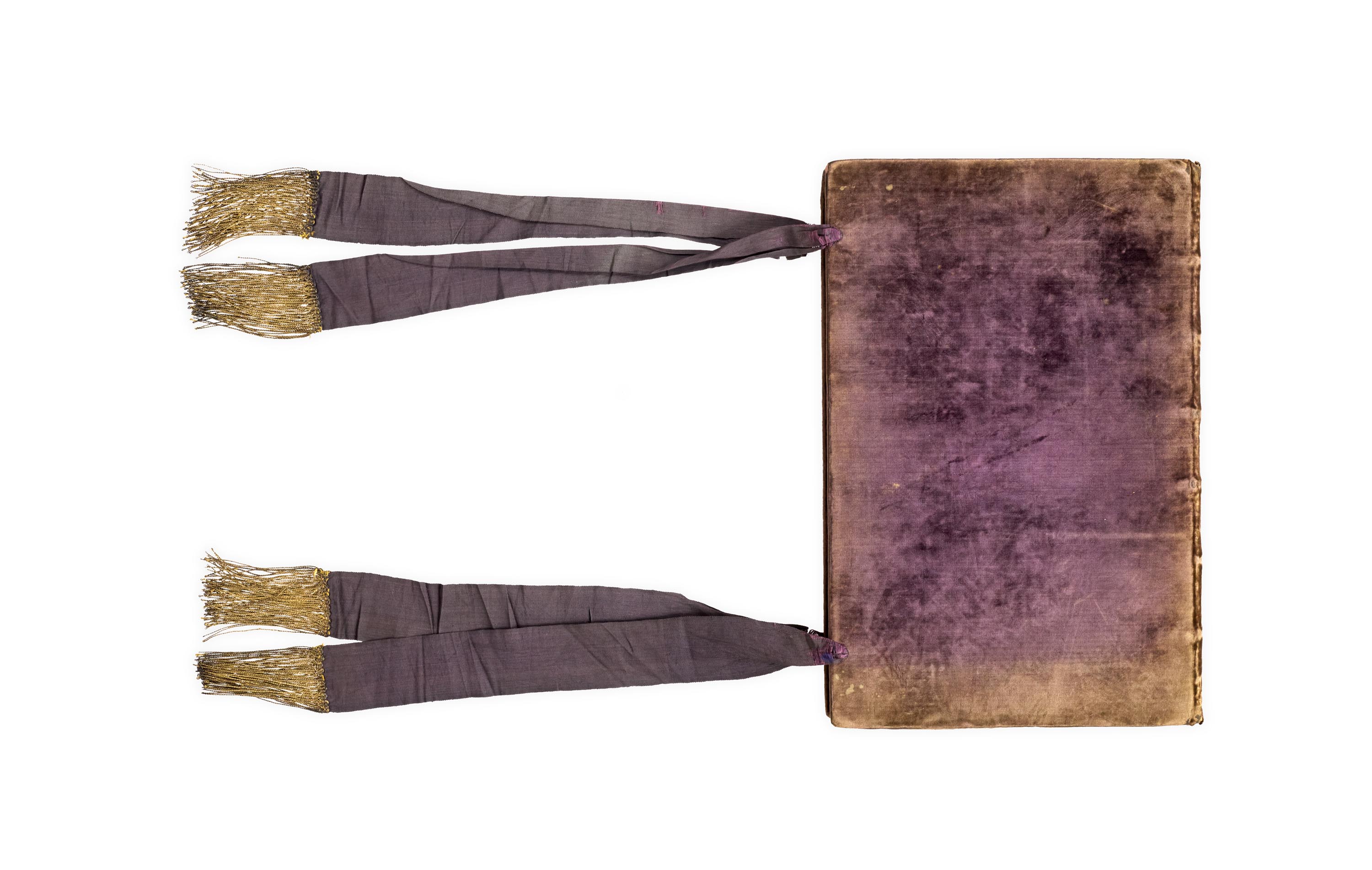
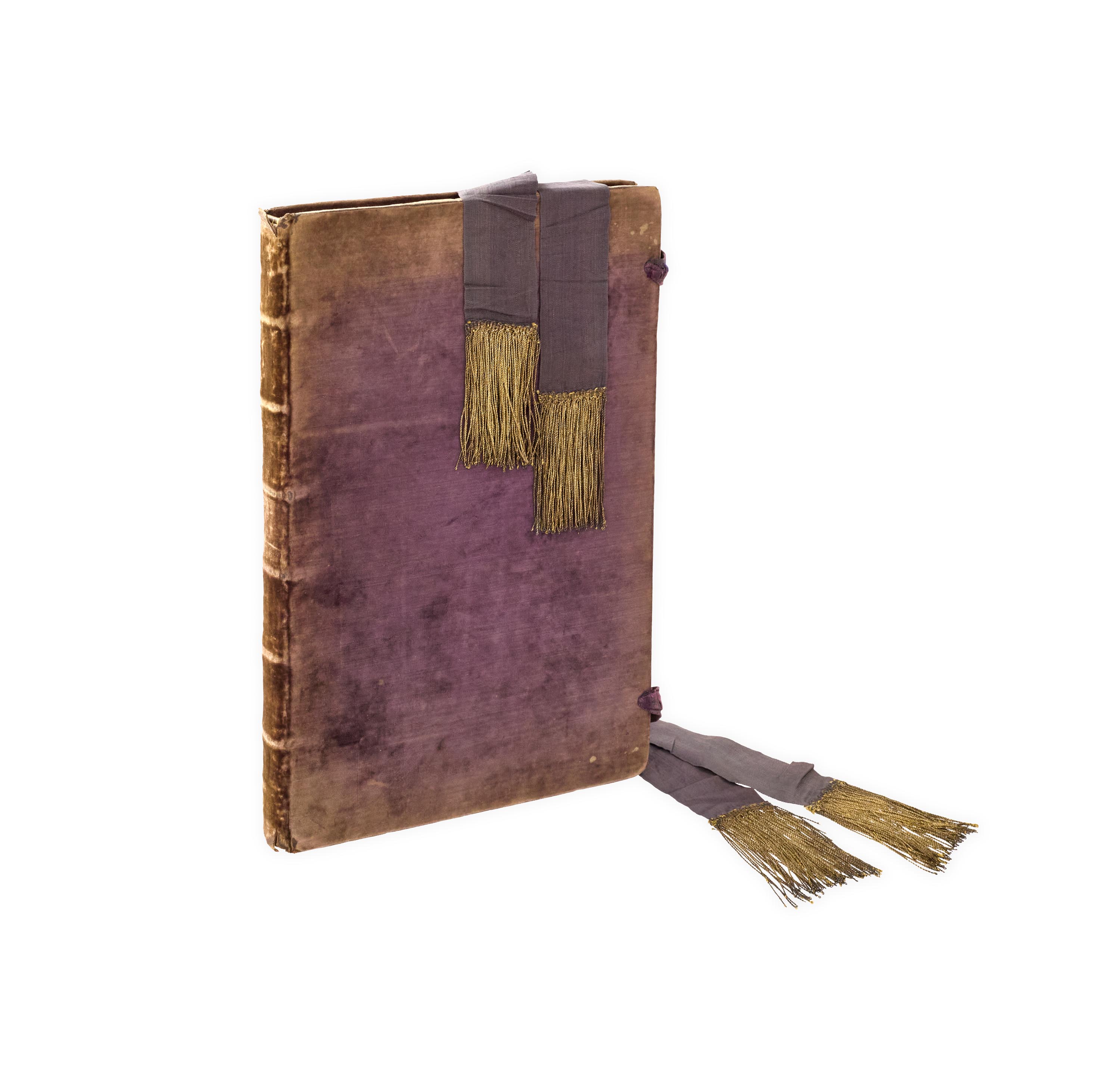
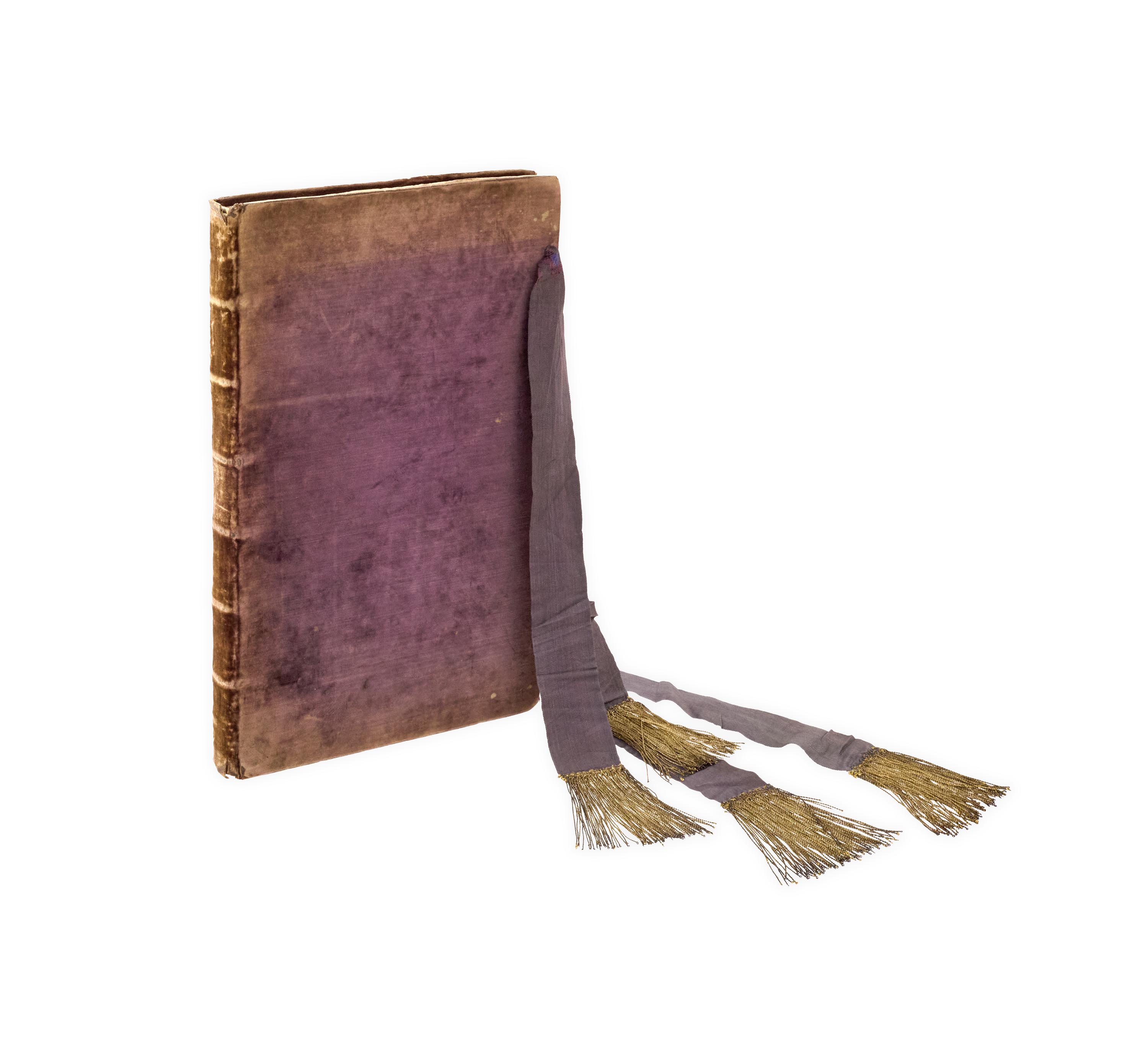
Folio, pp. [256], with a terminal blank; engraved vignette on the title-page, engraved head-piece and tailpieces, and three engraved poems in Phoenician, Syriac, and Samnitic Etruscan; a fine, wide-margined copy; bound in contemporary purple velvet, four wide purple silk ties with gold thread tassels; red and gilt brocade endpapers with a pattern of vines, flowers and grapes, gilt edges; joints cracked, spine slightly sunned, rubbed on the bands and at head and foot, upper edge of front cover slightly sunned, few small marks, but in remarkable condition, the ties with very little wear; preserved in a purple satin box.
Added to your basket:
Pietas Universitatis Oxoniensis in obitum serenissimi Regis Georgii II. et gratulatio in augustissimi Regis Georgii III. inaugurationem.
First edition, one of fifty copies on large paper, an exceptional survival in the most luxurious (and fragile) of presentation bindings: full purple velvet with gold-fringed purple silk ties, typically reserved for a handful or fewer of royal copies.
A collection of verses in English, Latin, Greek, Hebrew, Arabic, Welsh, etc., it was published by Oxford University to commemorate the death of George II and the accession of George III, and includes contributions by Benjamin Kennicott (in Hebrew) and the Poet Laureate Thomas Warton (in English).
Collections of commemorative poetry, often polyglot as a demonstration of academic prowess, were published by Oxford University from the early seventeenth to the mid-eighteenth centuries (the last in 1763). ‘The chief reason for such printing … was the free distribution of presentation copies. These were bound at the university’s expense in varying degrees of sumptuousness, chosen to reflect the status of the recipients … only a few copies were bound in the very finest materials, typically two in velvet (for the king and, probably, either the prince or queen), and six in satin (probably for the Chancellor and other leading courtiers)’ (Money). Money’s selections from the University accounts include (for the year Nov. 1761 to Nov. 1762) payments of £80 7s to Thompson for binding ‘Verses on the Marriage of the King’ (i.e. Epithalamia Oxoniensis 1761), and of £24 4s 6d to Turner for velvet and gold fringing – indicative of the great expense of such materials. It was almost certainly the university binder Alexander Thompson and the Oxford mercer John Turner who were also responsible for the materials and binding here, but there are no clues as to the intended recipient.
While earlier monarchs favoured red velvet, purple was the colour of choice for the Hanoverians; at his state funeral the purple silk-lined coffin of George II, draped with a purple velvet pall, processed under a canopy of purple velvet. George III in turn exchanged his red velvet coronation robe for a purple velvet Robe of Estate on his departure from Westminster Abbey.
ESTC T56608; Clary 835; Carter, History of the Oxford University Press, Appendix, 1761:18 (750 copies, of which 50 large paper). See Money, ‘Free Flattery or servile Tribute? Oxford and Cambridge commemorative Poetry in the seventeenth and eighteenth Centuries’, in Raven (ed.), Free Print and non-commercial Publishing since 1700, 2000.